

Audio By Carbonatix
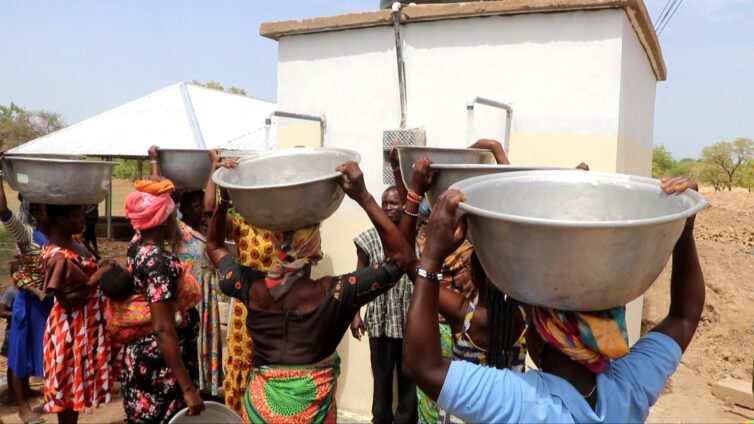
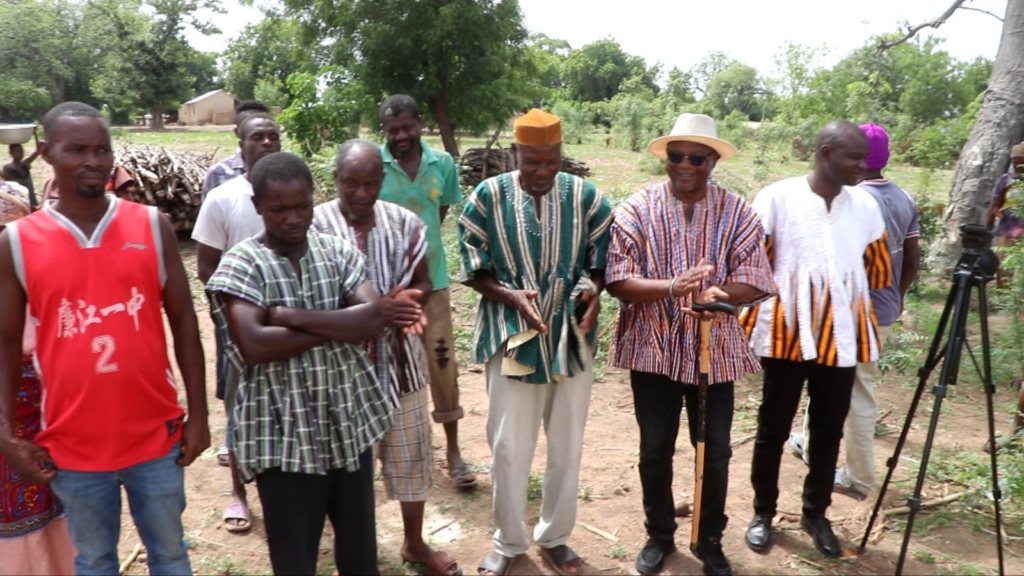
A solar-powered mechanised borehole has been commissioned for the people of Paali, funded through proceeds from Gbankor Bricks and Tiles (GBT), in an intervention aimed at addressing the community’s long-standing water challenges.
The project forms part of a broader social development model led by the Divisional Chief of the Kaleo Traditional Council, Naa Jamaa Matarah II, also known as Emmanuel Mwinila-Youri, who established the brick manufacturing enterprise about a decade ago to support local development through a social enterprise approach.
According to him, a portion of revenue generated from the business is consistently reinvested into community projects.
“Every single brick that we produce, five pesewas, if we sell one brick, we put five pesewas aside to try and do something back to the community,” he explained.
The newly commissioned borehole, which is fully powered by solar energy, was designed to eliminate operational costs, particularly benefiting women who are most affected by water scarcity in the area.
Assembly Member for the Gbankor electoral area, Baga Wilfred, noted that the project was delivered swiftly after the community identified water as its most pressing need, stating that it was completed in less than a month.
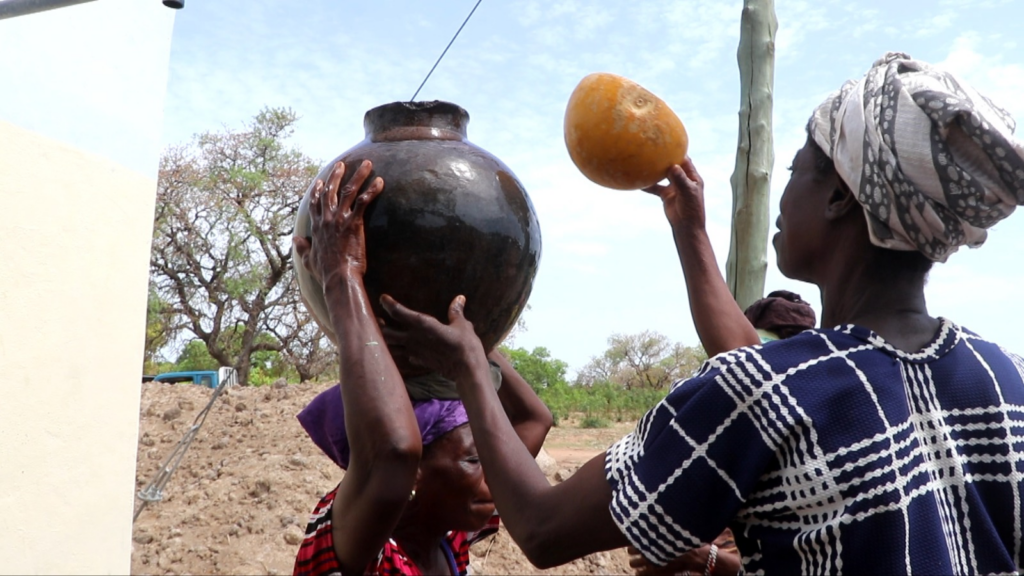
During the handover ceremony, Women’s Organiser Janet Kuun-lonno expressed gratitude on behalf of the women of the community, with residents celebrating the commissioning through traditional music and dance. As a gesture of appreciation, community elders presented a sheep to Naa Matarah II.
The borehole is one of several development projects funded by GBT, including a library, an ICT centre equipped with 18 computers, school furniture, and an annual rewards scheme for primary school pupils.
Naa Matarah II further disclosed that a major boost for the enterprise came after Speaker of Parliament Alban Sumana Bagbin awarded GBT a contract for 400,000 bricks for the construction of a fencing wall for Sombo Senior High School. This, he said, enabled the factory to expand operations and currently employ 15 young men and three women, each earning GH¢1,500 monthly, with additional year-end bonuses.
He also used the borehole project as an opportunity to promote the environmental and economic benefits of GBT’s clay bricks, urging wider adoption of eco-friendly building materials.
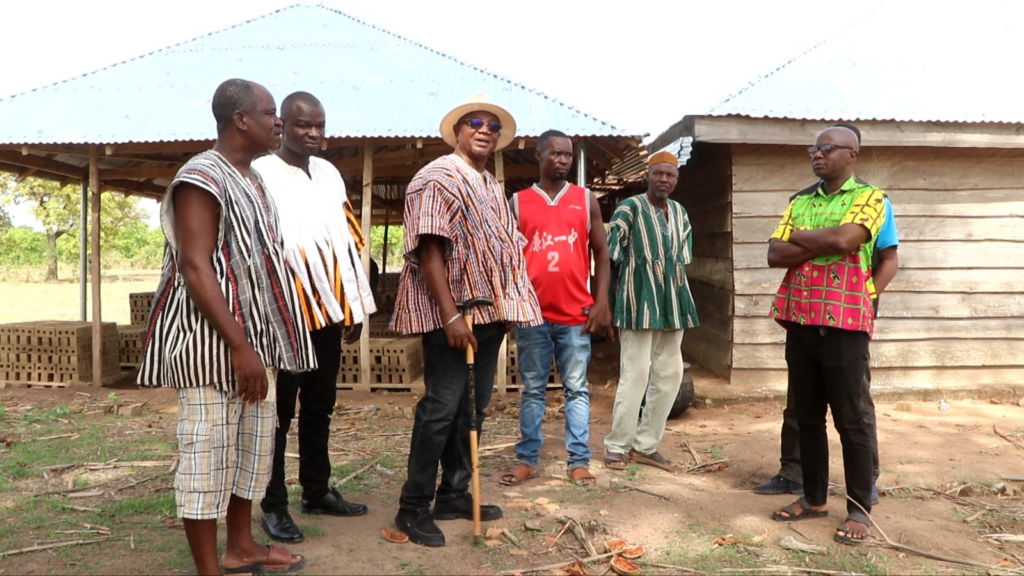
To demonstrate the durability and practicality of the product, the chief said he constructed a roadside residence using the bricks as a showpiece to address public scepticism.
“The reason we have invested in building that house is to set it up as a showpiece,” he stated, adding that it frequently attracts travellers who stop to take photographs and enquire about the materials used.
He noted that although previous projects, including homes built in Fielmuo and near the cathedral in Tumu, had demonstrated the product’s viability, their less visible locations limited public awareness.
According to him, the bricks offer improved temperature regulation and reduce maintenance costs, as they do not require regular painting.
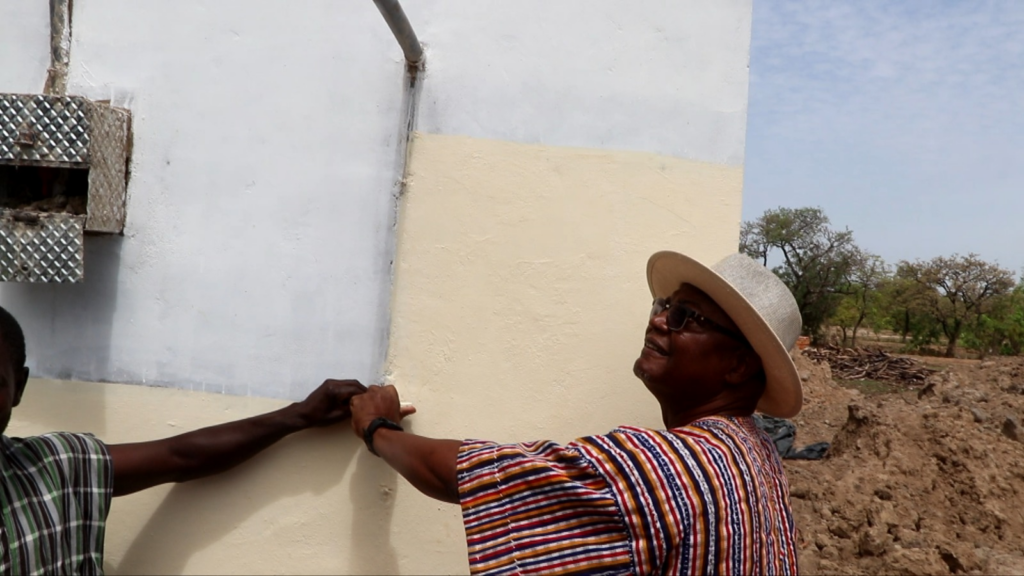
“You build a house with cement and concrete, what do you do? You paint it once,” he said. “If you need to make it beautiful all the time, every year or two you got to repaint... This brick as you see, it doesn't need to be painted, it's beautiful, it's the colour of the earth, it's cool.”
Looking ahead, Naa Matarah II expressed a vision of wider adoption of sustainable building materials in public infrastructure over the next decade, arguing that scaling such local enterprises could help reduce youth unemployment and discourage illegal mining by creating viable jobs within rural communities.
Latest Stories
-
GRA assures Tullow of collaboration to settle $393m tax liability without disrupting its petroleum operations
15 minutes -
South Korea demands apology from Pyongyang for landmine blasts that injured three
19 minutes -
Carlos Queiroz not the sort of coach Black Stars need – Nii Lante Vanderpuye
49 minutes -
AFCON 2027Q: ‘Our Black Stars team is gone’ – Former Sports Minister
1 hour -
Prof. Prempeh calls for public review of draft constitutional reform bills
1 hour -
AFCON 2027Q: ‘I have never seen a poor performance from Black Stars like against Gambia’ – Nii Lante Vanderpuye
1 hour -
Nigeria set to launch National Digital Address System 9 years after Ghana showed the way
2 hours -
Policy rate decision takes time to reflect in lower lending rates – BoG
2 hours -
Western Regional Minister applauds Karpowership’s role in Ghana’s power sector
2 hours -
Playback: Road safety crises: Where are we getting it wrong?
2 hours -
Enterprise Life celebrates 25 years of protecting families and building trust
3 hours -
ICC London rules in favor of Ghana against Tullow over $400m tax charge
3 hours -
We are disappointed in ICC’s ruling over our corporate income tax assessment in Ghana – Tullow Oil
3 hours -
Cost of building inflation for August 2026 increases to 4.6% – GSS
3 hours -
Today’s front pages: Wednesday, September 30, 2026
3 hours