

Audio By Carbonatix
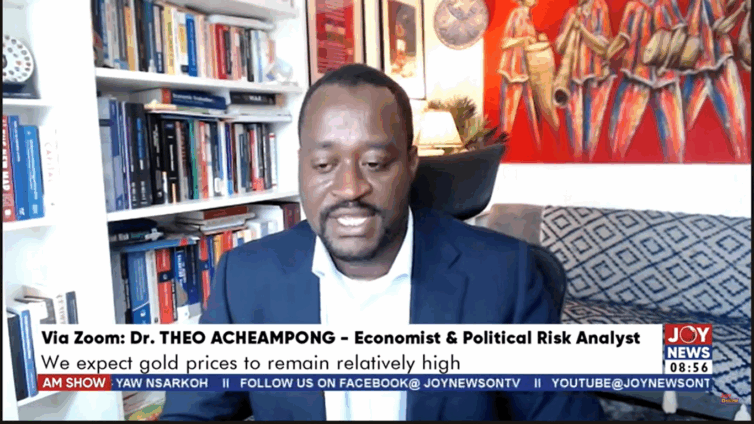
Economist and political risk analyst, Dr Theophilus Acheampong, has hinted at the possible reintroduction of the controversial GH₵1 energy levy, citing mounting financial pressure on Ghana’s energy sector and the growing impact of global geopolitical tensions.
Speaking on JoyNews’ AM Show on Tuesday, 24 June, Dr Acheampong suggested that senior government officials, including the Ministers for Finance and Energy, are likely assessing the fiscal situation and the implications of escalating global conflicts, particularly in the Middle East.
“I think the Finance Minister, the Energy Minister, and the rest of the team would be analysing and assessing the impact. I won’t be surprised if the GH₵1 levy comes back in the coming weeks,” he stated.
He acknowledged that although the previous implementation of the levy faced public opposition, certain segments of the population were relatively accommodating, giving the government possible grounds to revive it—especially if oil prices continue to rise.
The levy, initially introduced earlier this year to support the ailing energy sector, was suspended following widespread backlash from civil society groups and the Minority in Parliament. Nonetheless, Ghana’s energy sector remains in deep financial distress.
“We have serious challenges within Ghana’s energy sector and we need to do something about it,” Dr Acheampong warned.
He also raised concerns over the lack of transparency and accountability in the use of previous energy-related levies, particularly those collected under the Energy Sector Levies Act (ESLA).
“There are concerns as to how monies that have been collected in the past have been utilised, particularly with ESLA,” he observed.
Dr Acheampong urged that any reintroduction of the levy should be accompanied by clear mechanisms for parliamentary oversight and transparent reporting.
“Once we have further assurance and safeguards around the one cedi levy and what it will be used for, and the Minister accounts to Ghanaians through Parliament, perhaps we’ll be looking at some possible solutions to addressing the crisis in the energy sector,” he suggested.
He noted that Ghana continues to grapple with persistent energy problems, including generation shortfalls, rising utility debts, and high dependence on imported fuel.
Ongoing conflicts in regions like Iran, and their potential impact on global oil prices, have further exposed the country’s energy vulnerabilities.
Latest Stories
-
NDC Deputy National Organizer Aspirant Hamza Umar targets grassroots mobilisation
33 minutes -
Villarreal fight back to beat Napoli and end losing run
3 hours -
Tresoldi nets hat-trick as Club Brugge win Inter thriller
3 hours -
PSG’s Luis Enrique hopes Man City avoid sanctions
3 hours -
Lisandro Martinez issues scathing attack on Man Utd board – has he made things worse?
3 hours -
Saka responds to Arteta’s challenge with ‘huge impact’
3 hours -
Viking hold Bayern in thriller as Kane breaks Messi record
3 hours -
Gordon scores as Barcelona beats Galatasaray
4 hours -
Bumble bought for $1.3bn in ‘bet on the future of humanity’
4 hours -
Imagination Africa, Mentors Chess Academy to host second African Genius Chess Championship at Ghud Park
4 hours -
Paradigm Initiative steps up calls over digital rights, internet freedom in Africa
4 hours -
Saudi man charged with planting ‘sophisticated’ recording device in OpenAI office
4 hours -
Ghana wins UN Human Rights Council seat as calls grow for action against atrocities
4 hours -
Royal Mail losing 400 postal workers a week, says union
4 hours -
Techiman South MP ends decades of water struggle in Asutia
5 hours