

Audio By Carbonatix
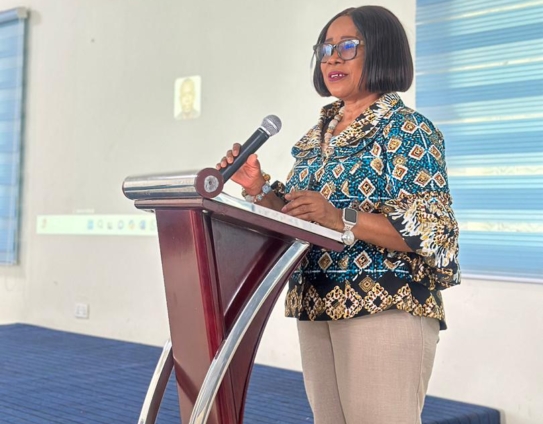
Executive Director of Women, Media and Change (WOMEC), Dr Charity Binka, has made a passionate appeal to government and stakeholders to treat child nutrition as a fundamental human right and not a privilege reserved for a few.
Speaking at a national capacity-building workshop held at Erata Hotel in Accra, Dr Binka declared, “Let us envision and create a Ghana where no mother must watch her child grow weak from hunger, where every child can grow up strong, and where nutrition is recognised not as a privilege but a fundamental right.”
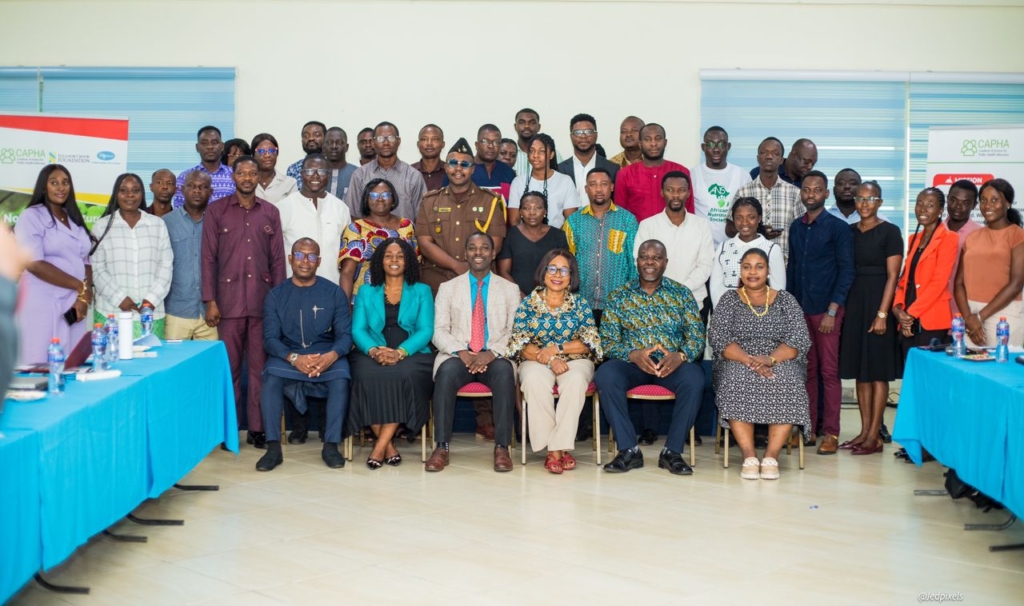
The event, organised by the Coalition of Actors for Public Health Advocacy (CAPHA) in collaboration with WOMEC, brought together civil society organisations and media professionals to drive strategic dialogue and action around maternal and child nutrition.
Dr Binka said Ghana must move beyond rhetoric and elevate nutrition to the highest levels of policy and funding decisions, noting that the country has enough resources to defeat malnutrition if accountability and prioritisation improve.
“Ghana should not be battling malnutrition,” she stressed. “We have fertile lands, capable farmers, national nutrition policies, and committed professionals. What we lack is a coordinated and well-funded national effort to close the nutrition gap.”
She expressed serious concern over the persistent rates of under nutrition in Ghana, especially among children under five, revealing that 18% of them are stunted while 7% suffer from wasting. She described these figures as devastating, highlighting that they reflect real lives being lost to a crisis that has long been under-addressed.
“These are not just statistics. They are real children, real families, and real futures being lost,” Dr Binka warned.
Underscoring the urgency, she explained that malnutrition does not just threaten health outcomes — it cripples national development. “Malnutrition weakens our workforce, increases healthcare costs, and reduces school performance. It robs children of their potential even before they get a chance to grow,” she said.
She was particularly emphatic on the need for government accountability in the nutrition space, demanding transparency on how resources allocated for nutrition initiatives are utilised.
“There appears to be a lack of accountability and transparency in terms of monies released towards nutrition initiatives,” she noted. “We need clarity and openness in how such funds are used to boost the fight against malnutrition.”
The workshop also served as a launchpad for the “Nourish Ghana: Advocating for Increased Leadership to Combat Malnutrition” project — a national advocacy initiative spearheaded by WOMEC and CAPHA with support from the Eleanor Crook Foundation, a globally recognised nutrition advocacy organisation.
According to Dr Binka, “Malnutrition is not just a health concern. It is a national emergency that threatens our development and steals the potential of our children.” She called on the government to integrate nutrition into all sectors and ensure it is adequately budgeted for at national, regional, and district levels.
She further advocated for enhanced public education on exclusive breastfeeding, improved complementary feeding, and the use of nutritious local foods prepared under hygienic conditions.
Crucially, Dr Binka challenged the media to use its power to reshape national conversations on nutrition.
“The media has the platform and the power to shape public opinion,” she said. “We must place malnutrition at the top of the national development agenda. Let us make nutrition part of everyday conversations — in our homes, our markets, and our communities.”
Dr Binka also used the opportunity to appeal to the government to commit more financial resources to tackle maternal and child malnutrition. She particularly expressed concern about how there appears to be a lack of accountability and transparency in terms of monies released towards nutrition initiatives, and demanded clarity and openness in how such funds are used to boost the fight against malnutrition.
Looking ahead, she announced that over the next year, WOMEC and CAPHA would roll out robust media campaigns, engage policymakers and nutrition champions, and strengthen partnerships to amplify advocacy efforts across the country.
The workshop marked a significant milestone in the fight against malnutrition in Ghana — not just as a health issue, but as a justice and development imperative.
Latest Stories
-
3 Co-wives, 5 children perish in canoe disaster – Maritime Authority insists life jackets use mandatory for all water transport
7 minutes -
Iran war lands ‘triple blow’ to flood-ravaged Sri Lankans
41 minutes -
Gunmen kill at least 11 people at Afghanistan picnic spot
55 minutes -
Woman, 25, in court for stealing baby at Bogoso
56 minutes -
Trump unveils giant gold-accented victory arch design for US capital
59 minutes -
We spoke to the man making viral Lego-style AI videos for Iran. Experts say it’s powerful propaganda
1 hour -
Hungarians vote in big numbers on whether to end Orbán rule and elect rival
1 hour -
At least 30 feared dead in crush at Haitian tourist site
1 hour -
Boxing: Abdul Ahmed wins WBA Africa Cruiserwight title after dispatching Nigeria’s Eradeye
1 hour -
Nearly 2,000 displaced, schools damaged as windstorm wreaks havoc in Gushegu
2 hours -
Ghana’s Derrick Kohn to work under Marie-Louise Eta as she becomes first woman to coach men’s Bundesliga team
2 hours -
Accra Open Championships conclude with strong performances ahead of African Championships
2 hours -
Ghana to begin camping with 12 athletes after Accra Open Championships – Bawa Fuseni
2 hours -
Anthony Joshua declines showdown with Tyson Fury but admits they ‘probably’ clash next
2 hours -
Tyson Fury dominates Makhmudov, calls out Joshua next
3 hours