

Audio By Carbonatix
The Open Forum on Agricultural Biotechnology in Africa (OFAB), Ghana Chapter, has called for bold and innovative thinking to secure the country’s food future.
The organisation, hosted by the Council for Scientific and Industrial Research (CSIR), is encouraging students to pursue biotechnology-related courses as a critical step toward achieving food security.
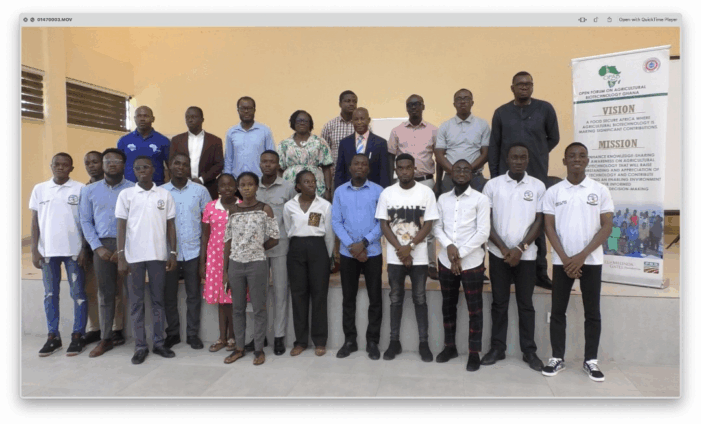
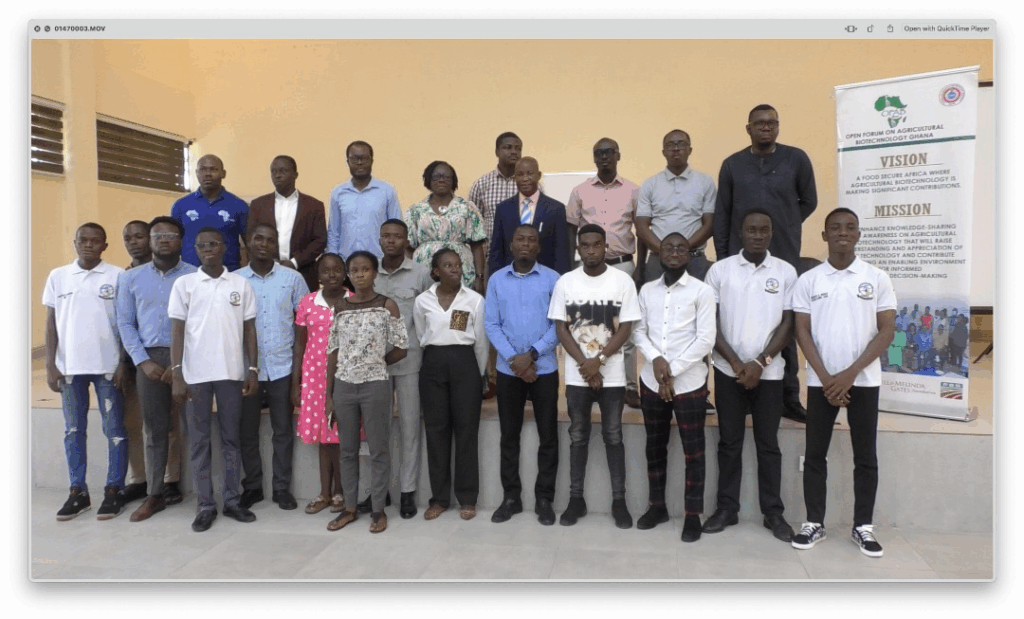
Speaking at the OFAB Youth for Biotech Seminar held at the University of Cape Coast (UCC), Prof. Aaron Asare, Dean of the School of Biological Sciences, emphasised that biotechnology is the most effective tool to boost food production and ensure sustainable farming.

“Ghana, with its numerous agricultural challenges, has no choice but to embrace biotechnology. It’s time to empower the youth to venture into the agricultural biotechnology revolution happening across the globe,” said Prof. Asare, who is also a senior lecturer at the College of Agriculture and Natural Sciences.
He stressed that up-and-coming scientists must adopt biotechnology to develop improved crop varieties for smallholder farmers, helping to overcome challenges such as low yields and heavy pesticide use.
“Biotechnology has wide applications—agriculture, medical, environmental—and can help our farmers worry less about erratic rainfall,” he added.
Dr. Daniel Osei Ofosu, Research Scientist at the Biotechnology and Nuclear Agriculture Research Institute and Country Coordinator of the Program for Biosafety Systems, urged students to embrace genetically modified (GM) foods as part of the solution to global food security.
“GM foods are not harmful to human health or the environment, contrary to popular misconceptions. Much of the earlier media coverage on biotechnology in Ghana has been obstructive, but with proper education, we can change the narrative,” he stated.
Dr. Daniel Dzidzienyo, Deputy Director for Administration, Teaching, and Learning at the West Africa Centre for Crop Improvement (WACCI), echoed similar sentiments.
He said Ghana is warming up to agricultural biotechnology, and students must seize the opportunity to build careers in this emerging field.
“Biotechnology is shaping the future. It offers vast opportunities—you can become a lecturer, a crop consultant, or an innovator in agriculture.
The world needs sharp and bold thinkers like you to lead the change,” he said.
Environmental communicator and media consultant Mrs. Mary Ama Kudom-Agyeman encouraged students to use social media to educate the public on the benefits of agricultural biotechnology.
“This is why OFAB Ghana is committed to building the mindset of a critical mass—especially among farmers and youth—to help them fully benefit from biotechnology,” she noted.
OFAB Ghana believes that cultivating interest in biotechnology among the youth is key to transforming Ghana’s agricultural landscape and ensuring long-term food security.
Latest Stories
-
Ghana’s BRICS move requires clear strategy to manage risks – Godfred Bokpin
13 seconds -
Pay teachers realistic income – Duncan Amoah to gov’t
16 minutes -
Bechem to become chicken capital of Ghana – Mahama projects
18 minutes -
Gov’t targets recruitment of 16,500 health professionals in 2026
39 minutes -
Two-week strike will not derail academic calendar – GNAT President
54 minutes -
Headmaster detained after BBC investigation into alleged sexual abuse of students
1 hour -
GNAT pushes for clear implementation procedures of teachers’ conditions of service
1 hour -
Recurrent strikes threaten quality of education and academic calendars – Prof Bokpin
1 hour -
‘Cockroach’ group leaders among hundreds detained in Delhi protest
1 hour -
Don’t let speed of information become your judgement – CJ tells new lawyers
2 hours -
World Cup visa scandal: People have leveraged public office to facilitate fraud – Senyo Hosi
2 hours -
Glut! Farmers count losses as prices crash, customers happy
3 hours -
GSA postpones auction of unserviceable vehicles
3 hours -
Man charged with attempted murder after stabbing
3 hours -
World Cup visa scandal: Senyo Hosi says issue goes beyond calls for Sports Minister’s resignation
3 hours