

Audio By Carbonatix
The SDGs Advisory Unit in the Office of the President, in partnership with CSIR-Water Research Institute, and supported by the Intergovernmental Oceanographic Commission of UNESCO (IOC-UNESCO) and the UNESCO Office in Accra, organised a two-day national training on Marine Spatial Planning (MSP) for key state and non-state actors in the ocean space.
The training, which was carried out from January 29 to 30, was organised within the context of Ghana’s Sustainable Ocean Plan and discussed MSP concepts and best practices.
It also explored innovative ways of using MSP to protect the health of the ocean and boost Ghana’s Blue Economy.
The event was attended by senior officers from government and civil society organisations including Ministry of Environment, Science, Technology and Innovation; Environmental Protection Agency; Petroleum Commission; Fisheries Commission; Ghana Police and Hen Mpoano.
“Our ocean does not have a voice. We, collectively, have to be the voice of the ocean and the guardian of this cardinal source of life. It is in our enlightened self-interest to do so.
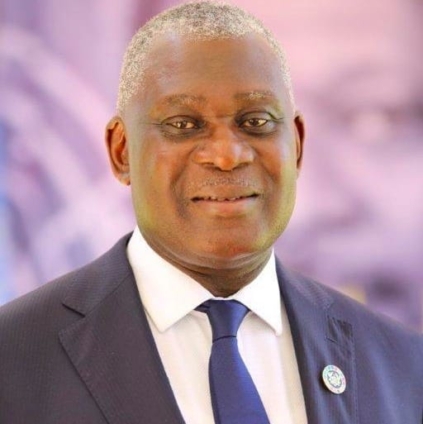
"Protecting and restoring the health of our ocean is not only a moral imperative. It is an absolute necessity” noted Dr Eugene Owusu, Special Advisor to the President on the SDGs and Sherpa to the President on Ocean Action.
The support from IOC-UNESCO occurs within the framework of Ocean Action 2030, a voluntary coalition dedicated to supporting members of the High-Level Panel for a Sustainable Ocean Economy (Ocean Panel) to develop and implement Sustainable Ocean Plans, an umbrella for marine policies that include MSP.
The assistance from IOC-UNESCO to Ghana was made possible and delivered under the MSPglobal 2.0 project co-funded by the European Union.
The project, which has activities in Togo, Benin and Côte d’Ivoire, aims at strengthening institutions for knowledge-based and participatory national MSP processes, as well as improving regional ocean governance in the Gulf of Guinea.
In December 2020, the Ocean Panel launched its ‘Transformations for a Sustainable Ocean Economy – A Vision for Protection, Production and Prosperity’ (Transformations) document.
The Ocean Panel, which comprises 18 Heads of State, including President Nana Addo Dankwa Akufo-Addo, committed to sustainably manage 100% of the ocean area under their national jurisdiction by 2025, guided by Sustainable Ocean Plans, and urged all coastal and ocean states to join this commitment so that by 2030 all ocean areas under national jurisdictions would be sustainably managed.
Ghana’s Sustainable Ocean Plan will cover six thematic areas; namely Ocean Wealth, Ocean Health, Ocean Equity, Ocean Knowledge, Ocean Finance and Ocean Security.
Latest Stories
-
Struggling Real suffer title blow with Girona draw
2 hours -
Mahama nominates Pamela Graham as Auditor-General
3 hours -
The five big sticking points in US-Iran talks
4 hours -
Melania Trump’s speech propels Epstein crisis back to forefront
4 hours -
What everyone should know about C-sections
5 hours -
Gunmen kill at least four people at Afghanistan picnic spot
5 hours -
Health Ministry engages Ga Mantse ahead of Free Primary Healthcare launch
5 hours -
We can tackle multiple priorities – Sam George defends Anti-LGBTQ Bill push
6 hours -
Statement: Ghana Chamber of Mines’ Response to Claims in Joe Jackson’s “Ananse Stories about the Economy of Ghana”
6 hours -
GES opens 2026 teacher recruitment for licensed B.Ed graduates
6 hours -
Ghana must value skilled trades, build resilient learners — Ibn Chambas
6 hours -
Ghana must rethink education around relevance, resilience and responsibility — Ibn Chambas
6 hours -
Prince Harry faces defamation lawsuit from charity he co-founded
6 hours -
South Korea deploys thermal cameras to track escaped zoo wolf
6 hours -
Calls for royal meeting with Epstein survivors grow ahead of US visit
6 hours