

Audio By Carbonatix
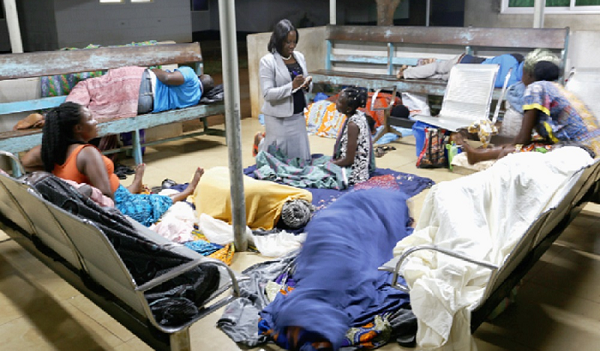
The General Secretary of the Ghana Medical Association (GMA), Dr Richard Selormey, has warned that there is a stark gap between Ghana’s emergency healthcare policies and what occurs in practice, describing the system as dangerously fragmented and in urgent need of reform.
Speaking on Joy FM’s Super Morning Show on Tuesday, 24 February 2026, Dr Selormey said that although policy documents outline clear standards for accident and emergency services, the reality in many hospitals falls far short.
“It is good that you are referencing the policy and the guidelines document,” he said in response to a question about emergency unit requirements. “But there is always a translation from policy into reality.”
According to him, Ghana has “many beautiful policies and guidelines”, yet implementation remains a major challenge.
“If you ask me directly, what happens on the ground is totally different from what exists,” he stressed.
The discussion followed a review of official guidelines requiring hospitals to have functional triage areas, resuscitation units for patient stabilisation, observation areas for up to 24 hours, procedure rooms for minor cases, and ambulance bays.
Dr Selormey challenged Ghanaians to assess the system for themselves.
“You can conduct a survey and visit the facilities to find out how many have these in place, how many even have standby oxygen and the necessary professionals to operate the equipment,” he said.
He identified multiple structural weaknesses, including logistical constraints, poor coordination between ambulances and hospitals, and a disjointed referral system.
Although the National Ambulance Service operates nationwide, he noted that it faces operational challenges, including limited ambulances and coordination gaps between facilities.
“There is no centralised point where we can know how many beds are available and where, in real time,” he explained, describing the system as lacking a proper capacity-tracking mechanism.
Dr Selormey also criticised the referral cycle, stating that patients are often transferred between facilities without proper communication or preparation at the receiving end.
Beyond infrastructure and logistics, he cited demotivated staff and poor health-seeking behaviour among sections of the public as contributing factors. Many patients, he noted, delay seeking care until emergencies arise.
“All these matters combine to give us a system that is very dangerous, which we must treat as a matter of urgency and cure,” he warned.
He called for a concerted effort involving government, the health sector, the public and the media to focus on solutions rather than repeatedly highlighting the problems.
Latest Stories
-
Prioritise cocoa sector with better prices, timely payments-Annoh-Dompreh urges NDC
10 minutes -
Lands and Mines Watch Ghana endorses Heath Goldfields’ mining capacity
25 minutes -
Gbintiri residents protest alleged diversion of 24-hour market project
50 minutes -
Justin Bieber headlines Coachella with nostalgia-fuelled set
52 minutes -
Ukraine and Russia accuse each other of hundreds of ceasefire violations
56 minutes -
Asha Bhosle: The sound of Bollywood dies aged 92
1 hour -
Fire destroys section of 4-bedroom apartment at Tantra Hill
1 hour -
Safe city: Unnoticeable protection
2 hours -
North East Regional Police Commander raises alarm over burning of checkpoints
2 hours -
Free Primary Healthcare Programme set for take-off — Health Ministry confirms readiness
2 hours -
3 co-wives, 5 children perish in canoe disaster – Maritime Authority insists life jackets use mandatory for all water transport
3 hours -
Iran war lands ‘triple blow’ to flood-ravaged Sri Lankans
3 hours -
Gunmen kill at least 11 people at Afghanistan picnic spot
4 hours -
Woman, 25, in court for stealing baby at Bogoso
4 hours -
Trump unveils giant gold-accented victory arch design for US capital
4 hours