

Audio By Carbonatix
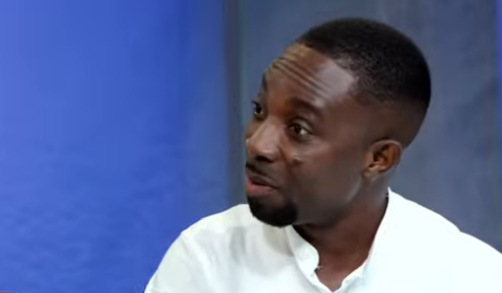
The Director of Communications for the Bawumia Campaign Team, Dennis Miracles Aboagye, has criticised the Mahama administration for what he describes as the government's failure to present a clear and comprehensive strategy to address the perennial flooding problem in Accra.
Speaking on JoyNews' AM Show on Monday, Mr. Aboagye argued that the government was merely lamenting the situation instead of outlining practical solutions to reassure residents affected by recurring floods.
According to him, leadership is responsible for safeguarding the welfare, safety, and prosperity of citizens, and governments must be held accountable for delivering on those expectations.
Mr Aboagye stated that citizens entrust their resources, freedoms, and rights to elected leaders with the expectation that they will provide direction and ensure national progress.
"A country entrusts its resources, freedoms, and rights to a select few so that they can guide the people and lead them towards prosperity, growth, and safety," he said. "So when the leaders we have given that responsibility are merely lamenting to us, it becomes a serious problem."
He further contended that the government had failed to communicate a clear roadmap for resolving Accra's flood challenges despite being fully aware of the city's vulnerabilities.
"They have failed to tell the people of this country what their roadmap is in solving flooding in Accra. A clear-cut roadmap. We are in a hopeless situation," Mr. Aboagye said.
The Bawumia campaign spokesperson also dismissed suggestions that the current administration was only now appreciating the scale of Accra's flooding problem, noting that President John Dramani Mahama had previously served as president and therefore possessed first-hand knowledge of the issue.
"This government should not pretend as if they just came into office and all of a sudden they are realising how Accra is," he stated.
Recalling the devastating June 3, 2015, disaster, which claimed numerous lives and caused widespread destruction following severe flooding and an explosion at a fuel station in Accra, Mr. Aboagye argued that the tragedy should have provided important lessons for future flood mitigation efforts.
"Our president has been president before. In fact, one of the most devastating flood disasters this country has seen in its history happened under his presidency during his first term," he said.
Mr Aboagye further questioned the effectiveness of measures announced in the aftermath of the disaster, noting that former President Mahama had pledged to re-engineer Accra and established a committee to address the situation.
"His Excellency John Dramani Mahama, immediately after the June 3 disaster, set up a committee. In fact, he indicated that he was re-engineering Accra. What happened?" he asked.
He argued that the continued occurrence of severe flooding in the capital raises questions about whether the interventions introduced after the tragedy achieved their intended objectives.
Mr. Aboagye maintained that many Ghanaians supported President Mahama's return to office because they believed his previous experience would enable him to tackle long-standing national challenges more effectively.
"One of the reasons why a lot of Ghanaians went to vote for His Excellency John Dramani Mahama was because they felt that he would have learned something from the experience he had in the past," he said.
He noted that experience featured prominently in President Mahama's campaign message and was a key factor behind the confidence many voters placed in him.
"Eight years in opposition, you come into office with experience. In fact, His Excellency said during the campaign period that we want experience. It was one of his mantras, and a lot of people bought into it," he added.
According to Mr. Aboagye, the president's substantial electoral victory reflected the high expectations many Ghanaians had for his administration.
"People were very hopeful. A 1.7 million vote difference speaks a lot. It is a huge mandate," he observed.
He also questioned why the government was still identifying flood-prone areas several months into its tenure, insisting that such assessments should already have been completed, given President Mahama's previous experience.
"A president that some people believed in and voted for on the back of your experience, you spend one and a half years out of your few years in office identifying hotspots. That is where the problem is," he said.
Mr. Aboagye urged the government to focus on presenting practical solutions and clear timelines rather than attributing blame to citizens for building in waterways or failing to adhere to planning regulations.
"Tell the people what your roadmap is in ensuring that moving forward, when it rains for 30 minutes, they will be able to get to their homes. That's what they want to hear," he stressed.
He maintained that the responsibility for preventing future flooding and ensuring effective urban planning rests with state institutions, which must provide residents with a clear strategy and measurable actions to address the recurring challenge.
Latest Stories
-
Tiptoe Lane’s tech takeover: The story behind Ghana’s booming informal phone market
44 minutes -
Abanga vows to use social media to counter NDC messaging ahead of 2028 elections
46 minutes -
Okai Mintah seeks Sabah Zita Benson’s support for NDC National Youth Organiser bid
60 minutes -
Okai Mintah vows to strengthen NDC campaign machinery ahead of 2028
1 hour -
Mother of four and Jasikan teacher among new Telecel M’ahitti Promo winners
1 hour -
International Youth Shakers Conclave 2026 set to bring global young leaders to London
1 hour -
Gov’t is committed to addressing teachers’ conditions of service, deprived-area allowance – Education Minister
1 hour -
GoldBod’s structure encouraging galamsey – Afenyo-Markin
1 hour -
Tullow starts selling Jubilee, TEN crude to Ghanaian refineries
1 hour -
Local Government Service authorises rationalisation, redistribution of staff
1 hour -
PURC assures consumers of working to ensure quality services in Northern Region
1 hour -
Ghana develops US$4.28bn water financing framework
2 hours -
Christian Council calls for protection of mission schools’ religious identity
2 hours -
Mahama holds discussions with India’s External Affairs Minister
2 hours -
Even when you cough, they come after you — Abanga accuses Mahama govt of criminalising free speech
2 hours