

Audio By Carbonatix
For years, the Tema Oil Refinery stood as a symbol of uncertainty—caught between arguments for privatisation and calls to preserve it as a national asset.
Once labelled a burden on the state, the refinery is now showing early signs of a comeback, though the journey remains far from complete.
What is unfolding today is not a simple recovery story. It is the result of a long cycle of setbacks, missed opportunities, and a determined push to rebuild an institution many had already written off.
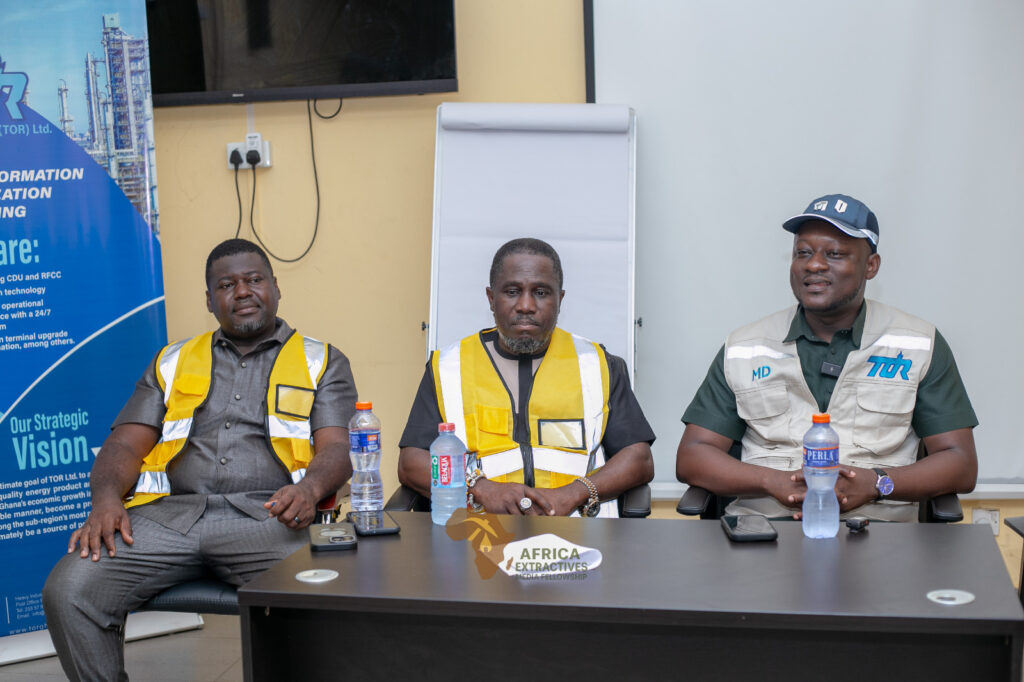
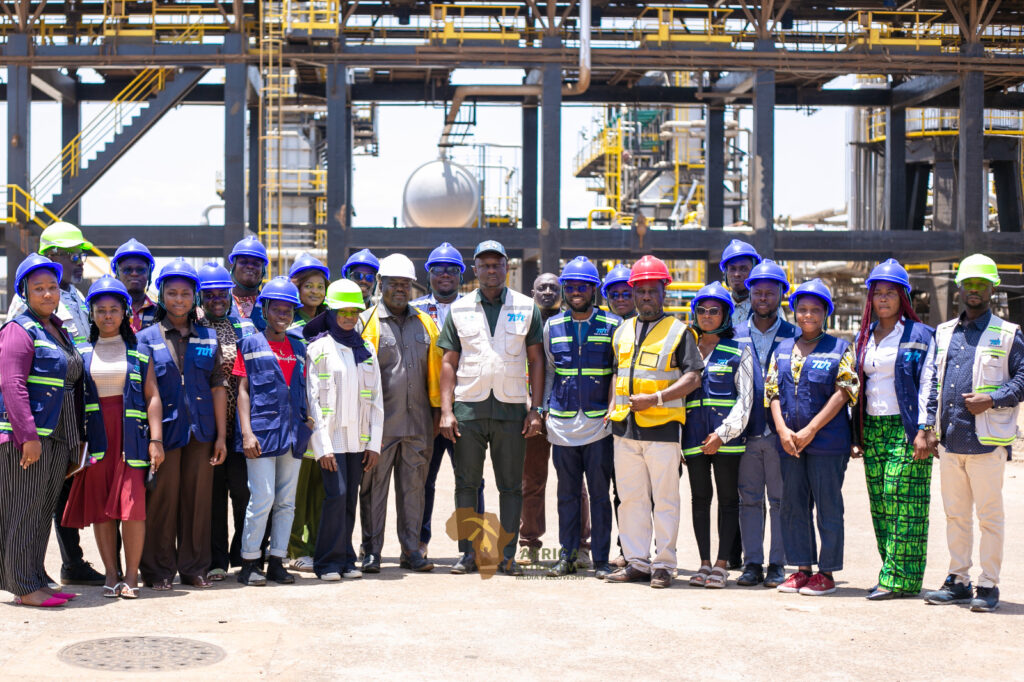
When members of the Africa Extractives Media Fellowship visited the facility, they encountered a leadership team eager to tell a different story—one of rebuilding rather than decline.
At the centre of that effort is Managing Director Edmond Kombat, whose account reveals just how fragile the refinery’s situation had become.
From Promise to Breakdown
Nearly a decade ago, during the tenure of John Dramani Mahama, the refinery was already under financial pressure. Mounting debt threatened its survival, forcing government intervention through the Energy Sector Levies Act. That move reduced liabilities significantly and offered a pathway to recovery.
At the time, there were tangible signs of progress. Crude was being processed, infrastructure upgrades were underway, and a structured plan aimed at stabilising operations had been outlined. The refinery was not thriving, but it had direction.
That momentum, however, did not last.
Years of Stagnation
By 2025, when Kombat stepped into leadership, the refinery had slipped into a far deeper crisis. Operations had stalled entirely.
The equipment had deteriorated. Financial discipline had broken down.
Debt had surged again, while basic accountability—such as audited financial statements—had been neglected for years. Workers faced delayed salaries, and retirees were still waiting for benefits owed long ago.
Even more damaging was the internal atmosphere. Experienced staff had exited, leaving gaps in expertise. Those who remained operated in an environment marked by low morale and mistrust.
Ironically, the refinery was not entirely devoid of income. Certain assets continued to generate revenue, but the lack of transparency around those funds only deepened concerns about governance.
Starting Over Without a Safety Net
Faced with limited external support, the new management team chose a different path: rebuild the organisation using its own resources.
The first challenge was cultural, not technical. Rebuilding trust became the foundation of everything else. Long-standing staff grievances were addressed, promotions regularised, and modest financial improvements introduced.
These steps signalled a shift in leadership approach and helped stabilise the workforce.
From there, attention turned to restoring activity. By improving operational efficiency and re-engaging industry players, the refinery began to generate income internally. It was a gradual process, but one that started to change perceptions.
The technical revival followed.
Engineers at the company worked to bring critical systems back online, culminating in the restart of the refinery’s core processing unit in late 2025—a milestone marking its return to production after years of inactivity.
Rebuilding Capacity and Confidence
Since resuming operations, efforts have focused on repairing infrastructure, upgrading systems, and preparing key processing units for full functionality. At the same time, new employment opportunities have emerged, alongside initiatives to train younger workers and rebuild lost expertise.
The refinery’s leadership argues that its importance goes beyond commercial returns. With its storage capabilities, fuel processing capacity, and links to regional supply networks, it plays a strategic role in Ghana’s energy security—particularly in a world where global supply disruptions remain a constant risk.
Not Yet a Success Story
Despite the progress, the refinery’s recovery is still in its early stages. Many of the structural challenges that contributed to its decline have not been fully resolved.
What has changed, however, is the trajectory. The facility is no longer idle, and a sense of purpose has returned.
For Kombat and his team, the goal is not just to revive operations, but to challenge a broader assumption—that state-owned enterprises are destined to fail. Whether that ambition is realised will depend on whether the current momentum can be sustained.
For now, the story of the refinery is no longer about collapse. It is about whether a second chance can become a lasting transformation.
Latest Stories
-
Power restoration fault suspected in Kumasi Central Market fire
2 hours -
The 7-foot giant of Ngleshie Amanfro: Seven-foot Ghanaian Ephraim Saawa dreams of joining the national basketball team
3 hours -
Government promises support for Kumasi Central Market fire victims
3 hours -
Vibes The Movie: Big Ghun’s Ghanaian film earns five nominations at 2026 REFFA
3 hours -
MamaCare CEO warns unresolved conflicts among health workers could undermine maternal and neonatal care
4 hours -
Health professionals urged to translate medical knowledge into practice to save mothers
4 hours -
Conflicts among care providers linked to maternal, neonatal deaths – Expert
5 hours -
GIS marks 10th TIME conference, champions improved teaching practices
6 hours -
BRICS Or Balance? What Ghana’s bid really means
6 hours -
GPRTU wants full TRAFFITECH-GH implementation to start in 2027
6 hours -
Mahama announces plans to import electric wheelchairs for PWDs
6 hours -
KGL U17 Colts 2026: Western beat Prempeh Elite Academy to set up final final with Greater Accra Region
7 hours -
Late Solanke strike salvages 10-man Spurs draw at Man United
7 hours -
Gender Ministry to monitor welfare of Nana Akua Addo’s children amid domestic violence case
7 hours -
Benedict Okyere Yeboah: Ghana’s football problem goes beyond sacking a coach
7 hours