

Audio By Carbonatix
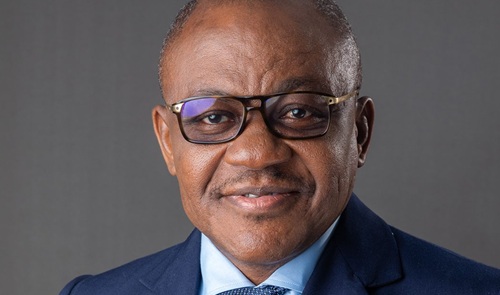
The Chief Executive Officer of the Fair Wages and Salaries Commission (FWSC), Dr George Smith-Graham, says the current impasse between the government and the Ghana Registered Nurses and Midwives Association (GRNMA) is not the fault of any one institution but rather legal and fiscal constraints.
Speaking on JoyNews’ The Pulse on Tuesday, June 10, Dr Smith-Graham appealed to the striking nurses and midwives to return to work to allow negotiations to continue.
According to him, the Fair Wages and Salary Commission is committed to resolving the dispute but needs cooperation from all parties involved.
“We have started engaging; it’s not difficult. The most important thing is for them to call off the strike. We have appealed to them to call off the strike, and once they do that, we will continue with our engagement,” he said.
Dr Smith-Graham explained that the collective agreement was signed in May 2024 and was immediately forwarded to the government for implementation.
However, implementation was halted due to a court injunction tied to a legal challenge against the government.
“It is no fault of anybody that we have not been able to implement the conditions of service up to today,” he explained.
“Just around that same time, the government was injuncted by a court injunction not to implement the signed conditions of service. So the government was injuncted and Fair Wages was injuncted, including all the institutions that were supposed to implement the conditions of service.”
The court process, he said, dragged on until January 2025, noting that after arbitration was concluded, the FWSC was directed to proceed with implementation.
However, he stated that because the national budget for 2025 had already been submitted to Parliament in advance, the agreed terms could not be captured.
Dr Smith-Graham further revealed that even the major teaching hospitals, which are typically autonomous in some of their budgetary planning, could not make provisions for the agreement in their internal budgets, compounding the challenge.
He proposed two pathways out of the deadlock.
“Our options on the table are two: Call off the strike, come back, and let’s continue with the engagement. The second is that these conditions of service were signed in May 2024, and if it was not budgeted for, our proposal is that let’s shift the period of the implementation to January 2026 so that the expiry date of the conditions of service can be shifted to December 2028. So you will enjoy the full two-year implementation of your conditions of service, and the government will also have the fiscal space.”
The strike by nurses and midwives, now in its second week, has had severe impacts on health service delivery nationwide.
Government negotiators are urging restraint and continued dialogue, while GRNMA has insisted that it will only return to work once implementation begins.
Latest Stories
-
Inflation to average 11.3% in 2027 – Fitch Solutions
24 minutes -
I didn’t campaign for NDC to come and do this nonsense – Kpebu on EOCO
25 minutes -
Fitch Solutions maintains its policy rate forecast of 14% by December 2026
32 minutes -
Diaspora Nasara Caucus congratulates Mohammed Ali Suraj, new NPP executives
2 hours -
Dr Antwi-Boasiako’s cybersecurity book showcased at UN crime prevention congress
2 hours -
We will empower the grassroots and protect every vote – NPP’s 1st Vice Chair Kojo Bamba
2 hours -
I do not see myself as better than anyone – NPP’s 1st Vice Chair Kojo Bamba
3 hours -
Police blur the line between invitations and arrests – Reindorf Twumasi Ankrah
3 hours -
Turning invitations into arrests is making citizens reluctant to assist police – Twumasi Ankrah
4 hours -
The Traffitech-GH SMS spot-fine system: The good, the sad, and the funny – Bright Simons writes
4 hours -
Hawa Koomson pledges experienced and mature leadership of NPP women’s wing
5 hours -
Young woman found dead at Kasoa Peace Town
6 hours -
Playback: The Law examined lawful arrest in Ghana
6 hours -
Mahama urges African governments to treat healthcare as an investment, not budget cost
7 hours -
Bawumia congratulates John Boadu and new NPP executives, pledges support ahead of 2028
7 hours