

Audio By Carbonatix
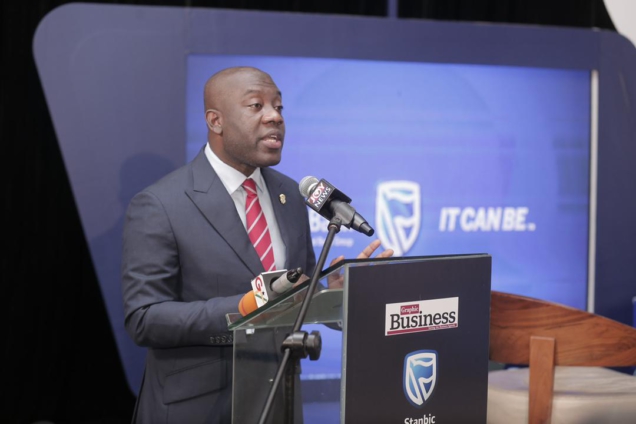
Information Minister, Kojo Oppong Nkrumah has highlighted the key role played by the mass media and marketing communications in the country’s quest to achieve economic growth post-Covid-19.
Speaking at the Graphic Business-Stanbic Bank Breakfast Meeting on Tuesday, Mr Oppong Nkrumah tasked the media to preach the importance of supporting the government in these critical times, particularly, those who refuse to pay taxes.
According to him, government is executing some policies to revamp the economy, however, it cannot achieve its objectives if the public fails to contribute its quota.
“Government will not even make an effort to pretend it is a walk in the park. They require difficult, unpopular decisions and a lot of public goodwill if they are to succeed.
“You [media] have to convince the 33,000 engineers, lawyers accountants and other professionals who are not known to the Tax database, yet demand that you fix everything around at a go, that they have to pay their due if we are to rake in the outstanding 10% of GDP that is not coming to the national treasury and reduce borrowing some more,” he said.
On government’s measures against Covid-19, the Minister charged the media to propagate the need for citizens to get vaccinated and abide by the safety protocols in order for the country to win the fight against the pandemic.
“In a robust media and democratic culture like ours, You have to convince the citizen who will not protect himself and could die if not vaccinated, yet who rightly holds you to live up to the full text of the law, that, you have to do all you can to procure a vaccine to protect his life?
“You have to convince the very person who refuses to wear the mask that the economy needs to be re-opened so he doesn’t go hungry,” Mr Oppong Nkrumah said.
Whilst recognizing that the media needs support to survive the effects of the Covid-19 pandemic, Mr Oppong-Nkrumah asked the media to deliver the right information that will make the country attractive to investors.
“How we report the aims the strategies and the evaluation of policy interventions can fuel or distort the picture of and for the general public. And in return becomes the new stimulus of how the economic actors, the general public, and even the governments further act in this recovery cycle.
“For any set of interventions to be successful as has been observed, it must gain the goodwill and support of the people,” he said.
Latest Stories
-
Total expenditure as of July 2026 amounted to GH¢147.07bn, 16% below target – BoG
2 hours -
Total revenue & grants stood at GH¢144.5bn in July 2026, slightly below target – BoG
3 hours -
Ghana Sports Fund urges sports federations to submit credible proposals and measurable targets
3 hours -
Sally Rooney books withdrawn in UK over Palestine Action support
3 hours -
Musk says US government may be behind slowdown of Ukraine drone speeds
3 hours -
Picking Chief Justices nearing retirement could give Mahama immense power – Bentil
3 hours -
Netflix to shed 1,000 jobs in steepest cuts since 2022
4 hours -
Burnham had two hospitality dinners with Man City chairman, deleted records show
4 hours -
Semenyo ‘froze’ after alleged racist abuse, court told
4 hours -
‘Shameless’ – Mourinho critical of Vinicius Jr ban timing
4 hours -
Loyalty can outweigh competence in Chief Justice selection – Bentil
4 hours -
Man City suffer as PSG masterclass sets up Champions League win
5 hours -
Customer Service Africa CEO urges business leaders to observe staff and customer interactions
5 hours -
On night of mayhem for Liverpool, Barcola arrives in style
5 hours -
Muzic Mensah finds healing and renewed love in new single ‘WayƐ Late’
5 hours