

Audio By Carbonatix
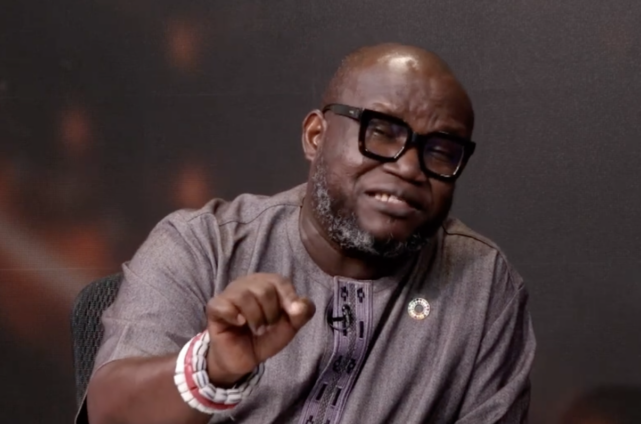
Convener of the Media Coalition Against Illegal Mining, Dr Ken Ashigbey, has criticised the continued failure to stop galamsey, saying the country has not honoured those who died while fighting the menace.
His comments come as Ghana marks a year since eight people, including senior military and government officials, died in a helicopter crash while travelling to a programme linked to the fight against illegal mining.
Dr Ashigbey said the continued destruction of water bodies and illegal mining activities a year after the tragedy raises serious questions about Ghana’s commitment to the fight.
“How dare all of us that you have in a year, a police station overlooking a river where galamsey is taking place, and we allow that to happen. How dare all of us that we have these people die?”
He cited an incident of illegal mining along the Bekwai road as further evidence that the problem persists despite repeated promises to tackle it.
“Ask Erastus Asare Donkor what we are calling the responsible mining that they are going to launch when he speaks to a man who is mining in a waterway by the Bekwai road, just by the road, and nothing is happening to him.”
Dr Ashigbey also pointed to illegal mining activities along the road from Bonsu through Enyinem to Osino, describing the operations as being conducted openly.
“How dare all of us that on the road from Bonsu through Enyinem, through Osino, and hidden in clear sight, people are just doing these things with reckless abandon.”
He said the situation has left him questioning whether Ghanaians have truly honoured those who died in the fight against illegal mining.
“So for me, unfortunately, including myself, I’m not too sure we’ve honoured them.”
Dr Ashigbey recalled comments by the wife of the Deputy Director General of NADMO, saying the country should by now be “bowing our heads in shame.”
He also questioned the effectiveness of government assurances that the fight against illegal mining would be intensified.
“And let me give you another example in what you just said. One of the ask that we had as civil society of the President, which he told us that was going to be happening, is the fact that they were going to publish the water quality result on a monthly basis.”
According to him, the failure to regularly publish water quality data prevents citizens from knowing the condition of the water they consume.
“But now we go to a state entity that is paid with, you know, and they don’t think that we need to know that the water that we are drinking is it because those who are running it are part of the people who are importing water, and that’s what they are drinking.”
Dr Ashigbey said the consequences of illegal mining are already evident, citing the water treatment plant at Kyebi.
“But we can tell you that if you go to Kyebi currently, the water treatment plant is shut. It is because the turbidity of water you can’t you can you can’t operate it because what will go into it will be sludge.”
He concluded that Ghana has failed to honour those who died in the fight against illegal mining.
“So definitely, from what we are seeing, we have unfortunately not honoured these people who have died in the quest of saying that they are going to save all of us our lives. We have not honoured them.”
Latest Stories
-
DVLA records GH¢25 million surplus in 2025 as contributions to state funds reach GH¢98.1 million
3 minutes -
Over 10 suspected scam centre kingpins arrested and remanded – CSA
7 minutes -
Ministers, CEOs, policymakers to grace 7th Africa Public Sector Conference in Accra
9 minutes -
NDC sets filing fees for national executive elections, with chairman aspirants paying GH¢100,000
11 minutes -
Muntaka urges Ghanaian cannabis growers to form cooperatives under licensed cultivation framework
20 minutes -
84 suspected drug offenders in custody as NACOC freezes nearly 73 assets – Muntaka
30 minutes -
Immediate reconciliation key to building united NPP — COKA
33 minutes -
MPs, CSOs push for dedicated budget line for malaria
34 minutes -
Jeffrey Nortey’s viral Kanayo O. Kanayo bar gets the legend’s attention, leads to a meet-up
35 minutes -
Bagre Dam’s Annual Floods: Scientists seek a lasting solution as Northern Ghana’s farmers count the cost
36 minutes -
Why Corporate Communications Professionals Must Be Marketing-Oriented: The strategic advantage and the professional mileage
46 minutes -
DVLA hands 357 suspected cloned vehicles to GRA over customs duties
47 minutes -
Appeals will not end strike, FWSC must negotiate – GAUA General Secretary
53 minutes -
Haruna Iddrisu hails Ghana’s academic calendar as best in a decade
54 minutes -
Silent Football: A team, a dream, a $24,000 debt – the struggles of Ghana’s deaf footballers
55 minutes