

Audio By Carbonatix
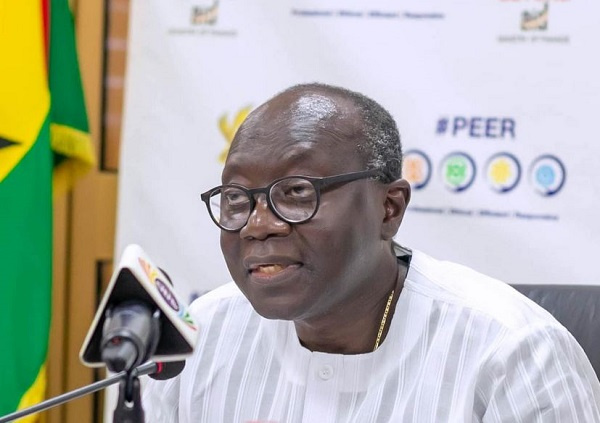
The Finance Minister, Ken Ofori-Atta, is optimistic that the board of the International Monetary Fund (IMF) would approve the second tranche of the country’s deal with the Fund.
Speaking on the business edition of JoyNews’ PM Express, the Minister said he has engaged external creditors who have, in turn, given him positive assurances about the fate of Ghana’s debt restructuring programme in the coming weeks.
It is on the back of these, that Mr Ofori-Atta remains hopeful that the country would successfully get the Fund’s Board to approve the second tranche of its financial support. The IMF Board is expected to meet in November 2023, to consider the second tranche of $600 million for Ghana as part of the Fund-support programme.
“My deep sense is that we will get whatever is appropriate for the Fund Board to be able to make their decision in November. I am confident about it. And yes, we did meet with the officials from Paris Club and there was pretty positive assurance.
“I also had the opportunity to meet the Governor of the PPOC of China which is their central bank and his assurances were also very positive. So really, I am confident that we would get to the Board and it will approve our next tranche,” he told George Wiafe on Thursday.
Ghana is eagerly anticipating the arrival of its second tranche of financial support from the IMF. However, the country faces a hurdle as it is mandated to restructure its external debt as a prerequisite for the aid package. Failure to comply with this requirement could potentially lead to a delay in the disbursement.
Since the Covid-19 pandemic, Ghana has been grappling with the economic fallout which has exacerbated its fiscal challenges and elevated the importance of external financial support.
The IMF's assistance is therefore vital for stabilising the country's economy, addressing budget deficits, and mitigating the adverse effects of the pandemic on citizens.
On Wednesday, May 17, the first tranche – $600 million – of the $3 billion was credited to Ghana’s bank account.
The funds were used for the balance of payment and budget support, as well as to stabilise the foreign exchange rate and control inflation.
Latest Stories
-
Total expenditure as of July 2026 amounted to GH¢147.07bn, 16% below target – BoG
33 minutes -
Total revenue & grants stood at GH¢144.5bn in July 2026, slightly below target – BoG
49 minutes -
Ghana Sports Fund urges sports federations to submit credible proposals and measurable targets
52 minutes -
Sally Rooney books withdrawn in UK over Palestine Action support
60 minutes -
Musk says US government may be behind slowdown of Ukraine drone speeds
1 hour -
Picking Chief Justices nearing retirement could give Mahama immense power – Bentil
1 hour -
Netflix to shed 1,000 jobs in steepest cuts since 2022
2 hours -
Burnham had two hospitality dinners with Man City chairman, deleted records show
2 hours -
Semenyo ‘froze’ after alleged racist abuse, court told
2 hours -
‘Shameless’ – Mourinho critical of Vinicius Jr ban timing
2 hours -
Loyalty can outweigh competence in Chief Justice selection – Bentil
2 hours -
Man City suffer as PSG masterclass sets up Champions League win
3 hours -
Customer Service Africa CEO urges business leaders to observe staff and customer interactions
3 hours -
On night of mayhem for Liverpool, Barcola arrives in style
3 hours -
Muzic Mensah finds healing and renewed love in new single ‘WayƐ Late’
3 hours