

Audio By Carbonatix
Iowa defended its new immigration law on Monday and argued that the state’s ability to file criminal charges against people did not infringe on federal authority over immigration because local officials would abide by all federal regulations.
Lawyers for the U.S. Department of Justice and a coalition of civil rights groups are seeking a temporary or permanent injunction of the law, which goes into effect July 1 unless it’s blocked by the courts. The law is similar to one in Texas, which has been temporarily blocked, and another in Oklahoma that the DOJ is seeking to stop.
U.S. District Court Judge Stephen Locher said “I’ll do my best” to rule quickly on the injunction request. Locher noted the likelihood his ruling would be appealed, calling it the “first step along this journey.”
The Iowa law would allow criminal charges to be brought against people who have outstanding deportation orders or who previously have been removed from or denied admission to the U.S. Once in custody, migrants could either agree to a judge’s order to leave the U.S. or be prosecuted, potentially facing time in prison before deportation.
Patrick Valencia, Iowa’s deputy solicitor general, told the judge that the state’s law wouldn’t establish new immigration rules but only allow state law enforcement and courts to apply federal law.
“We have a law that adopts the federal standard,” Valencia said.
The lawyers seeking an injunction countered that the Iowa law, approved by state legislators in the last legislative session, said the new rules without question violate the federal government’s sole authority over immigration matters.
“It’s clearly a federal responsibility,” said Christopher Eiswerth, a DOJ attorney.
Eiswerth and Emma Winger, representing the American Immigration Council, said the state law doesn’t make exceptions for people who have been deported before but now are in the country legally, such as those seeking asylum.
Valencia denied that, saying if someone is legally in Iowa under federal rules, the state will not prosecute them.
The law is similar but less expansive than a Texas law, which was in effect for only a few confusing hours in March before it was put on hold by a federal appeals court’s three-judge panel.
Some law enforcement officials and legal experts have said unanswered questions remain about how the law in Iowa would be implemented, since enforcement of immigration law has historically fallen to the federal government and is a binational process.
In court documents, that state said law enforcement would contact the federal government to determine a person’s immigration status since Iowa “does not maintain an independent immigration database.”
It’s up to federal authorities to determine if the person is violating federal law, the state argued. If that’s the case, the state said the person is violating Iowa’s law, too.
While the federal lawsuit alleged that Iowa was interfering with the deportation process and foreign relations by ordering someone to leave, Iowa said the law — Senate File 2340 — only allows Iowa officials to bring migrants “to federal immigration officers at one of Iowa’s ports of entry.”
“Under SF2340, federal officials retain their discretion to offer asylum or other removal relief at U.S. ports of entry,” the state argued, adding that the federal government would still decide where people should be sent if they are deported from Iowa.
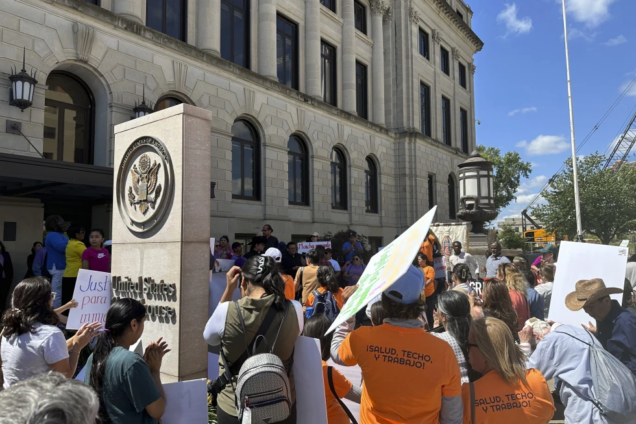
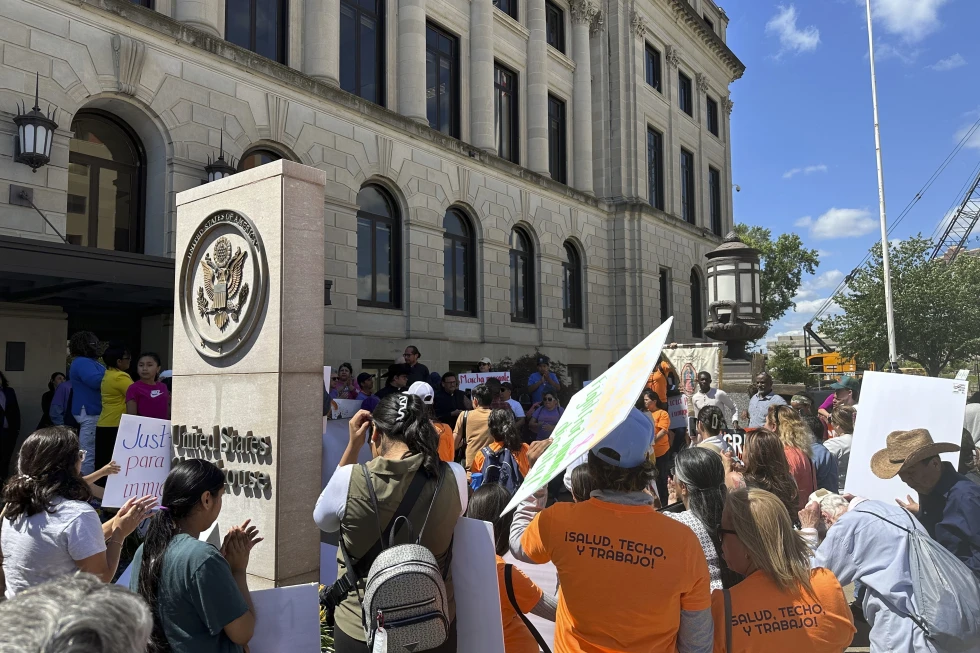
Outside the hearing, more than 100 people held signs and listened to brief speeches in Spanish and English that opposed the new law and called for people to care for each other.
Erica Johnson, executive director of the Iowa Migrant Move for Justice, said the country needs a workable immigration system but that the Iowa law worsens matters.
“It’s unworkable. It’s creating fear and driving misinformation in immigrant communities around our state,” Johnson said. “Supporters of the law say they passed it because they were tired of the way the federal government was handling immigration but this law is no solution to that.”
Latest Stories
-
Prioritise cocoa sector with better prices, timely payments-Annoh-Dompreh urges NDC
12 minutes -
Lands and Mines Watch Ghana endorses Heath Goldfields’ mining capacity
27 minutes -
Gbintiri residents protest alleged diversion of 24-hour market project
52 minutes -
Justin Bieber headlines Coachella with nostalgia-fuelled set
55 minutes -
Ukraine and Russia accuse each other of hundreds of ceasefire violations
59 minutes -
Asha Bhosle: The sound of Bollywood dies aged 92
1 hour -
Fire destroys section of 4-bedroom apartment at Tantra Hill
1 hour -
Safe city: Unnoticeable protection
2 hours -
North East Regional Police Commander raises alarm over burning of checkpoints
2 hours -
Free Primary Healthcare Programme set for take-off — Health Ministry confirms readiness
2 hours -
3 co-wives, 5 children perish in canoe disaster – Maritime Authority insists life jackets use mandatory for all water transport
3 hours -
Iran war lands ‘triple blow’ to flood-ravaged Sri Lankans
3 hours -
Gunmen kill at least 11 people at Afghanistan picnic spot
4 hours -
Woman, 25, in court for stealing baby at Bogoso
4 hours -
Trump unveils giant gold-accented victory arch design for US capital
4 hours