

Audio By Carbonatix
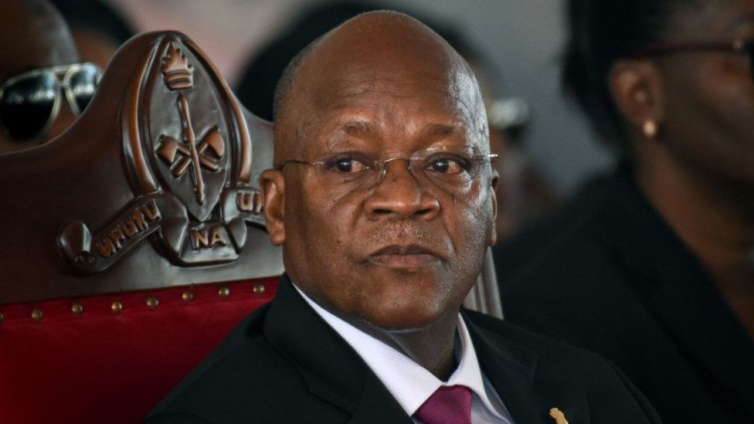
The late Tanzanian President John Magufuli was in his element on 24 February while unveiling a massive road project in Dar es Salaam - an accomplishment he boasted could only be achieved by the ruling CCM party.
"It was completed on time because no-one used corona as an excuse to delay it," he said, while applauding the contractors and also instructing government officials not to entertain anyone using the pandemic as an excuse to postpone the delivery of projects.
This one was no different to previous public functions - a choir serenaded him, and he ended it with a characteristic speech extolling his mantra of Hapa Kazi Tu (Work is My Only Focus).
"Tanzania is a rich country, we have to use our wealth in order to develop," he said in his remarks, which also chastised tardiness and exhorted Tanzanians to pay their taxes. Three days later Magufuli would be seen in public for the last time.
Since his first election in 2015, Magufuli cultivated the image of an rambunctious action man, a departure from his predecessors' demure and stately style.
His interventionist - supporters called it "hands-on" - leadership style won him fans beyond Tanzania, especially in the East African region, where he inspired the #WhatWouldMagufuliDo Twitter hashtag, praising his no-nonsense approach to fighting corruption and tirelessly following up infrastructure projects to ensure they are completed.
What most Tanzanians cared about, his fans argued, was service delivery and Magufuli's populist governing style was effective and a model for other African leaders.
A man of the people
His supporters will miss the hours-long road trips he embarked on across the country which involved multiple stops so he could speak with the public.
These trips, which unnerved government officials, were often broadcast live on TV and became popular with some Tanzanians who saw them as an opportunity to get instant redress to their problems.
Crowds of people often gathered and shuffled around the presidential convoy on close watch of the heavily armed bodyguards.
Those who were determined got a chance to ask him questions, but most people used the opportunity to plead with the president to intervene on a myriad of issues such as fixing delayed road projects, never-ending court cases, complaints about water supply, or grievances against local officials.
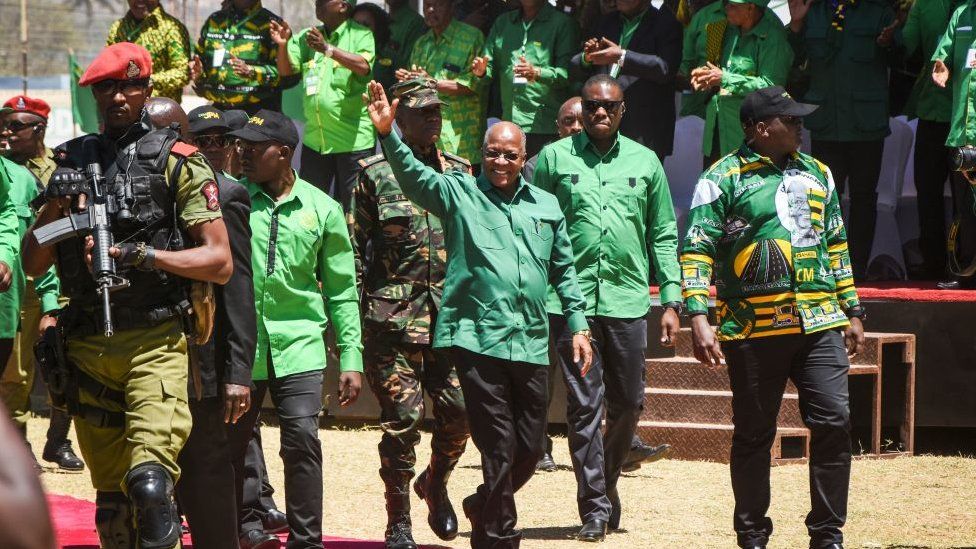
Standing out of the sunroof of his armoured vehicle, with a microphone in hand, Magufuli listened and sometimes asked follow-up questions. His responses were mixed but by the time he was done, a new policy would have been proclaimed, an official either sacked or promoted, or the person who asked the question humiliated.
He once berated a man in a Dar es Salaam neighbourhood who had complained that it was expensive to use public toilets: "Then leave your faeces at home," he answered back, to great amusement and consternation.
Political opponents, neighbouring countries, mining firms, Western nations and anyone he viewed as undermining Tanzanian interests were also targets of his abrasive governing style.
Critics said he was an autocrat with thin skin, a man obsessed with building a personality cult and who did not entertain any slights or jests whether from musicians, comedians or commentators on social media.
He instilled such fear in the country that even during his more than two-week absence from public, his draconian policies continued unabated - police arrested those who speculated about the president's whereabouts or asked simply: Where is Magufuli?
This state of affairs is something of a contradiction to his casting himself as a defender of the dignity of Tanzanians.
He also muzzled Tanzanian media, shutting down several newspapers, radio and TV stations as well as social media platforms simply for reporting what the government didn't like.
He was also criticised for implementing policies such as banning girls who got pregnant from going to school.
But it was his handling of the coronavirus pandemic that was arguably his most damning failure.
In his latter days he hectored critics who didn't buy his narrative about the country being "covid-free" - a stance which was surprisingly in contrast to his sober, science-led approach during the early days of the pandemic.
Magufuli, a former chemistry teacher, would later push conspiracies about plots to harm Tanzanians while expressing doubt about the safety of masks and vaccines.
At one point he sent papaya and goat meat samples to be tested for Covid-19 and used the results to justify his denial of the virus.
The true cost of this negligence and dereliction of duty can be counted in the number of lives lost as a result.
Strongmen or strong institutions
There will be vigorous debate in Tanzania about Magufuli's legacy and whether his successor should stay the course or change.
This debate cannot be divorced from the divide about whether the continent needs strongmen or strong institutions.
Magufuli appealed to many because he was unencumbered by institutional limits. He issued edicts and things happened and to many citizens who had grown frustrated by incompetence in government, this was refreshing.
But equally many Africans want to live in law-based countries, to enjoy a life of dignity free of brutality, to have leaders who govern honesty and truthfully, and a government that respects them and does not hide information about their president's health.
Mr Magufuli's death has been blamed on "heart problems" but many will still suspect that he succumbed to Covid-19.
It is an irony that the pandemic he strenuously denied has outlasted him, turning his once-heralded presidency into a cautionary tale for the region and the continent.
Latest Stories
-
Societe Generale Group agrees to sell Ghana subsidiary to Attijariwafa Bank
6 minutes -
Accra: Fire breaks out in North Industrial Area at Avenor
12 minutes -
Measure food systems progress not only by productivity but also ability to deliver healthy diets – AGRA
27 minutes -
Black Stars: Seven years of decline while hashtagging love
39 minutes -
Today’s front pages: Thursday, October 1, 2026
39 minutes -
Gov’t to suspend GH¢1 D-Levy on diesel for October and November
1 hour -
Fire destroys belongings in Akweteyman apartment
2 hours -
Baffour Awuah to turn himself in to EOCO today – JoyNews sources
2 hours -
Government identifies payment discrepancy holding up teachers’ strike resolution
2 hours -
BoG signals no FX intermediation for October as GoldBod plans $1bn support for banks
2 hours -
When share ownership becomes personal: The African mindset of the Dangote IPO
2 hours -
Why MFWA Legal Fund matters to Ghana’s democracy
2 hours -
Fuel prices to rise from October 1; diesel could hit GH¢19.60 – COMAC
2 hours -
Parliament must investigate how 3.9 tonnes of cocaine left Ghana undetected – Samuel Jinapor
2 hours -
Government pledges to pay striking teachers as payment dispute is resolved
3 hours