

Audio By Carbonatix
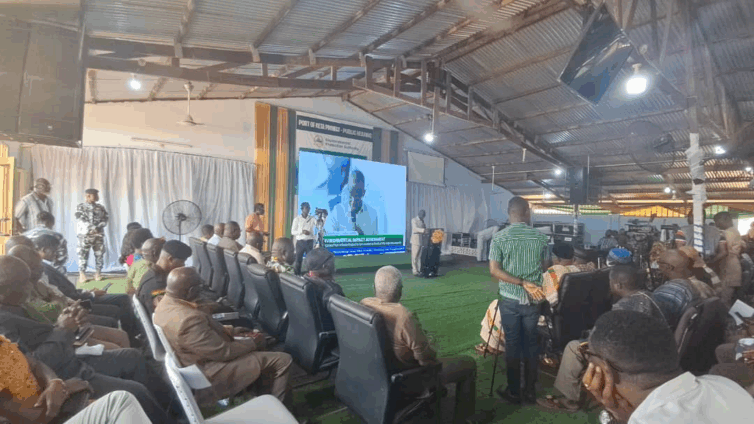
Ghana’s commitment to responsible environmental governance and sustainable infrastructure came into sharp focus as stakeholders converged at Dzelukope in the Volta Region for a crucial public hearing on the proposed Keta Port Development Project.
The event, held at the Global Evangelical Church, Bethel Chapel, brought together state authorities, traditional leaders, Members of Parliament, engineers, environmental experts, and community representatives in a landmark dialogue that underscored the balance between national development and environmental stewardship.
EPA Champions Accountability in Environmental Decision-Making
Delivering the purpose of the gathering, Prof. Nana Ama Browne-Klutse of the Environmental Protection Agency (EPA) said the exercise represented a vital step in strengthening transparency and public participation in Ghana’s environmental decision-making process.
She explained that under the Environmental Protection Act, 2025 (Act 1124), the EPA is mandated to regulate, coordinate, and oversee all matters related to the protection of the environment and climate resilience — and that the hearing was in fulfillment of Regulation 24 of LI 2504, which requires public engagement for projects with potentially far-reaching environmental and social implications.
“Our duty is not only to protect the environment but also to promote development that is sustainable, accountable, and informed by science and stakeholder perspectives,” she said.
She stressed that the feedback gathered from the engagement would be critical in determining the final decision on the Keta Port Project, describing the process as “a cornerstone of environmental democracy.”
“Public hearings such as this one affirm our collective right to participate in decisions that shape our environment and future,” Prof. Browne-Klutse emphasised.
A Model for National and Regional Integration
In a separate address, Mr. Johnson Asiedu Nketiah, Board Chairman of the Ghana Ports and Harbours Authority (GPHA), described the Keta Port as a strategic infrastructure poised to transform trade and logistics across the sub-region.
He noted that the project, when completed, will create new maritime trade corridors linking Ghana to Togo, Benin, and Nigeria and enhance the country’s competitiveness in global shipping and logistics.
“This is not just a port for Ghana—it is a gateway for regional commerce, a hub for investment, and a foundation for future industrial expansion,” he said.
Latest Stories
-
Central Regional Minister urges use of religious platforms to change environmental, sanitation practices
4 minutes -
Henry Kweku Banning
5 minutes -
Execution of US murderer Christa Pike halted an hour before it was due to happen
7 minutes -
GoldBod generates US$1.87bn in FX in September, exceeds monthly target
10 minutes -
SOE comments controversy: ‘We must never abandon our humanity because of judicial office’ – CJ
20 minutes -
Samuel Kojo Brace declares intention to contest NPP parliamentary primary in Ahanta West
21 minutes -
Dr Apaak calls for evidence-based education response to emergencies
25 minutes -
Pilot may have sought to crash Israel-bound flight after stabbing other pilot, Netanyahu says
30 minutes -
Report flags potential money laundering, terrorist financing risks among Ghana’s NGOs
30 minutes -
Breast Cancer Awareness Month launched: 2,695 women die from breast cancer annually — Dr Ann-Dadzie
37 minutes -
Mahama’s proposed airline looks to South America, Caribbean as Ghana confronts mounting drug trafficking cases
53 minutes -
5% progress on Suame Interchange Phase One inadequate – Roads Minister tasks contractor to speed up work
55 minutes -
Photos: Vice President joins GAAS Awards to celebrate outstanding women leaders
56 minutes -
OSP vs Ken Ofori-Atta, SML and others: Court gives OSP four more weeks to serve Ofori-Atta with summons
58 minutes -
High Commission sends caution to Ghanaians in South Africa ahead of planned protests
1 hour