

Audio By Carbonatix
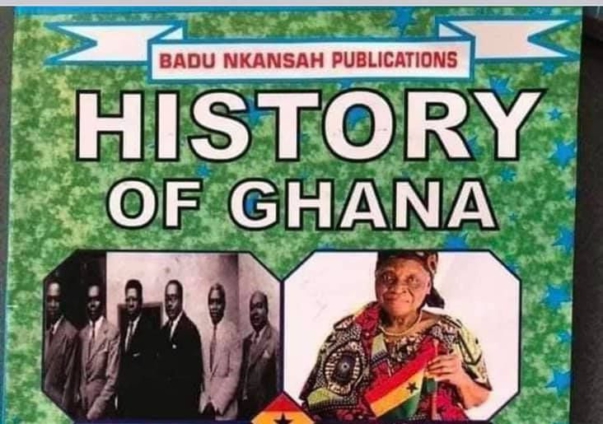
The Bible says in Luke 6:45 (NKJV), “…For out of the abundance of the heart his mouth speaks.” This week, the media landscape has been dominated by the ethnocentric content of some unapproved history and English textbooks. There has been a national uproar and anger against the content, the publishers, government and the National Council for Curriculum and Assessment (NaCCA). And rightly so, I must add.
As part of what one of the publishers, Badu Nkansah Publications, call an ‘apology’, they wrote: “Though it is not a deliberate attempt to berate such a huge section of our society, we wish to unreservedly apologize for the slip.” A slip? “…For out of the abundance of the heart his mouth speaks.” So, you sat down and wrote what you consider to be part of the history of a section of the Ghanaian society, edited it, proofread it, sent it out for official approval, edited it again after you were told “to work on certain aspects of the book further in order for it to meet the expectations of the new curriculum”, and then sent the script to your printers to print hard copies (some of which found their way into the public domain). Just what do you understand by the word, “slip”?
I do not mean to stoke the fire or beat a man when he is down. What has happened must give this country a chance to surgically deal with ethnocentrism and ethnic biases, insults and sterotypes that are more ingrained in our society than we want to admit. What we hear among our friends and colleagues of the same ethnic background, or what other people from other ethnic backgrounds say to us or about us, should tell us that this ethnic demon goes far deeper than we are willing to admit.
I am an Ashanti. I played no role in being born an Ashanti. Whatever the faults and wrongs my forefathers committed against people of other ethnic backgrounds cannot and should not be held against me. Whatever another Ashanti did in the past cannot and should not be used to characterise me. In my lifetime, I have had educational, family, work, neighbourly and emotional relationships with people from the Volta Region, Northern Region, Upper East Region and Upper West Region.
Back in the Ashanti Region and elsewhere in Ghana, I am aware of some of the unsavoury ethnocentric stereotypes that some Akan people associate with people from the other regions listed above. But I also know and have experienced some of the unsavoury ethnocentric stereotypes that some people from those regions hold about people from other ethnic groups, especially Ashantis. I know this because I have been a victim and I know it hurts. That is why I totally associate myself with Ewes and the anger and uproar being expressed by all well-meaning Ghanaians against the content in the Badu Nkansah history book. The current anger and uproar, however, are not enough.
I maintain that what was published in that history textbook was not a mere slip. There are ethnocentric stereotypes held by some people, said in private and used in jokes among friends from the same ethnic groups. And similar ethnocentric stereotypes about other tribes also exist. Let’s not play the ostrich. When I first came out of University as a graduate, I worked with a small audit firm. I once travelled with a senior consultant (now deceased) to conduct an audit in Wa. We shared the same room in a Guest House. As you may know, there are some people who talk in their sleep. I don’t know if he had had a row with the security man at the Guest House before going to sleep. By God, the ethnocentric comments he made in his sleep that night! I was so scared that the security man could have overheard him if he were walking down the corridor.
As unfortunate as the current episode is, it is the tip of a dangerous iceberg that Ghana as a country has to urgently confront. We cannot just deal with Badu Nkansah Publications and think we have dealt with the demon of ethnocentrism in Ghana. We may have to consider setting up a Commission of Enquiry that will conduct public hearings for Ghanaians to open up the wound of ethnocentrism with a view to eventually trashing them, causing a national healing and writing an accurate history of our people. There may be other suggestions on what we must do from here, but what I know is that the problem is deep, the hurt is deep, and the solution must be surgical.
Kwaku Antwi-Boasiako, Accra
March 16, 2021
Latest Stories
-
Yaw Ampofo Ankrah hasn’t taken or received any money to facilitate visas – Lawyer insists
18 minutes -
World Cup visa scandal: Senyo Hosi urges focus on constitutional accountability
18 minutes -
La Beach demolition: Senyo Hosi condemns lack of consultation
29 minutes -
Russian glide bomb attack on Zaporizhzhia kills at least 15 people
44 minutes -
Jinapor warns underperforming energy sector CEOs of consequences, says no protection for failure
46 minutes -
Fire destroys head of tipper truck on Lower Volta Bridge
50 minutes -
Palmer signs new Chelsea contract until 2034
52 minutes -
World Cup visa scandal: Mahama will act on corruption allegations – Abass Nurudeen
54 minutes -
Abass Nurudeen accuses Minority of ‘scandal scavenging’ over World Cup visa controversy
55 minutes -
US Embassy recognised NSA, GFA and GTA as separate entities for visa applications – Sports Minister’s aide
1 hour -
Only 30% of Ghanaian teachers satisfied with their jobs – CAPCOE data reveals
1 hour -
Communities affected by construction of Akosombo Dam urge government to speed up compensation process
2 hours -
World Cup visa scandal: Sports Ministry not shielding anyone – Sports Minister’s special aide
2 hours -
World Cup visa scandal: Over 30 people misrepresented as GTA board members to US Embassy – Vincent Assafuah alleges
2 hours -
Fire destroys wooden structure near Yesu Mo Villa at Bush Road
2 hours