

Audio By Carbonatix
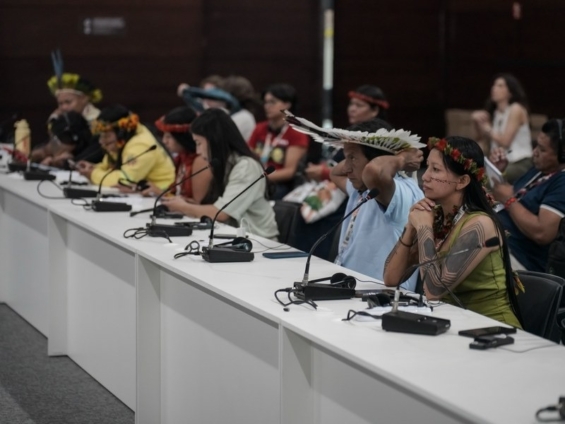
The role of Indigenous peoples in national climate adaptation efforts is gaining stronger recognition, as global leaders and experts at COP30 stressed the need for direct support, land protection, and greater participation of Indigenous communities in climate decision-making.
These issues were discussed during the High-Level Ministerial Event “Indigenous Adaptation” held on Wednesday, November 12, at COP30.
COP30 Special Envoy Ms. Sineia do Vale, who hosted the session, said Indigenous knowledge is essential to climate solutions and global goals.
“Indigenous peoples have been doing millennia-old work in their territories, bringing solutions to climate change. It is important that they can continue living their way of life,” she said.
UNFCCC Adaptation Committee representative Mr. Carlos Ruiz-Garvia agreed, noting that many international agreements—including the Paris Agreement, the Convention on Biological Diversity, and the Global Goal on Adaptation—recognize the importance of Indigenous peoples in climate action.
Speakers stressed that direct climate finance for Indigenous communities is critical for protecting their land and adapting to climate change.
The Green Climate Fund (GCF) also highlighted ongoing efforts to open direct funding channels for Indigenous-led actions.
“Our goal is also to ensure that Indigenous peoples benefit from climate finance — not merely to prevent harm to them,” said Mr. Artur Lacerda, Director of Governance Affairs and Secretary to the GCF Board.
Ms. Lívia Kraemer from the Norwegian International Climate and Forest Initiative (NICFI) said countries should design climate finance policies with Indigenous participation. She pointed to the Tropical Forests Forever Facility (TFFF)—to which Norway has pledged USD 3 billion—as a strong example of support for forest communities.
Land protection was another major issue. Dr. David Kaimowitz from the International Land and Forest Tenure Facility said securing Indigenous land rights is essential for reaching climate targets. His FAO-backed research shows that Indigenous and traditional communities are the most effective protectors of forests.
On Friday, November 14, COP30 will also see the launch of a new adaptation plan created by Indigenous leaders from the state of Roraima in Brazil. The plan is led by Ms. Sineia do Vale, who also serves as Co-Chair of the International Indigenous Peoples Forum on Climate Change (IIPFCC).
“Indigenous peoples offer natural indicators that demonstrate the impact of climate change on the cultural and social lives of communities,” Ms. Sineia said.
This new document is one of the few Indigenous-led adaptation plans in the world and the third in Brazil. It includes detailed traditional knowledge, such as identifying climate-resilient seed varieties and tracking the link between water temperature and native fish populations.
Leaders at COP30 say that protecting Indigenous territories and giving communities direct access to climate finance is not just fair—but essential for global climate progress.
Latest Stories
-
Ghana not seeking full BRICS membership, applying as Partner Country – Ablakwa
10 seconds -
Woman injures three people in third Poland school knife attack in a week
2 minutes -
Ghana should join BRICS as partner, not member – NPP Bono East Regional Secretary
3 minutes -
Ghana High Commission warns nationals in South Africa over protests in Johannesburg, Durban
3 minutes -
Mahama praises Roads Minister for keeping Big Push contractors on their toes
8 minutes -
World Cup Visa Scandal: ‘My client has not collected money for visas’ – Ampofo Ankrah’s lawyer
20 minutes -
US immigration officials defend ICE agents who shot man in same car as child
30 minutes -
Commentator Katie Zacharia picked as new White House press secretary
33 minutes -
Drone strike by Sudan paramilitary kills 41 near Ethiopian border, rights group says
39 minutes -
King warns malicious online actors are evolving tactics
46 minutes -
Several injured as Saudi capital airport reportedly hit again
49 minutes -
Christa Pike discharged from hospital and returned to prison, her lawyers say
51 minutes -
Ghana’s BRICS move requires clear strategy to manage risks – Godfred Bokpin
3 hours -
Pay teachers realistic income – Duncan Amoah to gov’t
3 hours -
Bechem to become chicken capital of Ghana – Mahama projects
3 hours