

Audio By Carbonatix
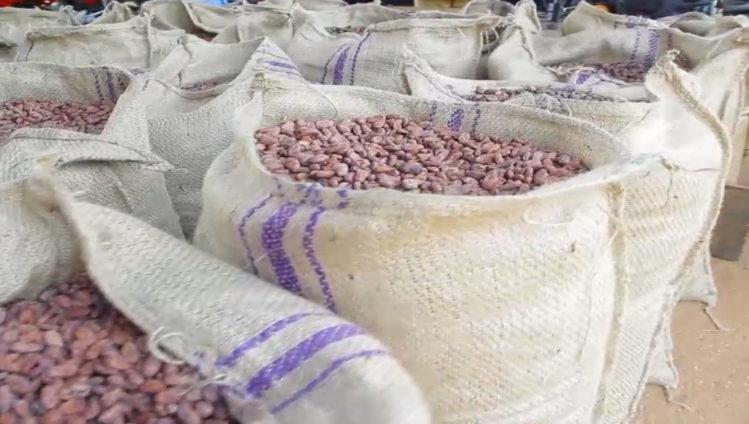
Liberia will be taking a lesson from Ghana and Ivory Coast in developing a sustainable cocoa sector.
Though the economy has been dominated by rubber plantations and large farms, Cocoa has been identified as national priority for export diversification and highlighted in the Liberia National Export Strategy (2014-2018).
However, there are challenges in the country’s cocoa sector, including underdeveloped value-chain, including old and diseased trees, lack of inputs, poor fermentation techniques, limited financing, high labour cost, lack of drying, packaging and drying techniques.
The African Center for Economic Transformation (ACET) and USAID initiated a dialogue on “Regional Collaboration on Overcoming Binding Constraints on the Growth of Liberia's Cocoa Value Chain”.
According to Edward Brown, ACET Senior Director Research, Policy and Programs, “there is the need to look at the regional value chain and how they interface between the various countries policies and regulations.”
“Ghana and Cote d’Ivoire produce almost two-third of world cocoa; Liberia’s cocoa development would further augment that percentage. So there is the need to look at how we situate the Liberian cocoa production, policy and industry to ensure that they have the maximum benefit from the experiences of the other countries,” he noted.
Liberia’s sustainable cocoa
There are over 40,000 farmers growing cocoa in Liberia, and individual farmers cultivate an average three acres of cocoa.
Cocoa is planted along with secondary food crops, allowing for diversification of farm enterprise.
The Liberia Agricultural Sector Investment Plan (LASIP) seeks to diversify the country’s economy through robust agricultural value chains and a modern industrial policy to increase production, productivity and income from 2018-2022.
The Government of Liberia and IFAD also have a $23million financing to boost cocoa production, targeting the Nimba County. This intervention is expected to help increase annual cocoa production to over 10,000metric tons.
Sustainable cocoa sector in Liberia is focused on three areas: Investments and cocoa marketing; Sustainable production and quality control; and Environment and climate change.
The LEPDA Project
The Liberia Economic Policy Dialogue Activity (LEPDA) project is a USAID-funded four-year technical assistance, capacity development, and grants project that aims to foster self-reliance by spurring private sector-led economic expansion in Liberia.
The project is implemented by Nathan Associate in collaboration with the government of Liberia and civil society organizations (CSOs).
The Project convened key players involved in Liberia’s cocoa sector to participate in an inception meeting to help in shaping and executing the research project towards enhancing the cocoa industry in Liberia.
They included government and policymakers, farmer organizations, the private sector, development partners, and the media.
Marcus Williamson, Chief of Party, USAID LEPDA, emphasized that civil society can be policy partners to shape Liberia’s policy direction.
The project therefore seeks to develop the capacity of civil society for the agriculture-based transformation through the value chains.
The CSOs capacity development processes will include a cocoa value-chain study and political economy analysis, which will lead to policy dialogue and the development of a Liberia Cocoa Policy.
The goal is to have an upgraded cocoa value chain as well as capable and credible framework.
The process will include a comparative analysis of cocoa producing economies like Ghana and Cote d’Ivoire, which already have an existing partnership.
Latest Stories
-
Several injured as Saudi capital airport reportedly hit again
1 minute -
Christa Pike discharged from hospital and returned to prison, her lawyers say
4 minutes -
Ghana’s BRICS move requires clear strategy to manage risks – Godfred Bokpin
2 hours -
Pay teachers realistic income – Duncan Amoah to gov’t
2 hours -
Bechem to become chicken capital of Ghana – Mahama projects
2 hours -
Gov’t targets recruitment of 16,500 health professionals in 2026
2 hours -
Two-week strike will not derail academic calendar – GNAT President
3 hours -
Headmaster detained after BBC investigation into alleged sexual abuse of students
3 hours -
GNAT pushes for clear implementation procedures of teachers’ conditions of service
3 hours -
Recurrent strikes threaten quality of education and academic calendars – Prof Bokpin
3 hours -
‘Cockroach’ group leaders among hundreds detained in Delhi protest
3 hours -
Don’t let speed of information become your judgement – CJ tells new lawyers
4 hours -
World Cup visa scandal: People have leveraged public office to facilitate fraud – Senyo Hosi
4 hours -
Glut! Farmers count losses as prices crash, customers happy
5 hours -
GSA postpones auction of unserviceable vehicles
5 hours