

Audio By Carbonatix
The Licensed Cocoa Buyers Association of Ghana (LICOBAG) has raised alarm over deepening financial challenges and a flawed sales strategy at the Ghana Cocoa Board (COCOBOD) and its trading arm, the Cocoa Marketing Company (CMC), warning that these issues are pushing the country’s cocoa industry into crisis.
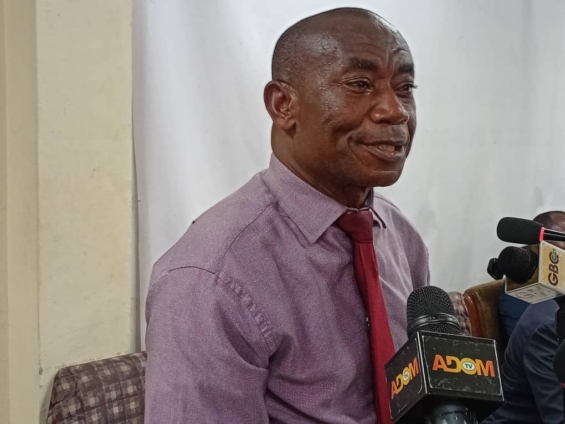
Addressing journalists at a press conference in Accra on Thursday, LICOBAG Executive Secretary Victus Dzah said the sector has faced persistent funding strain since the 2023/2024 season, primarily due to COCOBOD’s failure to secure its traditional syndicated financing facility.
“Since the 2023/2024 season, the industry has faced serious funding problems for cocoa purchases due to the inability of COCOBOD to arrange the traditional syndicated facility,” Mr Dzah said.
He explained that instead of the usual annual syndication of US$1.3 billion or more, COCOBOD managed to raise only US$500 million, and funding arrived six months after the season officially opened on 8 September 2023.
"Instead of the usual annual syndication of USD1.3 billion and above, COCOBOD was able to raise a paltry USD500 million, which was secured six months after the opening of the season on 8/9/23. LBCs therefore pre-financed crop purchases through facilities raised from various banks at very high interest rates prevailing (GRR 29.8%) at the time," he said.
Despite paying farmers promptly, LBCs reportedly waited months to be reimbursed by COCOBOD.
“COCOBOD made the first payment for cocoa deliveries to port on 26 January 2024, six clear months after deliveries, whilst LBCs had already paid farmers in full,” Mr Dzah claimed.
He warned that this situation plunged many buying companies into unsustainable debt, leading to widespread business failures.
“This unfortunate development pushed all LBCs into huge debts, leading to the total collapse of many companies,” he said, noting that promised compensation for high financing costs has yet to materialise.
The crisis worsened in the 2024/2025 season when COCOBOD failed to raise any syndicated facility, forcing the introduction of what LICOBAG described as a “novelty” 60/40 funding model, under which off-takers pre-finance 60 per cent of cocoa purchases through the Bank of Ghana, with the remaining 40 per cent paid to COCOBOD upon delivery to terminals.
While the arrangement temporarily eased cash flow pressures, Mr Dzah said it had unintended consequences.
“COCOBOD has effectively become a moderator in the client–LBC partnership because it no longer controls funding to the industry, having no funds of its own,” he explained.
LICOBAG noted that many LBCs struggled to access financing or secure off-takers for their stocks, while delayed payments for cocoa delivered to port further exacerbated debt servicing challenges. Inadequate funding has also contributed to rising cocoa smuggling.
The 2025/2026 season introduced a revised 80/20 model, but the relief proved short-lived.
“Most clients stopped buying as early as November, which is the peak of the season, either after meeting their contract targets or because cocoa already delivered has not been paid for by COCOBOD,” Mr Dzah said, adding that some buyers have also cited the high cost of Ghanaian cocoa.
Beyond funding issues, LICOBAG criticised COCOBOD and CMC’s sales and shipment strategy.
“Why should we move from a period of roll-overs in the previous season because COCOBOD could not deliver on contracts, to a situation where cocoa produced by farmers cannot be bought because our pricing mechanism is not competitive enough?” he questioned.
He warned that consequences have been severe: cocoa delivered to port since December 2025 remains unpaid; stocks in upcountry warehouses are unsettled; and farmers are storing unsold cocoa under conditions that threaten quality.
“Some farmers are storing cocoa in fertiliser bags, with imminent quality hazards,” Mr Dzah said.
He also revealed rising tensions at the grassroots level, including reports of farmers resorting to law enforcement.
“Farmers are arresting Purchasing Clerks and throwing them into police cells for failing to pay them for cocoa purchased,” he added.
Latest Stories
-
Ghana risks gaining notoriety as drug-trafficking hub – Bobby Banson
6 minutes -
Government dismissed my drug trafficking warning, then tried to arrest me – Ntim Fordjour
8 minutes -
Day Two: 3rd Republic Bank-JoyNews Habitat Fair Clinic underway at Junction Mall
8 minutes -
NACOC addressing inherited gaps in fight against drug trafficking – Deputy Director-General
20 minutes -
Taekwondo goes to school as GTF launches five-region youth campaign
23 minutes -
The issues Mourinho is struggling to fix at Real Madrid
30 minutes -
Hundreds throng EducationUSA College Fair in Kumasi in pursuit of abroad studies
32 minutes -
Drug bust: NACOC should be part of port inspection team – Twum-Barimah
36 minutes -
Ward appointed Liverpool’s sporting director
36 minutes -
This isn’t the first cocaine bust; NPP must stop the politicisation – NACOC deputy boss
39 minutes -
Drug bust case: Only Customs officers, MPS officials in scanning room – NACOC
2 hours -
I don’t mind being insulted; I have a crocodile skin – President Mahama
2 hours -
Samson’s Take: Verify the badge – and verify the story
2 hours -
President Mahama explains why Ghana must rethink regulation of TikTok, other new media platforms
2 hours -
Rule of law must be protected – GBA condemns EOCO action against Baffour Awuah
4 hours