

Audio By Carbonatix
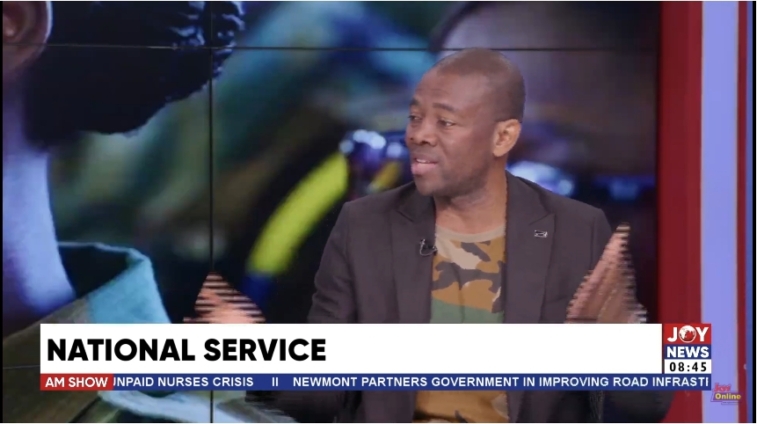
Deputy Director for Operations at the National Service Authority (NSA), Fuseini Donkor, says the introduction of a six-week military orientation programme for some National Service personnel is aimed at instilling discipline, patriotism, and a renewed sense of national pride among Ghana’s youth.
He explained that the initiative, which forms part of President John Dramani Mahama’s broader national vision, seeks to restore the culture of civic responsibility and nationalism that once defined Ghanaian society.
“The President’s vision is to bring us back to the patriotic days, days where primary schools would play the national anthem, and even people going to the farm would stop for it before continuing,” he said.
“He wants us to return to that sense of nationalism and patriotism. The best institution that can help instil discipline in the youth is the military.”
Mr Donkor noted that the new training module will not only expose personnel to basic military drills but also cover disaster preparedness and management skills.
“We are not just taking them through military orientation; we are also training them in disaster preparedness and management capabilities. This is part of their National Service; it’s not outside the mandatory 12-month period. For six weeks within that period, personnel will go through the military orientation programme,” he explained.
The training will combine physical activities, weapon handling, and classroom sessions designed to build resilience, teamwork, and discipline.
He revealed that the pilot phase will involve 10,000 personnel, with military facilities currently able to accommodate 5,000 trainees at a time. The sessions, he added, will be conducted entirely in military barracks to provide a change of environment and mindset.
“We don’t want it to feel like school again. This six-week training will be held entirely at the barracks, with no unnecessary phone use. We want them to fully experience discipline and focus,” he said.
“When they return, we will monitor the first 10,000 against the rest to assess the impact. From next year, it will become mandatory.”
Mr Donkor further disclosed that all participants will undergo comprehensive medical screening similar to that required for military recruits.
“Everyone will go through the same medical screening as those entering the military. Those with severe health conditions or disabilities will be exempted, and this will be clearly indicated on their certificate,” he stated.
“This ensures transparency; it’s not about dodging the process. Anyone exempted will have official documentation to that effect.”
Latest Stories
-
World Bank maintains Ghana’s growth rate forecast at 4.8% in 2026
1 hour -
Cedi was worst African currency in quarter 2, 2026 – World Bank
1 hour -
AI gains can lift three times as many people out of poverty in Ghana – World Bank
2 hours -
Police arrest suspect over jewellery theft during fire outbreak
4 hours -
EOCO returns Hanan’s £6,700, GH¢2,750 and devices after defence challenge
4 hours -
Opplift Youth Entrepreneurs Summit 2026 equips entrepreneurs with skills, mentorship and support
5 hours -
Rival clubs want range of punishments for Man City
5 hours -
Tear gas in Paris and Marseille as school protests grow across France
5 hours -
Kane inspires England to win over Czech Republic in UEFA Nations League
5 hours -
Finland orders halt to work on two Google data centres
5 hours -
Substitute Merino scores twice as Spain win in Croatia
5 hours -
Ronaldo wants Portugal ‘punishment’ but not retiring
6 hours -
White House defends Trump comment to let Iran ‘take out’ LA and San Diego
6 hours -
Asos confirms hackers sent ‘unauthorised’ notification to app users
6 hours -
US televangelist Jim Bakker, disgraced from sex scandal and fraud, dies at 86
6 hours