

Audio By Carbonatix
Mali has suspended schools and universities nationwide due to a severe fuel scarcity caused by a blockade on fuel imports imposed by Islamist insurgents.
Education Minister Amadou Sy Savane announced on state television that all education institutions would remain shut until 9 November, saying the movement of staff and students had been affected by the blockade.
He said the authorities were "doing everything possible" to end the crisis so that classes could resume on 10 November.
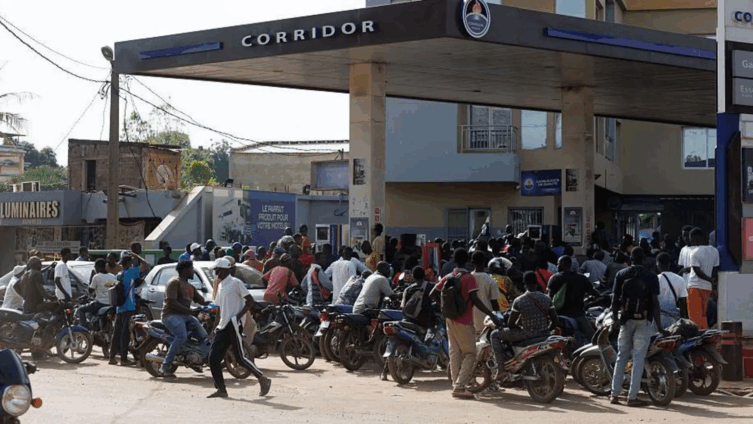
For weeks, Mali has been hit by a fuel shortage, especially in the capital Bamako, after militants from an al-Qaeda affiliate imposed a blockade by attacking tankers on major highways.
Mali is landlocked, so all fuel supplies are brought in by road from neighbouring states such as Senegal and Ivory Coast.
Long queues have been snaking around petrol stations in Bamako in recent weeks, and the city's usually crowded streets have now reportedly fallen quiet.
The military government had earlier this month assured residents that it was only a temporary issue, but the crisis has persisted.
Last week, the US Embassy in Bamako announced that non-essential diplomatic staff and their families would leave Mali amid the worsening fuel shortage and growing security concerns.
It said the fuel disruptions had affected the supply of electricity and had the "potential to disrupt the overall security situation in unpredictable ways".
Mali is currently ruled by a military junta led by Gen Assimi Goïta, who seized power in a coup in 2021.
The junta had popular support when it took power, promising to deal with the long-running security crisis prompted by a separatist rebellion in the north by ethnic Tuaregs, which was then hijacked by Islamist militants.
The UN peacekeeping mission and French forces had been deployed in 2013 to deal with the escalating insurgency.
Both have left since the junta took over, and the military government has hired Russian mercenaries to tackle the insecurity.
However, the jihadist insurgency has continued and large parts of the north and east of the country remain outside government control.
Latest Stories
-
Power restoration fault suspected in Kumasi Central Market fire
5 hours -
The 7-foot giant of Ngleshie Amanfro: Seven-foot Ghanaian Ephraim Saawa dreams of joining the national basketball team
5 hours -
Government promises support for Kumasi Central Market fire victims
5 hours -
Vibes The Movie: Big Ghun’s Ghanaian film earns five nominations at 2026 REFFA
6 hours -
MamaCare CEO warns unresolved conflicts among health workers could undermine maternal and neonatal care
6 hours -
Health professionals urged to translate medical knowledge into practice to save mothers
6 hours -
Retired judge Justice Francis Korbieh charges 1,568 new lawyers to uphold integrity
8 hours -
Conflicts among care providers linked to maternal, neonatal deaths – Expert
8 hours -
GIS marks 10th TIME conference, champions improved teaching practices
8 hours -
BRICS Or Balance? What Ghana’s bid really means
9 hours -
GPRTU wants full TRAFFITECH-GH implementation to start in 2027
9 hours -
How 10-mile walks for basic education birthed a 50-year legal career for Justice Korbieh
9 hours -
Mahama announces plans to import electric wheelchairs for PWDs
9 hours -
KGL U17 Colts 2026: Western beat Prempeh Elite Academy to set up final final with Greater Accra Region
9 hours -
Late Solanke strike salvages 10-man Spurs draw at Man United
9 hours