


Audio By Carbonatix
A lecturer of the University of Cape Coast Kwame Osei Kwarteng (PhD) has said that the Ghanaian-born Lebanese who assaulted a Ghanaian woman, has a mentality that debases blacks and rooted in the Arab slave trade.
Although the alleged attacker, Jihad Chaaban was born in Ghana, the lecturer of history says abusive treatment of blacks by Arabs is 'ingrained in their DNA'.
He was weighing in on a trending issue involving a lady, Evelyn Boakye, who says her face was dipped into pepper sauce by her supervisor, Jihad Chaaban, who heads the Abelenkpe branch of Marwako Fast Food.
The alleged act has sparked outrage on social media and an online petition has been launched calling for an end to “inhumane treatment of Ghanaians by foreigners” and the shutdown of the fast food chain.

Photo: Jihad Chabaan
Mr. Chaaban has been charged with assault to which he has pleaded not guilty. Social media appears very awake to see the conclusion of the matter.
Discussing the matter on Joy News Saturday flagship programme Newsfile, Kwame Osei Kwarteng said while the matter remains criminal, a historical understanding is important to appreciate the violence meted out to the young woman.
History shows that as bad as slavery was, there was an important difference in how the Atlantic Slave Trade was practised by the West and how the Arab slave trade by Asian and Middle-Easterners was practised, he said.
Kwame Kwarteng who is also President of University Teachers Association of Ghana (UTAG) explained that while the Atlantic slave trade is more popular, the cruellest form of slavery was perpetuated by the Arabs.
He said while Western ships docked and waited to cart away Africans, the Arabs went into the interior of the country themselves, shot the old and weak and captured young men and women off to their ships.
While the mortality rate for slaves being transported across the Atlantic was as high as 10%, the percentage of slaves dying in transit in the Trans Sahara and East African slave trade was between 80 and 90%, some historians have chronicled.
 David Livingstone wrote of the slave trade in the African Great Lakes region, which he visited in the mid-nineteenth century:
"To overdraw its evils is a simple impossibility ... We passed a slave woman shot or stabbed through the body and lying on the path. [Onlookers] said an Arab who passed early that morning had done it in anger at losing the price he had given for her, because she was unable to walk any longer.
"We passed a woman tied by the neck to a tree and dead ... We came upon a man dead from starvation ... The strangest disease I have seen in this country seems really to be broken heartedness, and it attacks free men who have been captured and made slaves".
The black men after arriving in the countries of their slave masters were castrated to prevent reproduction and the women were held as cheap concubines, Prof. Kwame Kwarteng described.
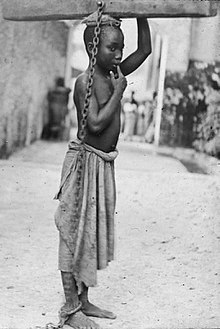
A photograph of a slave boy in Zanzibar. 'An Arab master's punishment for a slight offence. ' c. 1890.
Slavery is gone but that mentality of seeing the blacks as inferior has 'lingered on up till today', the historian said.
The attack he said is 'just the tip of the iceberg,' he said.
Latest Stories
-
At least 30 feared dead in crush at Haitian tourist site
2 hours -
Four arrested over murder of Scottish businessman in Kenya
2 hours -
New Mainoo deal closer, says Man Utd boss Carrick
2 hours -
Sinner beats Alcaraz to return to world top spot
3 hours -
An inappropriate joke nearly ended his career. Now he’s back with more humour
3 hours -
GPL 2025/26: Dreams FC stage stunning comeback to hammer Eleven Wonders
4 hours -
Livestream: The Probe examines Kumasi’s looming water crisis
4 hours -
MTN Ghana gears up to lead Africa’s AI revolution
4 hours -
Philanthropist Alhaji FuZak donates Da’wah bus to Ambariya Sunni community
4 hours -
GUTA calls for suspension of Publican AI system over trade disruptions
4 hours -
TTAG raises alarm over proposed recruitment of 7,000 teachers, demands national posting roadmap
5 hours -
Civilians feared killed after reports of air strike on Nigerian market
5 hours -
Bishop Simon Kofi Appiah installed as new Jasikan Diocese Bishop
5 hours -
Trump’s Strait of Hormuz blockade threat raises risks and leaves predicaments unchanged
5 hours -
US Court backs extradition of former MASLOC CEO Sedina Tamakloe-Attionu to Ghana
5 hours