

Audio By Carbonatix
In Ghana, where fish is a staple in nearly every household, the aquaculture sector plays a critical role in national food security.
Despite producing over 89,000 metric tonnes of fish in 2023, mostly tilapia and catfish, Ghana still imports more than 60% of the fish consumed locally.
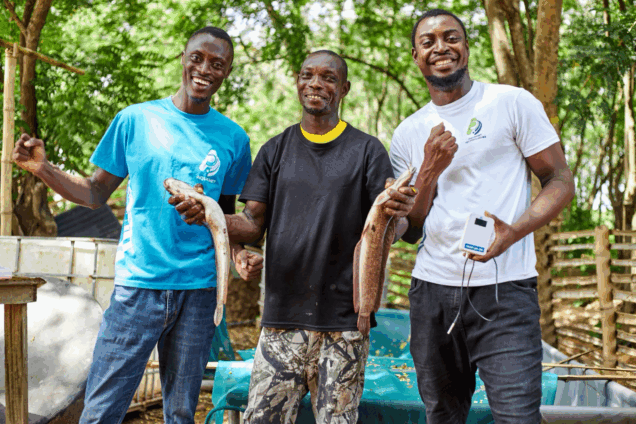
Aquamet Technologies is a Ghanaian aquatech startup supported by Kosmos Innovation Center (KIC) to play a critical role in national food security by supporting smallholder fish farmers grappling with challenges like poor water quality, disease outbreaks, and high feed costs.
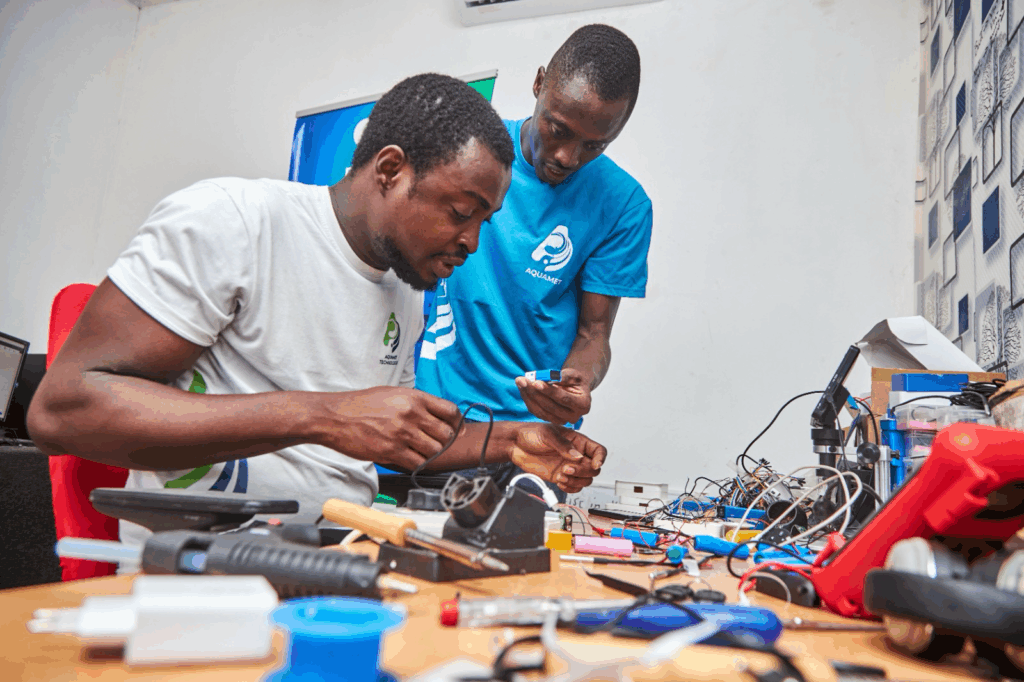
On a mission to meet supply chain gaps with cutting-edge but affordable technology designed specifically for the realities of local fish farmers, Aquamet uses a smart water quality probe that monitors essential parameters such as temperature, dissolved oxygen, and pH levels.
Unlike traditional solutions, the device provides real-time alerts via SMS and a mobile app, ensuring farmers, even in remote areas, can respond swiftly to changing water conditions and prevent fish loss.
Since launching, Aquamet has positively impacted over 145 farmers across the Volta, Eastern, Ashanti, and Greater Accra regions of Ghana.
As Ghana works towards its national goal of producing 200,000 metric tonnes of farmed fish by 2030, Aquamet is emerging as a key player in accelerating this vision and advancing the country’s blue economy.
In addition to the hardware innovations, Aquamet offers a comprehensive farm management app featuring a feeding estimator, robust inventory tools, digital record keeping, and on-demand expert support.
These tools enable farmers to reduce feed waste and fish mortality by up to 25% while increasing productivity and efficiency across their operations.
“With Aquamet, solutions are locally built, farmer-tested, and focused on empowering the next generation of aquaculture entrepreneurs across Africa.” Frank Owusu, co-founder of Aquamet Technologies, highlights.
Looking ahead, Aquamet Technologies plans to reach over 100,000 fish farmers across the continent within the next decade, contributing significantly to sustainable food systems and rural livelihoods.
Latest Stories
-
Sudan’s Gedaref protests deepen pressure on al-Burhan amid war and rising prices
3 seconds -
‘Our missing players are more important’ – Gambia coach fires shot at Ghana
57 minutes -
Today’s front pages: Tuesday, September 29, 2026
60 minutes -
Ghana ‘showing up differently’ on global stage – Joyce Bawah Mogtari
1 hour -
Ghana’s tuna industry in crisis as 20 hook-and-line vessels collapse
2 hours -
South Tongu MP launches apprenticeship programme for 159 young people
2 hours -
The Pusiga connection behind Gertrude Atongi’s work in New York
3 hours -
Teachers took promotion exams in December to beat government clearance deadline – GNAT
3 hours -
NPA launches 2026 staff welfare week with focus on teamwork and employee wellbeing
3 hours -
Ghana, Saint Kitts and Nevis sign labour deal to strengthen protections for Ghanaian nurses
3 hours -
Delayed promotions put teachers’ retirement benefits at risk – GNAT
3 hours -
No ‘Bawumia candidates’ in NPP executive elections – Anthony Karbo
3 hours -
Over 3,000 displaced as flooding overwhelms Hohoe communities
3 hours -
Sunyani East NPP executives begin reconciliation drive ahead of 2028 polls
3 hours -
Agric Minister engages Ga Mantse on agriculture transformation agenda
3 hours