

Audio By Carbonatix
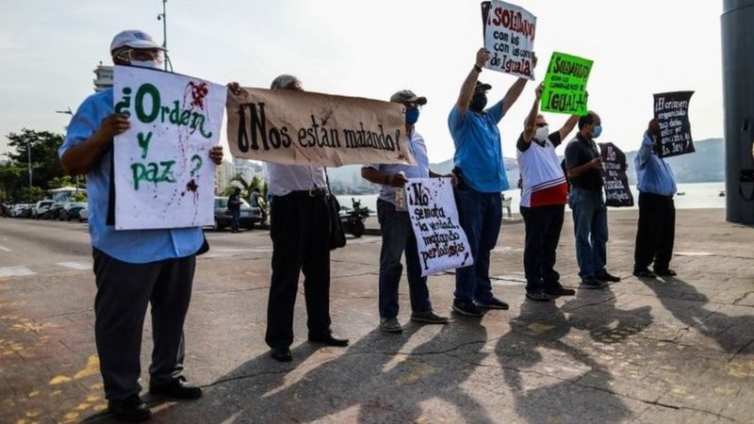
A 31-year-old journalist was shot dead on Monday in the central state of Guanajuato while he was reporting on the discovery of human remains dumped on a road in the city of Salamanca.
Israel Vázquez Rangel worked for the news web site El Salmantino.
Mexico is among the most dangerous countries for journalists.
More than 100 journalists have been killed in Mexico since 2000. Many of them were reporting on corruption or the country's powerful drug cartels.
Vázquez went to investigate reports of human remains found in the city of Salamanca early on Monday, the attorney-general's office of Guanajuato said.
He appears to have arrived at the scene of the find before the security forces.
By the time the police arrived, they found Vázquez seriously injured with several bullet wounds. He died hours later in hospital.
The website he worked for said he had been the victim of a "cowardly and atrocious attack... while he was carrying out his honourable work as a journalist".
Other news outlets also expressed their outrage at his killing.
El periodista Israel Vázquez cubría hallazgo de restos humanos en Salamanca; fue asesinado a balazos https://t.co/GApeJOKK3N pic.twitter.com/h2wA3nGmEk
— Sin Embargo MX (@SinEmbargoMX) November 10, 2020
El Salmantino pointed out that Vázquez had travelled to the location in a car clearly marked with the logo of the website and should therefore have been recognisable as a reporter.
The governor of Guanajuato urged the attorney-general's office to investigate the killing and said the state of Guanajuato would support and protect the murdered journalist's family.
The discovery of human remains and mass graves is not unusual in Guanajuato.
Less than two weeks ago, the remains of 59 bodies - belonging mostly to young people - were found in unmarked graves in Salvatierra, just over an hour's drive from Salamanca.
Guanajuato has seen a rise in violence as two rival criminal gangs, the Santa Rosa de Lima Cartel and the powerful Jalisco New Generation Cartel, have engaged in a violent turf war.
The cartels mainly engage in fuel theft from major oil pipelines located in the state as well as selling drugs to locals and extorting businesses.
Latest Stories
-
Parliament questions proliferation of unapproved containers in East Legon
26 minutes -
Promotion arrears alone cannot end teachers’ strike — PRETAG
32 minutes -
Ebi Bright alleges assault on driver in dispute with Tema Central MP
38 minutes -
GH¢35m Darkuman 24-hour market to be completed in 16 months — MCE
45 minutes -
NPP risks losing Karaga seat if Amin Adam doesn’t contest – John Boadu
49 minutes -
Ghana Reference Rate falls to 10.04% in October as borrowing costs ease
51 minutes -
53% of NPP delegates backed alternatives to John Boadu in chairmanship race – Mussa Dankwah
54 minutes -
High taxes, water shortages push up hotel operating costs — Hotels Association
55 minutes -
Catholic Bishops demand tougher action on tramadol, marijuana and other drugs
59 minutes -
Government positioning Banda District to become major tourism destination hub – Housing Minister
1 hour -
Deputy Education Minister appeals to striking teachers to return to classrooms
1 hour -
Government to involve corporate Ghana in street maintenance – Ayariga
1 hour -
No contractor is untouchable because of political links — Agbodza
1 hour -
Contractors to resume work on Phase Two of Kejetia Market Project
1 hour -
Government committed to resolving teachers’ concerns - Vice President
1 hour