

Audio By Carbonatix
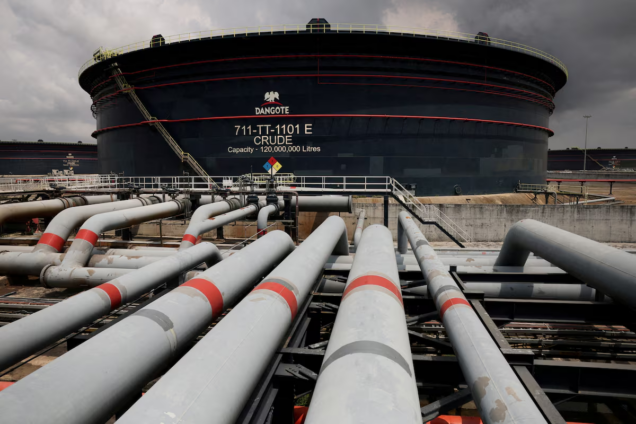
Nigeria's Dangote Petroleum Refinery has stepped up gasoline exports across Africa as disruptions to energy flows due to the Iran conflict squeeze traditional fuel supply routes, curbing the cheap imports that long dominated West African markets.
Data from tanker-tracking firm Kpler show Nigeria's exports of clean petroleum products - which include gasoline, diesel, kerosene and jet fuel - have risen to about 214,000 barrels per day so far in March from an average of 100,000 bpd in February.
Shipments to other African countries have climbed to about 90,000 bpd from 38,000 bpd previously.
The 650,000-barrel-per-day Dangote refinery has sold 12 cargoes of premium motor spirit, totalling 456,000 metric tons, on a free-on-board basis to international traders, with shipments delivered to Cote d'Ivoire, Cameroon, Tanzania, Ghana, and Togo, sources familiar with the deals said.
The sales mark Dangote's first gasoline exports since the plant reached full capacity in February.
OPPORTUNITIES FOR REFINERS WITH SHORTER SUPPLY CHAINS
The escalating Middle East conflict has pushed up global crude prices, lifting feedstock costs for refiners worldwide. At the same time, shipping disruptions and lower fuel availability from Europe and the Gulf have cut flows of low-cost refined products into West Africa.
That has created opportunities for suppliers with shorter supply chains.
Dangote's owner Aliko Dangote has been sparring with Nigerian regulators over continued petrol imports, which he contends undermine his refinery.
Nigeria halted imports last month. Since then, domestic pump prices have risen more than 50% as the Iran conflict roiled energy markets.
The country consumes an estimated 50 million to 60 million litres of gasoline a day — nearly one-fifth of Africa’s total demand — making fuel availability and pricing acutely sensitive to swings in global markets.
For decades, West Africa has depended heavily on imported fuel cargoes from Europe and the Middle East, often of lower quality, leaving the region exposed to logistical delays and external supply shocks.
Preliminary data shows that Nigerian fuel imports are at a daily average of 90,000 bpd so far in March, according to Kpler, down from 209,000 bpd for the whole of February.
Arrivals from offshore Togo, which Dangote has previously accused of being the source of dirty fuel imports into the country, have fallen to zero so far in March, compared with 60,000 bpd in February.
As the Dangote Refinery seeks to end all imports, the Middle East crisis is pushing more local fuel traders to seek supply from the refinery.
Latest Stories
-
Ghana seeks long-term mining investments that benefit local communities – Armah-Kofi Buah
19 minutes -
Ghana’s Ambassador to China, Kojo Bonsu, presents credentials to Nepalese President
32 minutes -
Fairtrade Africa’s Cocoa Hubs Project strengthens rural service centres in cocoa-growing communities
37 minutes -
SEC cautions investors against fraudulent investment schemes
39 minutes -
Land Ministry urges rCOMSDEP operators to reserve earnings for land reclamation
42 minutes -
Commercial drivers give authorities one week to clear traders from lorry terminals, bus stops
46 minutes -
Nana B denies claims that Kojo Bamba was his driver and bodyguard
1 hour -
Engage Now Africa to construct a 10-unit classroom block for struggling Navrongo Vocational Training Centre
1 hour -
One digital financial breach could expose linked accounts to fraud – Financial Crimes Manager
1 hour -
Ghana Russia Centre signs ICT cooperation agreement with Moscow University
1 hour -
The powerhouses of the village: Honouring Ghana’s rural women on International Rural Women’s Day
2 hours -
Vincent Assafuah petitions CHRAJ to investigate alleged irregularities in 2026 World Cup visa arrangements
2 hours -
12-year-old boy found dead in muddy pit at Opeikuma
2 hours -
GHS begins Yellow Fever vaccination campaign in three Upper West districts
2 hours -
Organised Labour pushes for higher 2027 base pay despite slowing inflation
2 hours