

Audio By Carbonatix
Months after its launch, questions are emerging over whether the Fugu Wednesday campaign is losing momentum, with traders saying the initiative has created awareness but has not yet delivered the expected boost in sales.
The campaign, introduced by the Ministry of Tourism, Culture and Creative Arts, encourages Ghanaians to wear the traditional Fugu smock every Wednesday as part of efforts to promote cultural identity and support local producers.
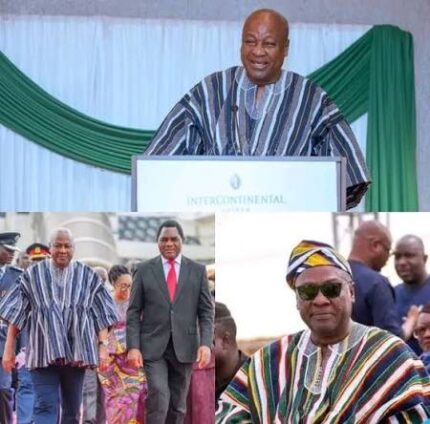
It was launched following a social media debate over President John Dramani Mahama’s decision to wear a traditional Fugu during a state visit to Zambia, after some online users in the country described the outfit as a “blouse”.
The comments triggered widespread reactions from Ghanaians who defended the smock’s cultural significance and highlighted its importance as a symbol of Ghanaian heritage.
However, some Fugu traders say the attention generated by the campaign has not translated into the level of commercial growth they anticipated.
Aligasa Yussif, a Fugu trader in Accra, said he expected demand for the traditional attire to increase significantly after the campaign was introduced, but sales have recorded only modest improvement.
Another trader, Mohammed Ali, said business has improved compared to the period before the campaign but believes the initial excitement surrounding Fugu Wednesday has reduced.
He explained that some customers still consider traditional handwoven Fugu too heavy for regular use, despite the availability of lighter machine-woven versions.
The concerns among traders reflect wider public opinions about the campaign. While some Ghanaians continue to support Fugu Wednesday as a means of preserving cultural heritage and promoting local textile businesses, others say work conditions, lifestyle choices and the country’s warm climate make regular use of the attire difficult.
Some members of the public have also argued that sustained promotion and stronger support for local producers will be necessary for the campaign to achieve its long-term objectives.
Responding to concerns about declining enthusiasm, Minister for Tourism, Culture and Creative Arts, Abla Dzifa Gomashie, said the initiative was not designed to produce immediate results.
She explained that changing public dressing habits requires consistent engagement and government intends to evaluate the campaign after one year.
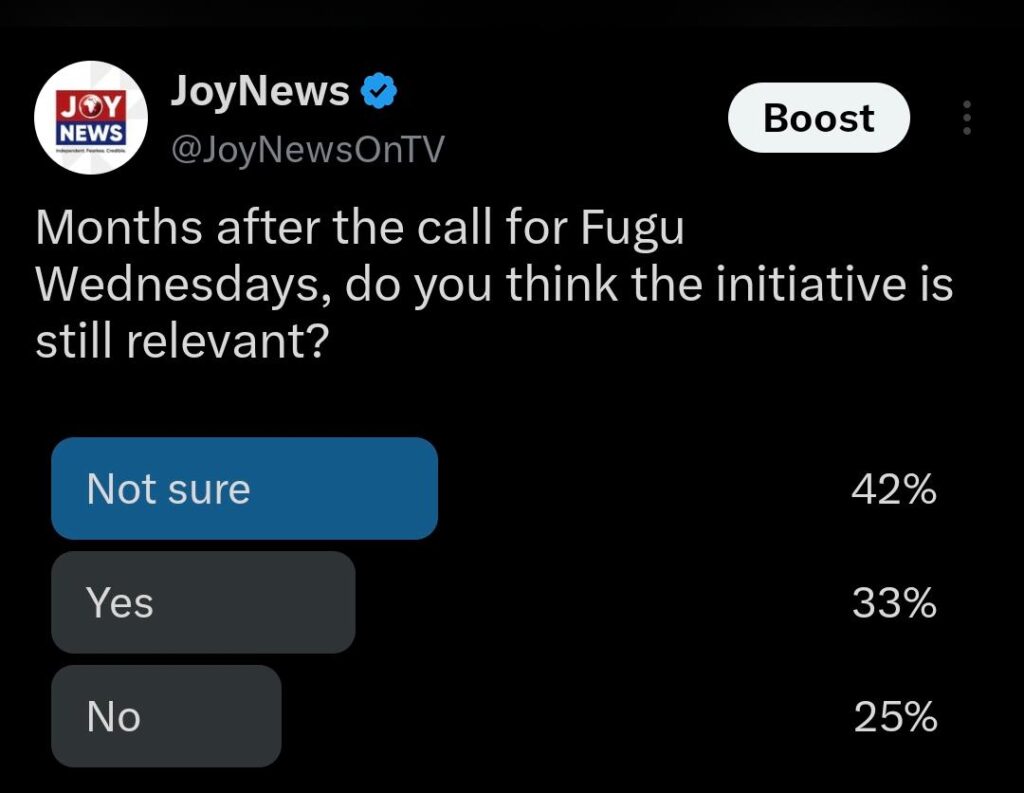
A JoyNews poll showed that 33 per cent of respondents believe the Fugu Wednesday campaign remains relevant, while 25 per cent believe public interest has declined.
Despite concerns about sales, the campaign has kept Ghana’s traditional smock in national conversations, with stakeholders saying its long-term success will depend on whether increased awareness leads to sustained demand for locally produced Fugu.
Latest Stories
-
Manhyia South MP charged with conspiracy, financial loss and money laundering
3 minutes -
Attorney-General charges Manhyia South MP over alleged GH¢9.85m financial loss
6 minutes -
Food Security: Buffer Stock CEO calls for more investment in Agri-Tech
6 minutes -
Three missing children found dead in parked vehicle in Tamale
16 minutes -
Nana Akomea denies reports linking his absence from NPP executives’ introduction to Kojo Bamba
17 minutes -
2026 U-17 WWC: Black Maidens arrive in Morocco for tournament
19 minutes -
GSA suspends pre-shipment inspection of imported used vehicles
26 minutes -
Elevate Africa confirms presidents, vice presidents and ministers for 2026 Annual Convening in Accra
50 minutes -
Keta MP commissions 60-seater kindergarten facility to replace unsafe structure
55 minutes -
Salomey Awiti-Baffoe’s lawyers welcome GH¢100,000 bail after earlier rejection
56 minutes -
Domestic tourism and its impact on the local economy
1 hour -
Top-Up Pharmacy wins Community Pharmacy Chain of the Year at 2026 PSGH Pharma Excellence Awards
1 hour -
Nigeria military aircraft with 32 on board crashes
1 hour -
Black Stars need a coach who can inspire players to perform – Ignatius Osei Fosu
1 hour -
Revenue collector crushed to death on Kasoa-Winneba highway
1 hour