

Audio By Carbonatix
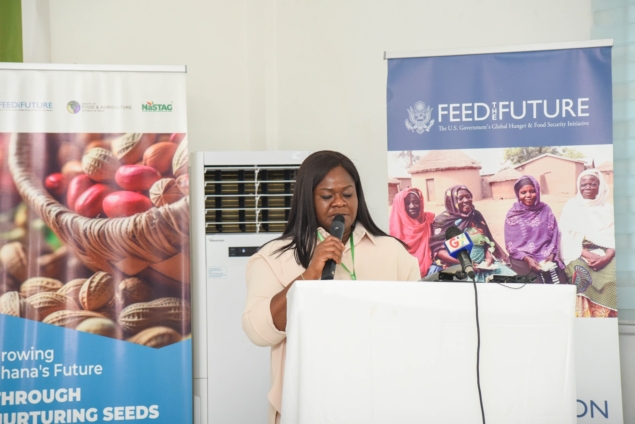
The Ghana Country Director of AGRA, Dr Betty Annan, says more efforts are needed to ensure farmers in the country have access to certified seeds to improve productivity.
She says although Ghana has witnessed a growth in the development and availability of improved and locally adopted seed varieties, there is still a huge gap that needs to be filled.
“The adoption is still marginal with only about 30% of the farmers using improved varieties. The slow pace of adoption is linked to inadequate compliance with seed legislation by seed value chain operators and disregard for seed certification and standard regulations here in Ghana,” she observed.
“AGRA with the support of USAID is committed to strengthening the Ghana seed system to enhance quality seed delivery to farmers,” she added.
Madam Annan was speaking at the 4th National Seed Business and Networking Forum (Seedlink 2023) in Tamale.
The forum was organised by the National Seed Trade Association of Ghana (NASTAG), National Seed Council, AGRA, Feed the Future Ghana Market Systems and Resilience and PolicyLINK.
The theme of the two-day forum is; "Harnessing Resources, Cultivating Success and Fostering Synergy in the Seed Industry."
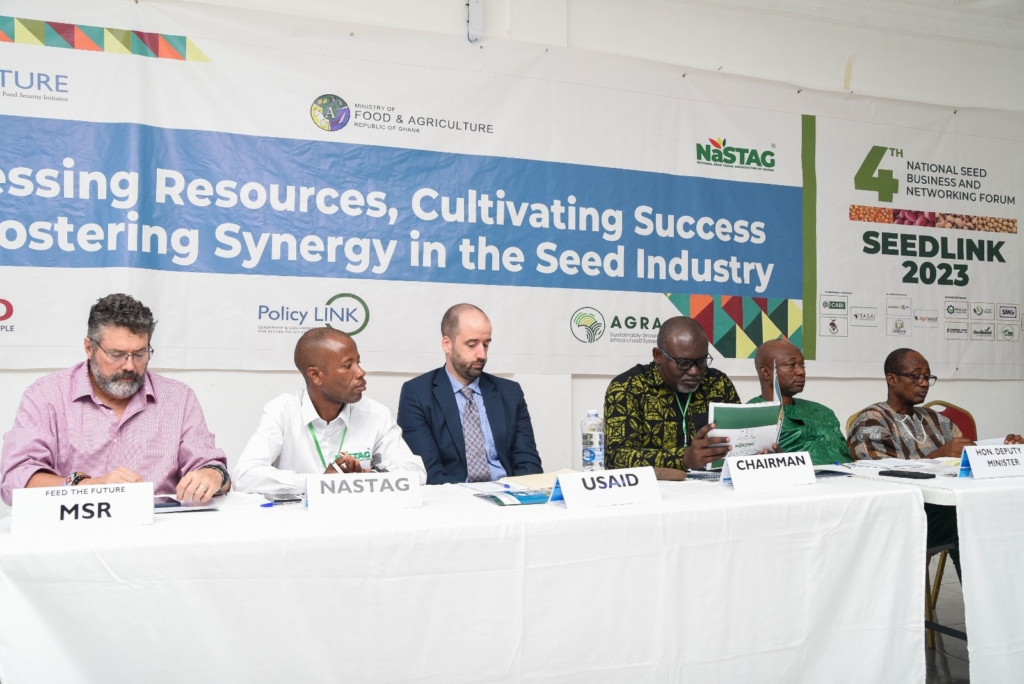
The forum seeks to deepen engagement among stakeholders within the seed industry. About 100 participants from key seed stakeholder institutions including the Ministry of Food and Agriculture, district assemblies, academia, development partners, and farmers are participating in the forum.
Dr Annan expressed concern that the current global economic crisis has hindered farmers' access to quality seeds and fertilisers.
“There is therefore an urgent need for industry players to act in unison to strengthen the seed sector and scale up the use of improved seeds to boost productivity and transform the food systems,” she said.
“AGRA by its design supports the drive towards inclusive transformation and sustainable food systems. We support smallholder households to transform their agriculture into profitable businesses,” she added.
Deputy Minister for Food and Agriculture Mohammed Tufeiru agreed that there remains substantial room for growth in Ghana’s seed sector.
He said local companies have struggled to provide enough seeds to supply the government’s Planting for Food and Jobs initiative.
Alhaji Tufeiru cited an instance where local seed companies could not meet demand for the supply of seeds despite $28.8 m funding from the African Development Bank to bolster the seed sector in the Savanah region.
“Unfortunately, only AGRA rice and soya, could be supplied. The maize, we had to import them from South Africa and other countries. Some $11 m on seeds alone. Only rice and soya that we could get from local sources,” he said.

Kwasi Wih who is head of the Ghana Seed Inspection Division of the Plant Protection and Regulatory Services Directorate (PPRSD) commended AGRA for its role in helping improve Ghana’s seed sector.
“I would like to thank AGRA for the support they have offered PPRSD to strengthen seed control and certification system in Ghana.
"The project seeks to adopt traceability technology to check counterfeit seeds and enhance customer confidence in certified seeds and their authenticity,” he said.
Kelvin Fath who is Deputy Office Director at USAID Ghana told the forum the seed sector is crucial if Ghana can improve food security, sustainably manage natural resources, and generate economic growth.
“It (seed) is also critical to the life and aspirations of every farmer in Ghana. High-quality certified seeds are essential for farmers to be able to produce the food they need, and feed their families and communities,” he said.
Mr Fath said the US government is working side by side with partners in Ghana’s public and private institutions to improve food security. He said in 2022, the US provided Ghana with about $32 million in agricultural assistance.
“Our initiatives implemented through AGRA in partnership with NASTAG have improved the performance of the seed sector. This includes the production of nearly 1,800 kg of breeder seeds and 18 metric tonnes of foundation seeds,” he disclosed.
“This ensured that 130,000 smallholder farmers had access to high-quality, climate-smart seeds last year. These investments and other investments by the government of Ghana and other donors have been instrumental in increasing agricultural productivity and competitiveness,” Mr Fath added.
Latest Stories
-
Let The Constitution direct Chieftaincy to deliver “All Development Is Local”
52 minutes -
John Jinapor outlines renewable energy, nuclear power priorities for 2027
1 hour -
Ghana explores centre of excellence for hearing, communication and cochlear implant care
2 hours -
Schizophrenia-related disorders lead mental health cases recorded in Ghana
3 hours -
Dutch authorities enlist Ghana in hunt for fugitive drug lord Bolle Jos
3 hours -
Ghana housing finance conference adopts communiqué to improve affordable housing access
7 hours -
Special Initiatives Minister urges Wa Technical Institute to enrol more girls as EU-backed solar training lab opens
8 hours -
In the matter of my first year at the Bar
8 hours -
ActionAid Ghana calls for an end to child marriage, greater investment in girls’ rights
8 hours -
Newsfile to tackle World Cup visa scandal, beach demolitions, education strikes, BRICS bid
9 hours -
UK-Ghana Trade & Investment Summit: Trade Resource Centre to help businesses maximise UK-Ghana trade opportunities
9 hours -
Embassy of Denmark celebrates World Maritime Day
9 hours -
Linking LEAP to productive inclusion could cut extreme poverty by 2030 – UNICEF
10 hours -
Trade Ministry backs use of creative arts to rehabilitate prison inmates
10 hours -
Negotiations with government to continue despite strike suspension – GNAT
10 hours