

Audio By Carbonatix
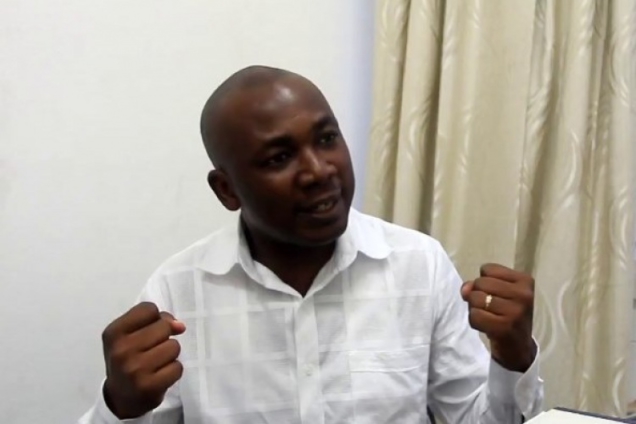
An Economist and Finance Lecturer at the University of Ghana Business School (UGBS) says the government’s introduction of a debt exchange programme is the first level of measures to be implemented before Ghana qualifies for an IMF bailout.
According to Prof Godfred Bokpin, there would be more programmes to follow.
“This is not to scare anyone. The debt exchange government announced is just the first level, there would be more to come,” he stated.
According to him, “there would be exchange with non-tradable government debt, there would be some other fiscal adjustment that would have to be made beyond what is in the 2023 Budget.”
Speaking in an interview on Joy FM's Top Story on Monday, he explained that his assertion is due to the fact that the level of adjustment that needs to be made to attain sustainability in the debt levels is enormous.
“Because across almost all the debt sustainability dependency indicators, we are trending in some cases more than 40% above the policy dependency threshold in the baseline estimation.”
"Unfortunately, what makes it sad is the lack of disclosure and transparency on the part of our government and their lack of consultation, coming with clean hands, honesty, humility to say that this is the extent of the problem. I need all of you to come on board. Look, the government has adopted an approach like they more or less want to ambush the market. It doesn't help," he explained.
Prof. Bokpin added that, “assuming government was to have its way and even suspend interest payment across all its instrument –treasury bills, bonds etc and even include external debt servicing obligation as captured in the 2023 Budget, approximately 63 billion cedis, it will not be enough.”
According to him, per the analysis, the primary surplus the country needs to record in the next five years to climb back to a sustainable level is averaging 6.4 million dollars.
“If you look at that current exchange rate, you are looking at something in excess of 75 billion cedis. So that tells you that the level of savings that have to be made on annual basis to bring the debt to a more sustainable level is huge,” he said.
Latest Stories
-
Gabriel Tanko Kwamigah-Atokple appointed Patron of NDC UK and Ireland Aldershot Branch
4 minutes -
Bawumia engages Ghana Medical Association on health workforce and licensing concerns
7 minutes -
SEC shuts down Nyak-City Hostels over unlicensed investment scheme
8 minutes -
The Ladder Project engages 60 UPSA student leaders on leadership and Ghana’s next chapter
10 minutes -
National Investment Quiz: St. Augustine’s, Prempeh College advance to semi-finals
15 minutes -
Leadership is about responsibility, not titles – Sammi Awuku tells UPSA students
17 minutes -
National Investment Quiz: Corpus Christi, Wesley Girls, advance to semi-finals
22 minutes -
Phone dealer murder: 3 suspects remanded as court adjourns Teshie case
24 minutes -
Seamless Technologies CEO Calls for Strategic AI adoption to transform Ghana’s financial services sector
27 minutes -
Cargill, ICI equip 111 youth with vocational skills to tackle child labour
29 minutes -
Council of State member donates $5,000 to NDC UK and Ireland Aldershot branch for water project
34 minutes -
Education Ministry renews return-to-class appeal despite teachers’ refusal to end strike
39 minutes -
Remains of dozens of suspected kidnap victims found in Nigerian forests
39 minutes -
Four bodies found after avalanche hits Himalayan climbing group
45 minutes -
Adipa residents give government seven days to halt Agbogbloshie waste transfer
55 minutes