

Audio By Carbonatix
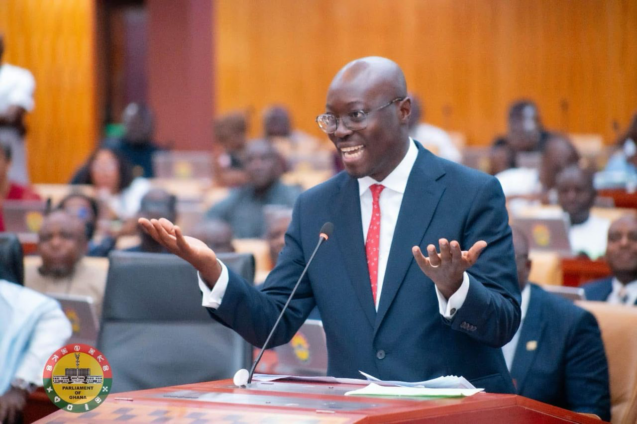
Finance Minister Dr. Cassiel Ato Forson has outlined the major benefits of several new bills signed into law by President John Mahama, stressing their role in providing financial relief, boosting economic growth, and ensuring responsible fiscal management.
In a Facebook post, the Minister highlighted the repeal of the Electronic Transfer Levy (E-Levy), increased funding for social programs, tax reforms, and stricter financial discipline as key wins for Ghanaians.
E-Levy Repealed: More Money in Your Pocket
The Finance Minister confirmed that the E-Levy, which taxed mobile money transactions, has been officially scrapped. This means that individuals and businesses will no longer have to pay extra charges when transferring money electronically.
“This is a major relief for ordinary Ghanaians who rely on mobile money for daily transactions. It also supports businesses by making digital payments cheaper and more accessible,” he stated.
Tax Relief: Lower Costs for Drivers and “investors”
Other tax relief measures have also been introduced:
• No Tax on Lottery & Betting Winnings: Ghanaians who win from betting or lottery will now keep their full earnings.
Additionally, the government has removed the tax on unprocessed gold exports to curb smuggling and support legal gold trading.
• No More VAT on Motor Insurance: Vehicle owners will now pay less for insurance, reducing transportation costs.
GH¢3.8 Billion Redirected to Social Programs
The Minister announced that GHS 3.8 billion is being freed up by adjusting the tax refund ceiling, allowing these funds to be redirected to critical social programs.
“We are investing in areas that directly impact the lives of citizens. This money will support free sanitary pads for schoolgirls, school feeding programs, the capitation grant, and the LEAP program for vulnerable households,” he explained.
These interventions, he noted, will improve education, health, and social welfare for millions of Ghanaians.
Education, Healthcare, and Infrastructure Receive a Major Boost
The Minister assured Ghanaians that government spending on hospitals, schools, and road projects will be increased, thanks to reforms that remove caps on funds allocated to these sectors.
“We are making sure that free secondary education and free tertiary education for Persons with Disabilities are properly funded. Additionally, we are prioritizing health and infrastructure projects that benefit communities nationwide,” he said.
New Fiscal Rules to Prevent Reckless Spending
The government is introducing tougher financial rules to control debt and prevent wasteful spending.
Key measures include:
• An Independent Fiscal Council to monitor government spending and enforce transparency.
• A debt cap of 45% of GDP by 2034 to ensure Ghana does not accumulate unsustainable debt.
• A primary surplus of 1.5% of GDP annually until 2034 to maintain economic stability.
“These reforms will prevent the mistakes of the past where government spending was excessive and unsustainable. We are committed to responsible financial management,” the Minister stated.
Stronger Public Procurement Laws to End Wasteful Projects
To curb corruption and ensure efficient use of public funds, commencement certificates will now be required before awarding any government contract.
“This will prevent projects from being awarded without proper funding, ensuring that every project started is completed,” he explained.
Oil Revenues to Fund Infrastructure Under ‘The Big Push’
All of Ghana’s oil revenue will now be channeled into major infrastructure projects, including roads and bridges, under a new policy called “The Big Push.”
“We are using our natural resources to build lasting infrastructure that supports economic growth and job creation,” the Minister emphasized.
Environmental Policy Overhaul: Emissions Levy Scrapped
While reaffirming Ghana’s commitment to environmental protection, the Minister announced that the Emissions Levy has been removed, stating that better policies will be introduced to tackle pollution without burdening citizens with additional taxes.
Higher Taxes for Mining Companies to Ensure Fair Contribution
Gold mining companies will now pay higher taxes on super-normal profits, ensuring that Ghana benefits fairly from its natural resources.
“Mining companies make significant profits, and it is only right that they contribute more to national development,” he noted.
A New Era of Economic Stability and Growth
The Finance Minister concluded by emphasizing that these reforms will ease financial burdens, improve public services, and ensure disciplined economic management.
“This is about resetting Ghana’s economy for long-term stability and prosperity. We are putting money back into the pockets of Ghanaians while making sure government finances remain strong,” he stated.
Latest Stories
-
Kwabena Boamah appointed Board Chair for Impact Investing Ghana
5 minutes -
Striking teacher unions to meet Fair Wages and Salaries Commission on October 6
19 minutes -
EOCO working with AG to arraign Nana Baffour Awuah before weekend court
22 minutes -
Duraplast reassures customers after fire, announces October 5 reopening
31 minutes -
Call off strike, gov’t will not renege on promotion arrears pledge – Haruna Iddrisu appeals to teacher unions
33 minutes -
Committee set up to validate teachers eligible for 20% deprived-area allowance – Education Minister
37 minutes -
Five-member committee to search for new Black Stars coach after Sports Ministry-GFA meeting
1 hour -
Pinktober: Breast cancer survival exceeds 90% when detected early – Breast Society of Ghana
1 hour -
TCDA to adopt Upper West’s MATCO mango farm as northern prototype, issues warning against felling shea trees
1 hour -
‘Fear delegates’ tag: Afoko touts genuineness among delegates ahead of NPP delegates conference
2 hours -
John Boadu: The leader our party needs at this time – Amb. Edward Akwasi Boateng
2 hours -
Baffour Awuah: EOCO arrested, detained MP after hours of waiting, questioning – Afenyo-Markin
2 hours -
EOCO court warrant authorised search of Baffour Awuah’s law firm, not residence – Afenyo-Markin
2 hours -
NPP delegates conference: 3,000 to 4,000 police personnel deployed for security in Kumasi – Anthony Karbo
2 hours -
KGL Foundation commits $200,000 to support juvenile football for the next two years
2 hours