

Audio By Carbonatix
More than 1.3 million AstraZeneca vaccines delivered to the Democratic Republic of Congo on March 4, 2021, are to be re-distributed to Ghana and five other African countries.
The Central African country is the second largest country in Africa (by area) and 11th in the world, with a population of 86.79 million (World Bank, 2019).
But it has only been able to administer a mere 400,000 of the 1.7 million it received.
The remaining 1.3 million doses will expire next month if unused.
UNICEF is currently leading the largest vaccine procurement and supply operation ever on behalf of the global COVAX facility, to deliver Covid-19 vaccines across Africa.
But it is facing challenges.
“Only 26 per cent of vaccines delivered to Western and Southern African countries have been administered,” said, UNICEF’s regional Advisor for Health Systems Strengthening for West and Central Africa, Susie Villeneuve.
“This is something we have to handle carefully to see why systems are not performing to at least use the vaccines that the countries are receiving.”
She gave a tall list of problems hindering the rollout and procurement of the vaccines.
“UNICEF and partners are really pleased to see that vaccination activities are being rolled out since early March this year, in Western and Central Africa and elsewhere. However, it is worth noting that implementation is negatively impacted by issues hindering efforts to achieve the coverage of the first 20 per cent priority population group,” she told a gathering of public health experts on Monday, at the 11th Africa Vaccination Week celebration being held in Ghana.
The region’s major constraint on supply availability, she says is leading to little visibility on future shipment plans.
“No visibility in shipment plan for the second allocation for instance to ensure continuity of vaccination campaign”.
Safety
Safety signals on some Covid vaccines - AstraZeneca and Johnson & Johnson was another concern for her. She says the news from Europe, the Americas and other places were of concern.
Funding
Funding is another issue affecting vaccine rollout. Operation costs, she said was impeding the smooth rollout
“This is the reality in several African countries. Operation issues to identify priority groups and effectively vaccinate these groups is something we’re experiencing a lot. So limited number of vaccination sites leading to poor availability of early vaccines at a centralised level. It is something countries are working on to make sure we can address this”.
The poor performance of vaccination activities in most countries implies the implementation of innovation of vaccination strategies to ensure equity in the distribution of the vaccines.
Another issue is the short shelf life of AstraZeneca vaccines so far distributed to countries and this requires good preparation and implementation strategy.
“So for this, there is the ongoing process to re-distribute 1.3 million doses from DRC out of the 1.7 million they received. The distribution processes have been undertaken because the doses they received are expiring on the 24th of June this year. So we are in the processes of reallocating to other countries in Africa and the possible recipients so far but to be confirmed are; Ghana, Senegal, Togo, Angola, Madagascar and Comoros”.
UNICEF is also concerned about vaccine hesitancy. Villeneuve said, despite all the effort through advocacy in risk communication and community engagement, countries are still refusing or still resisting vaccines.
To address the challenges UNICEF says it will continue to advocate with donors and manufacturers to ensure the availability of vaccines and to ensure equitable distribution.
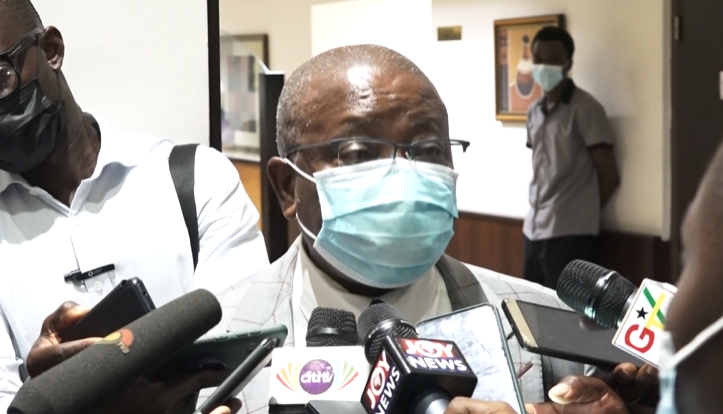
On Monday, Ghana’s Health Minister, Kwaku Agyeman-Manu announced that President Akufo-Addo himself is leading a diplomatic effort to ensure that countries with unused vaccines, share them with Ghana which has achieved more than 90 per cent of coverage in the administration of available vaccines.
Ghanaians who took their first jabs of the AstraZeneca vaccines on the second of March were due to take their second doses on Tuesday, April, 27.
However the Ghana Health Service announced a four-week extension of that, bringing the window to 12 weeks, the maximum interval recommended between the first and second jabs.
But the Health Ministry has asked Ghanaians not to panic, assuring that efforts to bring in more vaccines will soon yield results.
Ghana plans to vaccinate at least 20 million of its 31 million population, in a bid to achieve population immunity.
Latest Stories
-
British national arrested in connection with RAF Fairford incident
2 minutes -
‘Strike is the only language government understands’ –IFEST backs teachers
3 minutes -
Teachers must not be blamed for maintaining strike; the gov’t failed to act earlier – IFEST
12 minutes -
Attijariwafa’s acquisition of Societe Generale likely to be ratings neutral; Ghana’s banking environment healthy – Fitch
20 minutes -
Mahama’s Reset Agenda will make resource wealth benefit citizens – Dr Djokoto
25 minutes -
La Pleasure Beach to reopen after demolition exercise
30 minutes -
La Pleasure Beach demolition victims to receive compensation
42 minutes -
NPP Germany congratulates new national executives, calls for unity ahead of 2028 elections
45 minutes -
Avaricious elitism and intellectualism
47 minutes -
Speeding tipper truck kills 2 basic school students at Ekumfi
50 minutes -
‘I’m 16, passed my BECE and want to become a lawyer’ – Adanwomase ‘smallish’ SHS boy
1 hour -
Ghanaians in their 30s and 50s dying from heart disease without knowing – Cardiothoracic Centre
1 hour -
Emeritus Professor Kwame Akon Ninsin: The man who mentored a department
1 hour -
BoG orders banks to give fraud units direct access to CEOs
1 hour -
Government must clarify fate of 29,000 teachers awaiting promotion – NAGRAT
2 hours