


Audio By Carbonatix
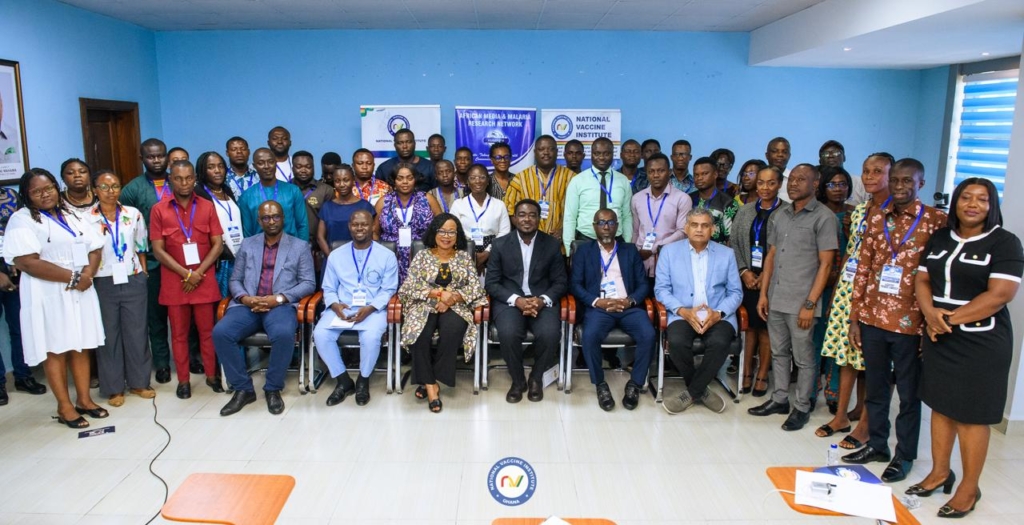
Health experts, scientists, and journalists have renewed calls for stronger media engagement in promoting accurate vaccine information and countering misinformation to strengthen public confidence in immunisation across Ghana and Africa. This came to light at a joint training programme organised by the African Media and Malaria Research Network (AMMREN) in collaboration with the National Vaccine Institute (NVI) in Accra.
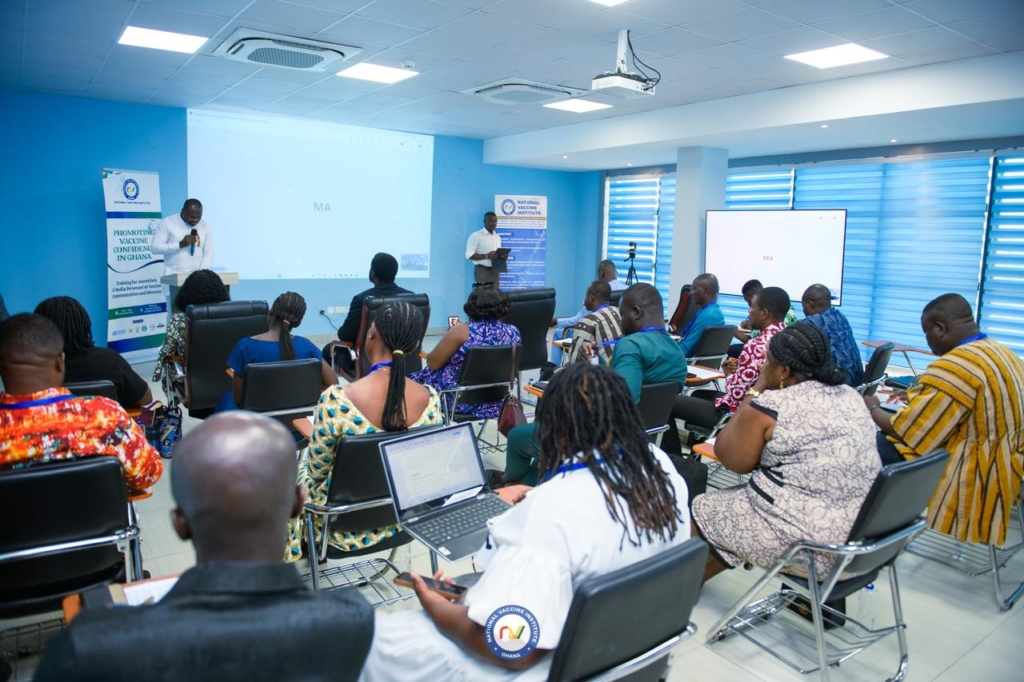
The training brought together journalists, scientists, and health communicators to deepen their understanding of vaccines, improve health communication, and enhance responsible media reporting on immunisation and public health.
AMMREN Calls for Media Empowerment in Vaccine Reporting
Delivering the opening remarks, Dr Charity Binka, Executive Secretary of AMMREN, lauded the partnership with the National Vaccine Institute, describing it as “a shining example of what can be achieved when institutions—public and private—work together with a shared vision to build trust in vaccines and confidence in health systems.”
She emphasised that the media’s role in shaping public perception of health interventions has never been more critical, especially in an era marked by misinformation and digital disinformation.
“Journalists are the vital link between science and society. When the media is well-informed, the public is well-protected,” Dr Binka said.
She noted that AMMREN, since its inception in 2006, has been committed to bridging the gap between health research and public understanding. The network has expanded its focus to include vaccine communication, with several advocacy campaigns and training sessions designed to promote accurate reporting on malaria, COVID-19, and other vaccine-preventable diseases.
Dr Binka highlighted that vaccines remain one of the most effective tools in public health, having saved millions of lives worldwide. Yet, misinformation and vaccine hesitancy continue to undermine progress in many African communities.
“Through responsible reporting, the media has the power to demystify vaccines, counter myths, and build confidence in science,” she said.
She called on participants to use the training to strengthen collaboration between journalists and health experts and to reaffirm their shared commitment to accurate, evidence-based communication.
Ghana’s Immunisation Success and Challenges
Presenting on the state of vaccine uptake in Ghana, Dr. (Med) Naziru Tanko Mohammed, Deputy Programme Manager of the Expanded Programme on Immunisation (EPI) under the Ghana Health Service, provided an overview of how the country’s immunisation programme operates and the challenges it faces.
He explained that Ghana’s EPI is well integrated within the health system and operates at national, regional, and district levels, offering free vaccination services nationwide. Vaccines used under the programme fall into major categories such as live attenuated, inactivated, subunit, toxoid, mRNA, and viral vector vaccines.
Dr Tanko detailed how vaccines work by stimulating the immune system to recognise and fight pathogens, noting that while mild side effects may occur, vaccines remain overwhelmingly safe and effective.
“The very low risk of adverse events caused by a vaccine far outweighs the risk of illness and complications caused by natural infection,” he emphasised.
He dispelled common misconceptions that multiple vaccines given at once can overload a child’s immune system, clarifying that studies consistently show that such combinations are both safe and effective.
Despite notable successes in controlling polio, eliminating neonatal tetanus, and reducing measles and other childhood killer diseases, Dr Tanko outlined persistent challenges:
Heavy reliance on partners like Gavi, the Vaccine Alliance, with Ghana expected to transition out of Gavi support by 2030.
Frequent cold-chain equipment breakdowns at district and facility levels.
Inequities in vaccine coverage between districts.
Rising vaccine hesitancy, misinformation, and anti-vaccine lobbying.
Workforce burnout and response fatigue from frequent outbreaks.
“Vaccination remains one of the greatest public health achievements in human history. To sustain the gains, we must all be on board—health workers, policymakers, and the media alike,” he urged.
Understanding the Science Behind Vaccines
Adding scientific context to the discussion, Dr Kwadwo Asamoah Kusi, Associate Professor at the Department of Immunology, Noguchi Memorial Institute for Medical Research (NMIMR), delivered a lecture titled “Understanding the Concept of Vaccines and Vaccination to Improve Health Communication.”
Dr Kusi traced the history of infectious diseases and their profound impact on human civilisation, from the Black Plague and Spanish Flu to HIV/AIDS and COVID-19, noting that these global epidemics underscore the importance of scientific innovation and vaccination.
He emphasised that the discovery of microorganisms as causes of disease revolutionised medicine and public health, leading to better infection control measures and the eventual development of vaccines. He also underscored the ethical principles governing vaccine research, referencing the Nuremberg Code (1946), the Declaration of Helsinki (1964), and lessons learned from unethical historical studies such as the Tuskegee Syphilis Study.
“Scientific advancement must always go hand in hand with ethical responsibility and public trust,” he said.
Dr Kusi called for greater collaboration between scientists and the media to ensure that accurate, science-based information reaches the public in accessible and trustworthy ways.
A Shared Vision for Health and Trust
The training concluded with a shared call to action from all speakers: to build an informed media landscape that champions public health through factual, evidence-driven reporting.
Dr Binka reiterated AMMREN’s commitment to empowering journalists to become advocates for vaccine confidence and scientific literacy.
“Together, we can build trust, confidence, and resilience in vaccine communication, for the health and well-being of our communities and our continent,” she affirmed.
As Ghana continues to consolidate its immunisation gains and prepare for new health challenges, the role of journalists, as partners in education, advocacy, and accountability, remains indispensable in ensuring that every Ghanaian, and every African, is protected by the power of vaccines.
Latest Stories
-
Who is Attijariwafa Bank, the Moroccan Group set to take over majority stake in SG Ghana?
26 seconds -
University Librarians Ghana honours past leaders for distinguished service
7 minutes -
Seychelles President leads high-level dialogue on Africa’s digital future at FALS Global Conversations in New York
8 minutes -
24-hour economy requires faster justice for commercial cases – Chief of Staff
15 minutes -
Five Agric Colleges receive digital tools to drive climate-smart farming
19 minutes -
GPL 2026/27: Kotoko face Karela test as Hamza Obeng takes temporary charge
39 minutes -
Morocco strike late to overcome 10-man Black Starlets
57 minutes -
Nyaho-Tamakloe calls on Kurt Okraku to resign amid Black Stars struggles
1 hour -
Societe Generale Group agrees to sell Ghana subsidiary to Attijariwafa Bank
1 hour -
Accra: Fire breaks out in North Industrial Area at Avenor
1 hour -
Measure food systems progress not only by productivity but also ability to deliver healthy diets – AGRA
2 hours -
Black Stars: Seven years of decline while hashtagging love
2 hours -
Today’s front pages: Thursday, October 1, 2026
2 hours -
Gov’t to suspend GH¢1 D-Levy on diesel for October and November
2 hours -
Fire destroys belongings in Akweteyman apartment
3 hours