

Audio By Carbonatix
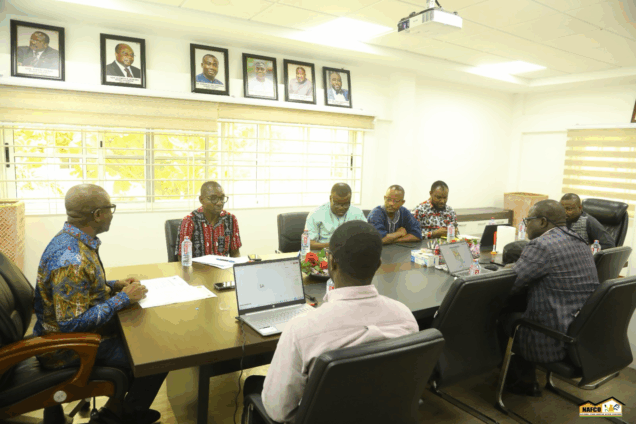
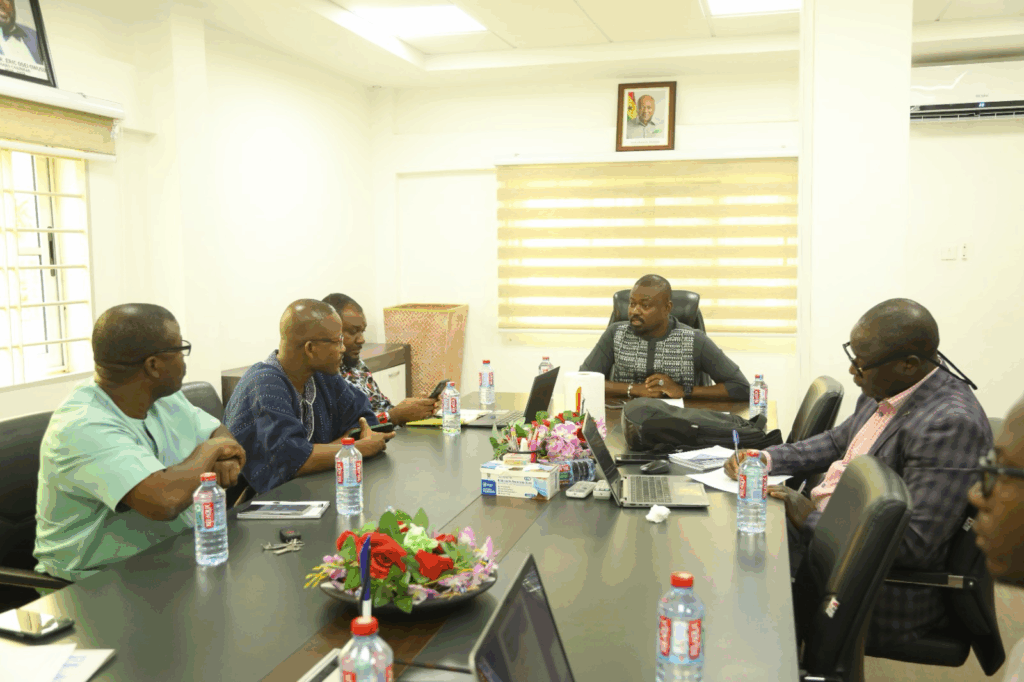
The CEO of the National Food Buffer Stock Company (NAFCO), George Abradu-Otoo, has inaugurated a 10-member Producer Price Committee (PPC) in Accra.
This comes before the commencement of purchases to revive the National Food Security Reserve (NFSR).
The committee is tasked to determine price thresholds that will guide the purchase of selected food commodities from markets and farm gates as part of government’s response to food gluts in some parts of the country.

NAFCO’s mandate includes managing a national food reserve to address emergency needs, stabilise prices during lean seasons, and reduce post-harvest challenges that have long undermined agricultural productivity.
Earlier this year, President John Mahama announced government’s intention to provide GH¢100 million to NAFCO to revitalise the reserve, which has remained empty for years.
The buffer stock company is expected to mop up excess maize, rice, and gari for safekeeping against future eventualities such as shortages, disasters, or emergencies.
The PPC will also serve as a platform for dialogue and decision-making in setting fair producer prices for staple grains.
Smallholder farmers, who produce most of the country’s food, often face unstable markets, post-harvest losses, and weak bargaining power.
Through this committee, farmers are assured of fair returns, while buyers and aggregators benefit from stable pricing structures that support long-term planning and investment.
The committee is made up of representatives from the Ministry of Food and Agriculture (MoFA), NAFCO, World Food Programme (WFP), Peasant Farmers Association, Poultry Farmers Association, Feed Ghana Secretariat, and the Network of Commercial Agricultural Production (NETCAP).
Speaking at the inaugural ceremony, Mr. Abradu-Otoo emphasised that post-harvest losses continue to undermine growth in the sector and described the aggregation of excess produce as an urgent call to action.
“By guaranteeing fair producer prices, government ensures that farmers and aggregators can reinvest in production, thereby contributing to rural development and poverty reduction,” he said.
He added that the initiative aligns with government’s broader efforts to stabilise food prices, reduce import dependency, and strengthen local production.
He urged the committee to ensure pricing policies balance national food security priorities with the economic welfare of smallholder farmers.
Committee Chairman Osmond Amuah expressed hope that their work will reflect the aspirations of all stakeholders in the agricultural value chain.
Latest Stories
-
Central Regional Minister urges use of religious platforms to change environmental, sanitation practices
3 minutes -
Henry Kweku Banning
3 minutes -
Execution of US murderer Christa Pike halted an hour before it was due to happen
5 minutes -
GoldBod generates US$1.87bn in FX in September, exceeds monthly target
9 minutes -
SOE comments controversy: ‘We must never abandon our humanity because of judicial office’ – CJ
18 minutes -
Samuel Kojo Brace declares intention to contest NPP parliamentary primary in Ahanta West
20 minutes -
Dr Apaak calls for evidence-based education response to emergencies
23 minutes -
Pilot may have sought to crash Israel-bound flight after stabbing other pilot, Netanyahu says
28 minutes -
Report flags potential money laundering, terrorist financing risks among Ghana’s NGOs
28 minutes -
Breast Cancer Awareness Month launched: 2,695 women die from breast cancer annually — Dr Ann-Dadzie
36 minutes -
Mahama’s proposed airline looks to South America, Caribbean as Ghana confronts mounting drug trafficking cases
51 minutes -
5% progress on Suame Interchange Phase One inadequate – Roads Minister tasks contractor to speed up work
54 minutes -
Photos: Vice President joins GAAS Awards to celebrate outstanding women leaders
55 minutes -
OSP vs Ken Ofori-Atta, SML and others: Court gives OSP four more weeks to serve Ofori-Atta with summons
56 minutes -
High Commission sends caution to Ghanaians in South Africa ahead of planned protests
59 minutes