

Audio By Carbonatix
I love trains. Many of my fondest memories have had to do with train journeys or simply watching trains. Long before I learnt that train-spotting was a hobby indulged in by millions of people, I was an enthusiast without knowing that my pastime had a name.
When I was a primary school pupil at Koforidua Presby A, I spent long hours at the Koforidua train station, which to my child’s mind was a sophisticated piece of architecture, especially because of the footbridge that spanned the tracks. Standing on the bridge gave a completely different perspective – a feeling of standing above the world and seeing all.
The shaking sensation as the train passed under the bridge gave a particular thrill that the station master tried to deny us, children, by getting us off the bridge. Sometimes he succeeded, other times we eluded him. It was a cat and a mouse.
My train experience started in Ghana’s steam-age when trains were driven by steam engines powered by coal. There was a man, always covered in coal dust, who shovelled coal into the furnace which boiled water from which steam was produced. The power of the steam turned the engine which pulled the long train on its tracks.
I had scores of such journeys, especially between Nsawam and Kumasi which my parents travelled frequently. It was customary to wear dark clothes because inevitably, the soot, smoke and ashes from the engine room managed to reach the passengers, so experienced travellers prepared for the ordeal. As a child, I loved the smell of the steam, maybe because it was my association with trains.
However, around 1958 or so, the first “electric trains” arrived in Ghana. They may have been diesel engines but we called them electric engines, anyway. The electric train was also known as the “Blue train” because the front was a bright blue hue. It was neat and clean both outside and in the carriages, It had first and second class carriages as well as the third class, which would politely be called “economy” these days.
The Blue Trains were reserved for passengers while steam still drove “goods trains”, which carted the country’s wealth in timber, bauxite, manganese, and other raw materials to the shores for onward shipment abroad.
In addition to regular train services, the Ghana Railways Corporation, which was the company running the service in independent Ghana, also ran a special night train known as “Sleeper”, which plied the Accra-Kumasi routes every night. The Sleeper served a variety of customers such as traders, civil servants, students and even lawyers who needed to arrive at their destinations early in the morning and possibly depart that same evening with the return service.
During my years as a student at Legon, most students going to Kumasi and beyond from Accra travelled frequently by Sleeper. Students paid a reduced fare known as “concession”, which was most convenient for our pockets. In addition, there was much socialisation on the train, as unlike being in a car or bus, one could walk between carriages and chat with friends. One memorable train occasion was a night the train broke down at Asuoyaa near Koforidua.
We had boarded the train at Achimota and were just settling down for the night when the train halted. Towards the end of the railway's service, trains often stopped due to technical faults and we expected this pause in our journey to be a short one. Unfortunately, or rather, fortunately, it turned out to be an-all night breakdown in that small village.
Imagine the situation. Students from Legon and other institutions – the polytechnic, training colleges and secondary schools - onboard the train going on vacation could not be expected to sit in their seats or lie in their bunk beds all night. We got down in trickles and then it became a carnival as we discovered village “spots” and other forms of entertainment with the local youth throughout the warm night. As I said, just imagine it and let’s leave that here.
In the course of many travels around the world, I have sampled train journeys in many countries and they all leave lasting impressions. Travelling by train is the best way to get to know a country. I once took a 40 minute train journey on the Irish coast just to see the beauty of Ireland. Its green golf courses owned by the world’s richest people provide the definition of the colour green in pristine nature.
Or, take the summer midnight train from Moscow to St Petersburg in Russia. In Soviet times, St. Petersburg was known as Leningrad and the train to Leningrad was one that every tourist was encouraged to take at least once in a lifetime. In June and July, with the sun setting late and rising early in the northern reaches of the Northern Hemisphere, the midnight train, which left Moscow at exactly one minute past midnight, would go through towns and villages revelling in the night sunshine. It was a beauty to behold.
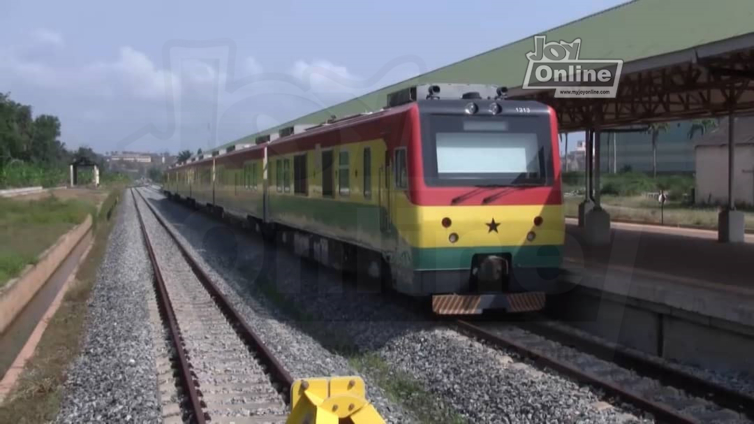
So, dear reader, you wonder why your columnist has gone into these reminiscences about trains. The answer is simple. I have discovered, or am about to discover Ghana’s best-hidden secret: our coming railways future. Quietly and without fanfare, the work on railways is said to be going on in many parts of the country. A friend who works in the sector says I will be impressed and has shown me pictures that warm my train-loving heart.
In the coming weeks, I want to go and see for myself what I hope will be the beginning of a new railway age for our country, and of course, I will share the information with you. Watch this space. First appeared in the Mirror
Latest Stories
-
SOE comments controversy: ‘We must never abandon our humanity because of judicial office’ – CJ
53 seconds -
Samuel Kojo Brace declares intention to contest NPP parliamentary primary in Ahanta West
2 minutes -
Dr Apaak calls for evidence-based education response to emergencies
6 minutes -
Pilot may have sought to crash Israel-bound flight after stabbing other pilot, Netanyahu says
10 minutes -
Report flags potential money laundering, terrorist financing risks among Ghana’s NGOs
10 minutes -
Breast Cancer Awareness Month launched: 2,695 women die from breast cancer annually — Dr Ann-Dadzie
18 minutes -
Mahama’s proposed airline looks to South America, Caribbean as Ghana confronts mounting drug trafficking cases
33 minutes -
5% progress on Suame Interchange Phase One inadequate – Roads Minister tasks contractor to speed up work
36 minutes -
Photos: Vice President joins GAAS Awards to celebrate outstanding women leaders
37 minutes -
OSP vs Ken Ofori-Atta, SML and others: Court gives OSP four more weeks to serve Ofori-Atta with summons
39 minutes -
High Commission sends caution to Ghanaians in South Africa ahead of planned protests
42 minutes -
Okai Mintah outlines vision for NDC Youth Wing as he engages MMDCEs
47 minutes -
Mahama Ayariga leads renewed push for stronger local governance through partnerships
51 minutes -
NDC youth organiser aspirant Okai Mintah consults MMDCEs ahead of elections
52 minutes -
PHOTOS: Ayikuma Methodist Basic School wins National Juniors Challenge
54 minutes