

Audio By Carbonatix
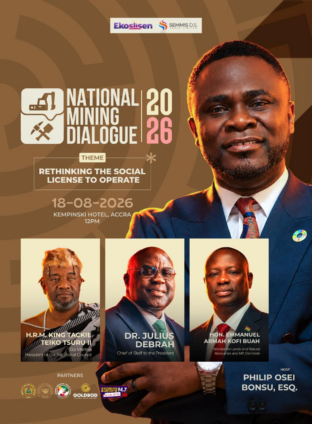
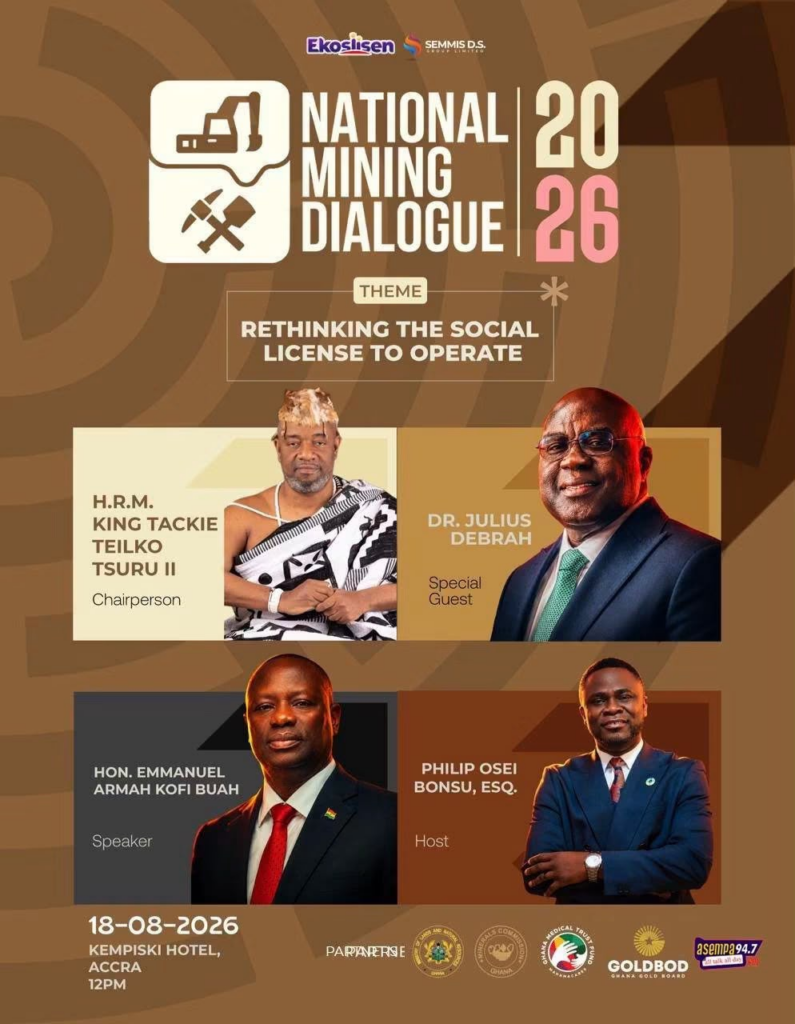
Senior government officials, regulators, traditional authorities, mining industry leaders, small-scale miners, civil society organisations and media practitioners will converge at the Kempinski Hotel in Accra on Tuesday, August 18, for a National Mining Dialogue 2026 aimed at reshaping the conversation around Ghana’s mineral resources and their impact on host communities.
The conference, being organised by Semmis DS Group Limited in conjunction with Ekosii Sen on Asempa FM, will provide a major platform for stakeholders across the mining value chain to examine how the country can derive greater economic and social benefits from its mineral wealth while addressing persistent concerns in mining communities.
The event comes at a critical juncture for Ghana’s mining sector, with reforms around local content and participation, the formalisation of small-scale mining, gold traceability, national reserve accumulation and local value retention increasingly shaping the industry’s future.
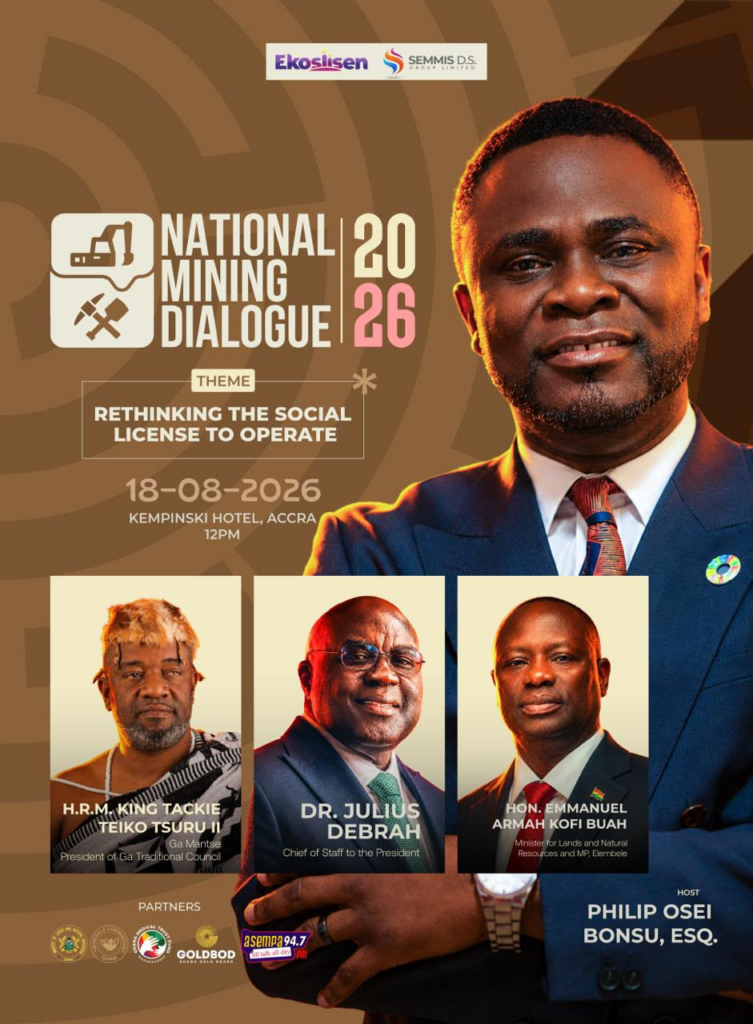
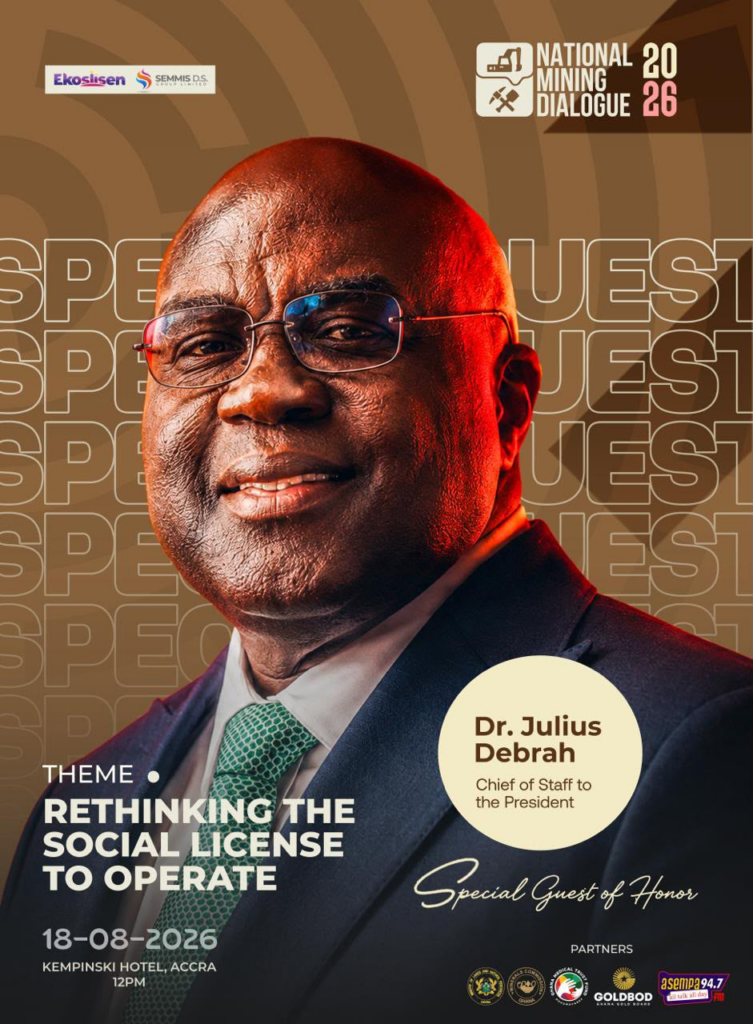
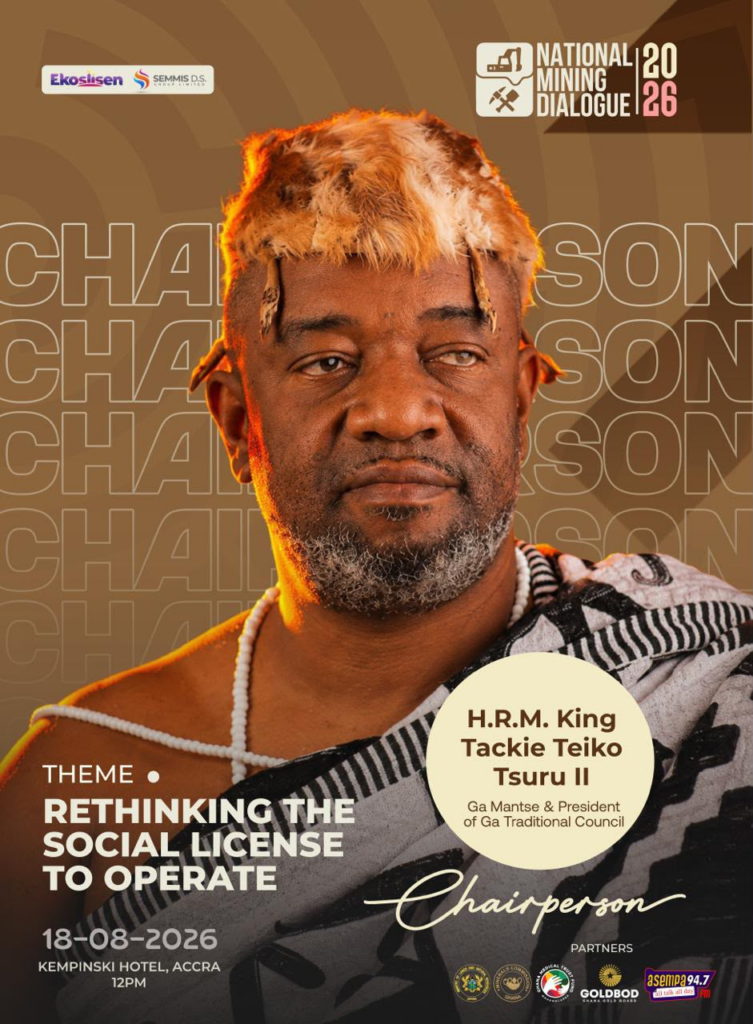
Among the high-profile speakers expected at the conference are Chief of Staff Dr Julius Debrah; Minister for Lands and Natural Resources Emmanuel Armah-Kofi Buah; Chief Executive Officer of the Minerals Income Investment Fund (MIIF), Mrs Justina Nelson; Ga Mantse, His Royal Majesty Nii Tackie Teiko Tsuru II; Administrator of the Ghana Medical Trust (GMTF) Fund, Adjoa Obuobia Darko-Opoku; Chief Executive Officer of the Minerals Commission, Isaac Andrews Tandoh; Chief Executive Officer of the Ghana Gold Board (GoldBod), Sammy Gyamfi; President of the Ghana Journalists Association (GJA), Albert Kwabena Dwumfour; and former Deputy Minister for Lands and Natural Resources, George Mireku Duker.
A conversation centred on mining communities
Mining remains one of the principal drivers of Ghana’s economy, generating foreign exchange, government revenue, employment and investment while supporting infrastructure and other economic activities.
Gold, in particular, remains central to Ghana’s mineral economy, while other resources including bauxite, manganese and lithium are creating new opportunities for investment and industrial development.
However, the economic gains recorded at the national level have not always translated into equally visible improvements in the lives of communities located around mining concessions.
Communities hosting mining operations continue to raise concerns about environmental degradation, displacement, land-use conflicts, youth unemployment, inadequate local economic opportunities and the extent to which mining creates lasting value within affected areas.
It is this gap between the wealth generated from mineral resources and the experiences of communities closest to mining operations that organisers want to place at the heart of the August 18 conference.
The conference is based on the premise that the socio-economic wellbeing of mining catchment communities must become a central consideration in the development of Ghana’s mining industry.
Rather than allowing regulators, mining companies, communities, small-scale miners and the media to engage with one another in separate conversations, the organisers want the different stakeholders brought together to examine the evidence, identify areas of disagreement and agree on practical commitments.

Local content and participation in focus
A key issue expected to dominate discussions is Ghana’s local content and local participation regime.
The conference will examine how large-scale mining companies are using Ghanaian goods and services, employing and developing Ghanaian skills, engaging local businesses and creating opportunities for economic participation along the mining value chain.
Stakeholders are also expected to examine how compliance with local content requirements can translate into measurable benefits for mining-host communities.
The organisers want discussions on Corporate Social Responsibility (CSR) to move beyond the traditional concept of corporate philanthropy.
Instead, CSR will be examined as part of a broader framework for delivering measurable social and economic outcomes in communities affected by mining.
Mining companies will be expected to highlight interventions they have already undertaken in their catchment areas, while also outlining planned programmes and investments.
The conference will seek greater clarity on how such commitments can be planned, reported, measured and independently followed up.
GoldBod reforms to receive major attention
The reform of Ghana’s small-scale mining and gold-trading sector is another major issue expected to feature prominently at the event.
GoldBod Chief Executive Officer Sammy Gyamfi will provide a platform for discussion around the new framework for formalising small-scale mining, strengthening traceability and regulating the purchase and sale of artisanal and small-scale mining (ASM) gold.
The conference is expected to bring together small-scale mining leadership, licensed gold buyers and aggregators, regulators and other participants in the gold value chain to discuss the implications of the reforms.
The objective is to promote a more formal, transparent and accountable gold value chain while recognising the importance of small-scale mining to livelihoods and local economic activity.
Questions around responsible sourcing, pricing transparency, traceability and the retention of greater value within mining communities are expected to form part of the discussion.
The platform will also allow stakeholders to interrogate the challenges facing small-scale miners as the country seeks to move more operators into a regulated and formal framework.
Mining, national reserves and local value retention
Beyond local content and CSR, the conference will address two issues described by the organisers as increasingly important measures of whether Ghana is deriving sufficient value from its mining sector: national reserve accumulation and local value retention.
The discussion will consider the supply of refined gold into the national reserve pipeline and how large-scale mining companies can contribute to Ghana’s broader economic resilience.
At the same time, stakeholders will examine how much of the economic value generated by mining remains within Ghana.
This includes taxes and royalties, local procurement, Ghanaian employment and skills development, downstream processing, indigenous equity participation and ring-fenced community development expenditure.
The conference is expected to encourage large-scale mining companies and the Ghana Chamber of Mines to make specific, verifiable and time-bound commitments on reserve accumulation and local value retention.
Government and regulators to articulate policy direction
The participation of the Minister for Lands and Natural Resources, Emmanuel Armah-Kofi Buah, and other senior officials will give the conference a strong policy and regulatory dimension.
The Ministry is expected to provide direction on responsible mining, local content enforcement, community development and the formalisation of small-scale mining.
The Minerals Commission, represented by its Chief Executive Officer Isaac Andrews Tandoh, will provide an important regulatory perspective, particularly on licensing, compliance, local content and local participation requirements applicable to large-scale operators.
GoldBod, under Sammy Gyamfi, will lead discussions on its reform agenda for small-scale mining, gold traceability and the regulated purchase and sale of ASM gold.
The participation of Mrs Justina Nelson, Chief Executive Officer of MIIF, is also expected to bring a perspective on mineral-sector investment and the challenge of ensuring that Ghana’s mineral wealth generates sustainable long-term value.
Meanwhile, Chief of Staff Dr Julius Debrah is expected to provide a broader government perspective on the national development implications of the mining sector.
Traditional leadership and the voice of communities
The presence of the Ga Mantse, His Royal Majesty Nii Tackie Teiko Tsuru II, emphasises the importance of traditional leadership in the conversation around natural resources, land and community development.
Traditional authorities, district assemblies, youth groups and women’s organisations from mining catchment areas are expected to have an opportunity to present their priorities, grievances and expectations.
Their participation is intended to ensure that the conference does not become an industry or government discussion solely, but reflects the experiences of people living closest to mining operations.
One of the proposed outcomes is a “Catchment Charter”, envisaged as a voluntary but publicly tracked compact between mining companies and host communities.
Health and social development dimension
The participation of Adjoa Obuobia Darko-Opoku, Administrator of the Ghana Medical Trust Fund (GMTF), will also bring a social-development and health perspective to the conference.
The inclusion of stakeholders beyond the traditional mining regulatory and commercial institutions reflects the organisers’ broader approach to mining and community development.
For mining communities, the benefits of mineral extraction are not limited to employment or infrastructure. Access to healthcare, education, skills development, social protection and other essential services can also shape how communities perceive mining operations and their contribution to local development.

Media expected to strengthen accountability
The media will play an important role in extending the conference beyond the walls of the Kempinski Hotel.
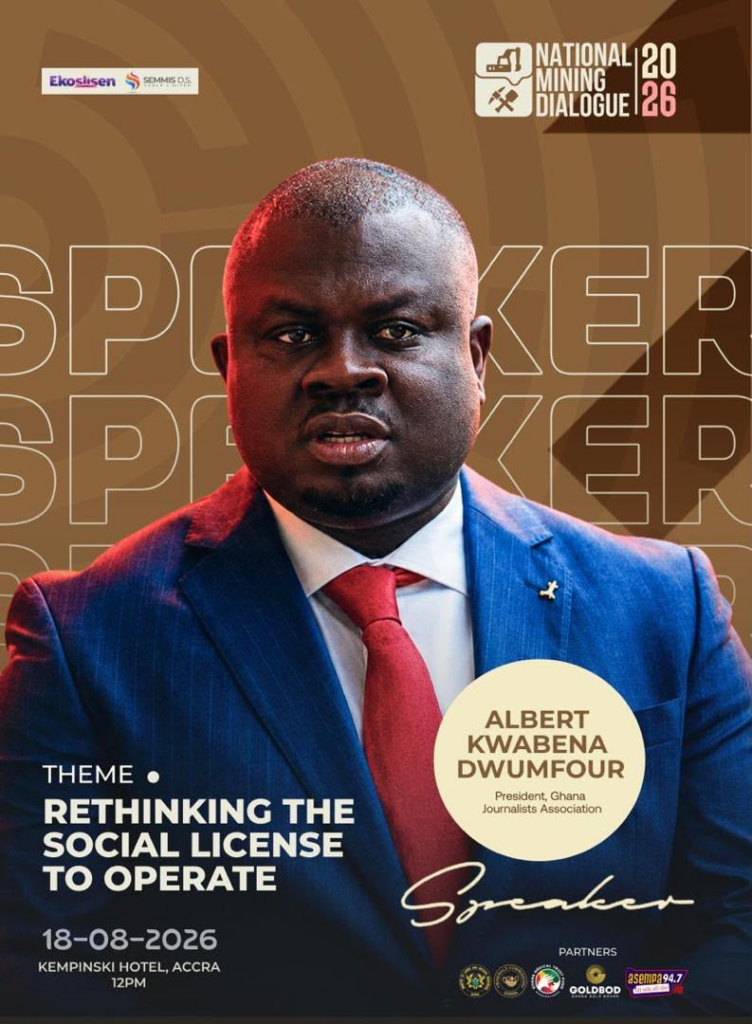
The participation of Albert Kwabena Dwumfour, President of the Ghana Journalists Association, is expected to reinforce the role of journalism in providing public scrutiny of the mining sector and tracking commitments made by industry and government.
The conference organisers plan to leverage live broadcasting and digital distribution through Ekosii Sen and associated Multimedia platforms to widen public participation and awareness.
This is intended to ensure that the discussions and commitments emerging from the conference are not confined to participants in the room, but are made accessible to the wider public.
From speeches to commitments
Among the expected outcomes are a shared understanding of local content and local participation obligations, greater clarity on GoldBod’s reform agenda, public disclosure of mining companies’ community interventions and a conference communiqué setting out key commitments and action points.
The proposed Catchment Charter will provide another mechanism for documenting commitments between mining companies and host communities.
A post-conference monitoring framework is also envisaged, with the convenors and media partners expected to follow up on the implementation of commitments made during the event.
This accountability component is particularly significant given the long-standing concerns about the gap between promises made to mining communities and the outcomes eventually delivered.
Bringing the mining value chain to one table
The August 18 conference is expected to attract participants from across the mining value chain, including large-scale mining companies, small-scale miners, licensed gold buyers and aggregators, service providers, traditional authorities, district assemblies, civil society organisations, academia and the media.
Large-scale mining companies will be expected to present their investments and CSR interventions in host communities and outline future commitments.
Small-scale miners will have the opportunity to discuss the realities of artisanal mining and engage directly with the GoldBod reform pathway.
Latest Stories
-
Abdul Hayi Moomen Writes: You cannot betray the prophet by betraying his example
45 seconds -
Three men will be executed on the same day as death penalties rise in US
7 minutes -
The vulture of silence – Kurom Ayɛ Dinn – Occasional Kwatriot Kwesi Yankah writes
9 minutes -
South Korea’s Incheon airport beats Heathrow to become world’s busiest
11 minutes -
Is Agenda 111 being privatised? RTI request seeks details of ‘secret deals’ with private entities
18 minutes -
AGI raises alarm over 40% electricity tariff hikes facing businesses
19 minutes -
Tipper drivers’ indiscipline becoming a danger to road users – Association
19 minutes -
Evelyn Naa-Otua Addo
21 minutes -
NMC warns political parties against foreign information manipulation and interference
23 minutes -
GNFS yet to determine cause of Ofankor crash that killed 11
26 minutes -
Energy Minister John Jinapor urges GNPC to increase investment and oil sector value
27 minutes -
Mrs Anna Tackie
31 minutes -
Church of God donates sewing machines to vocational graduates in Mamprobi
33 minutes -
World Mission Society Church of God provides food packages to Weija-Gbawe flood victims
34 minutes -
Use Parliament recall to review COCOBOD Bill – Oppong Nkrumah tells Mahama
35 minutes