

Audio By Carbonatix
The National Development Planning Commission (NDPC) has identified affordable access to credit as a critical factor in reviving Ghana's industrial sector and accelerating job creation.
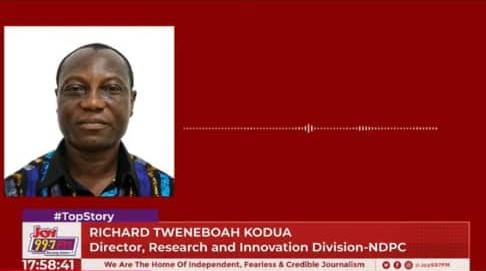
Director of Research and Innovation at the NDPC, Richard Tweneboah Kodua, said the country's growing dependence on the services sector, while not inherently negative, is limiting employment opportunities because industry has failed to expand at the pace required to absorb the labour force.
Speaking on Joy FM's Top Story on Thursday, July 16, Mr Kodua said the commission's latest National Annual Progress Report showed the industrial sector recorded average growth of just 2.1% between 2022 and 2025, compared with 6.6% for the services sector.
He explained that although services continue to make the largest contribution to Ghana's GDP growth, the country needs a stronger industrial base because it is better positioned to generate large-scale and decent employment.
"Services sector has always led the contributions to GDP growth. Much as that may not necessarily be a bad idea, we rather wish that the industry sector comes up strongly because that is where you get a lot of jobs happening," he said.
Mr Kodua attributed the weak performance of industry to several factors, chief among them the high cost and limited availability of credit for businesses.
"Access to credit and affordable credit for industries or businesses is a key thing. Interest rates, if they are low enough for businesses to invest, would help drive that agenda," he noted.
He disclosed that the NDPC is working closely with the Bank of Ghana and financial institutions to assess lending patterns across sectors of the economy.
"We are taking a closer look at the credit portfolios that financial institutions are running, which sectors are receiving investment, and what quantum of resources is going there, so that we can engineer that and ensure resources are directed into areas that create more jobs," he explained.
Mr Kodua also welcomed the government's decision to strengthen collaboration between agriculture, agribusiness and industry, saying closer integration between production, processing and value addition would support industrial growth and employment.
"You need jobs and decent jobs to fuel growth and also make the economy more stable," he added.
Latest Stories
-
Ray Michael Djan Jr puts Ghanaian creativity on global stage with Chelsea anthem
8 minutes -
Matilda Dibloni Kokar elected USAG president after two-year dormancy
11 minutes -
NPP delegates wanted youthful energy with Kojo Bamba’s election – Political scientist
14 minutes -
Zenith Bank supports Childhood Cancer Unit at Greater Accra Regional Hospital
14 minutes -
KMA empowers 64 persons with disabilities; Mayor unveils plan for sustainable skills centre
16 minutes -
DJs Union urges musicians to prioritise respect, communication amid industry tensions
24 minutes -
“Ghanaian DJs deserve their flowers” – Lasmid
24 minutes -
Zenith Bank supports childhood cancer unit at Greater Accra Regional Hospital
26 minutes -
‘Who’s in charge doesn’t really matter; we’re all servants’ – John Boadu on leader of NPP
29 minutes -
Christa Pike’s prognosis still unclear after failed execution, lawyer says
45 minutes -
SLTF to advance fees for first-year students facing admission payment deadlines
48 minutes -
Ghana Institute of Architects calls for action to make adequate housing a human right
48 minutes -
BoG, Police arrest seven over alleged misuse of Ghana Cedi as bouquets
48 minutes -
NCPTAs appeal to striking teachers to return to classroom
49 minutes -
Government plans engineered landfills and waste transfer stations nationwide – Ayariga
51 minutes