

Audio By Carbonatix
Nearly half of Ghana’s economic engagements with its neighbouring countries take place within the informal sector, a development that significantly affects the accurate assessment of the country’s economic growth.
According to new data from the Ghana Statistical Service (GSS), a substantial portion of trade between Ghana and its northern and western neighbours occurs outside formal systems, obscuring the true size and performance of the Ghanaian economy.
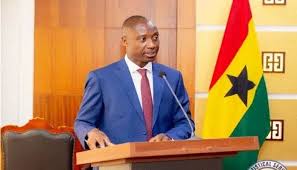
Launching the Informal Cross-Border Trade (ICBT) Survey, Government Statistician, Dr Alhassan Iddrisu, explained that Ghana’s Gross Domestic Product (GDP) calculations may be understating real economic activity, as informal trade flows are not fully captured in national accounts.
Read also: Cross-border informal trade in 2024 Q4 estimated at GH₵7.4bn – GSS
The GSS’s maiden ICBT survey tracked the movement of goods between Ghana and neighbouring Togo, Côte d’Ivoire, and Burkina Faso that pass through informal customs channels.
The findings highlight that informal cross-border trade remains a vital part of Ghana’s economy, generating billions of cedis annually and sustaining thousands of small traders, farmers, transporters, and market operators.
Because much of this activity goes unrecorded, the country’s official trade statistics and GDP estimates fail to present a complete picture of economic performance.
Dr Iddrisu noted that the goal is not to suppress informal trade, but rather to recognise and support it, ensuring that policy reflects economic realities.
“When we acknowledge informal trade as legitimate economic activity, we build a more inclusive and realistic picture of our economy,” he stated.
He further explained that GDP and trade statistics depend on understanding the value of goods and services entering and leaving the country.
When significant volumes of goods cross borders informally, national accounts fail to capture these flows, resulting in undercounted GDP, distorted growth rates, and poorly targeted policies due to gaps in data on demand, supply, and distribution.
With the ICBT data now publicly available, the GSS is urging government, the private sector, and development partners to move from dialogue to decisive action—investing in border infrastructure, introducing trader registration and financing schemes, and harmonising regional trade procedures to make cross-border commerce more efficient.
“Now we have the data on informal trade. Let’s use it to design policies that are grounded in evidence,” Dr Iddrisu urged.
Latest Stories
-
GH¢70k is no ordinary gift, it raises serious ethical questions – Edem Senanu
33 minutes -
Accra-Kumasi Expressway will be Ghana’s biggest infrastructure project – Kwakye Ofosu
47 minutes -
Cape Coast pulses with colour, sound ahead of Fetu Afahye
48 minutes -
Nigerians die after inhaling toxic fumes during alleged pipeline theft, community group says
49 minutes -
CSSPS placement results to be released tonight at 10:00 pm
49 minutes -
Accra-Kumasi Expressway to be fully funded locally – Government
50 minutes -
US diesel prices hit an all-time-high
53 minutes -
Horticulture Expo: Gov’t targets stronger agric value chain to boost horticulture exports
56 minutes -
Reckless driving incidents fall by 38% across Africa – Yango report
57 minutes -
It is ‘FAKE’ – Patricia Appiagyei reacts to memo alleging rejection of GH¢70,000 money
59 minutes -
ICE agent charged with lying about shooting Venezuelan man during crackdown
60 minutes -
Police arrest landlord’s wife for allegedly biting tenant’s ear during a fight
1 hour -
US diesel prices hit a record high, pushing up transportation costs for a long list of goods
1 hour -
300 entrepreneurs in Bono East battle for MTN-Innohub SME Support as programme enters 4th year
1 hour -
Lawyer sues AG, GRA boss over passenger baggage exemption rules
1 hour