

Audio By Carbonatix
Over 90% of people living in flood-prone areas are primary/ JHS/SHS leavers who lack information about flood.
That is part of the findings of a research by the Centre of Settlement Studies, the Kwame Nkrumah University of Science and Technology and the Network of Excellence in Land Governance in Africa (NELGA).
The research dubbed, NELGA Flood Land Research with funding from the GIZ sought to determine the category of people who acquire land in flood-prone areas in Kumasi.
It also aimed at establishing reasons for people acquiring and living on flood-risk lands
The researchers found that many of the victims have trade skills as hairdressers, welders, gadget preparers and carpenters servicing the urban economy with specialised artisanal trades.
Others are; head porters, table top traders, and street sellers trying to make a living for themselves.
The research also revealed that females with formal education below JHS level on flood lands are relatively higher (73.8%) than their male counterparts.
Also, it came out that the average number of children for the married cohort was three to four children. Thus, vulnerable families are mostly affected with over 80% of their jobs also being affected, when flooding occurs.
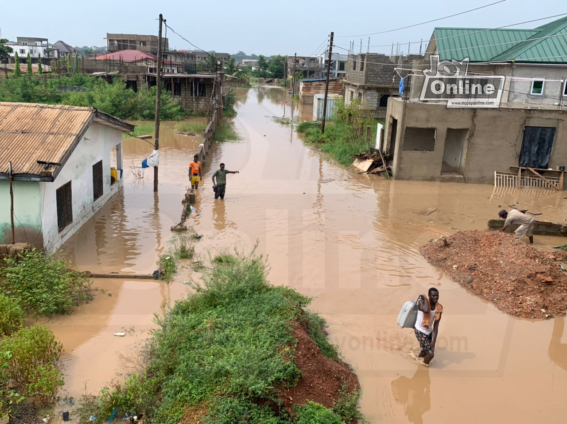
Most victims (92%) alluded to the fact that they have experienced flood waters to waist level, suggesting very severe flood occurrences that can be very devastating and traumatic.
Overall, the study has revealed that, while the vulnerable and socially excluded are making great strides towards making a living for themselves, the annual flooding is derailing their efforts and making them worse off.
Moreover, the national discourse often focusses on blaming them rather than seeing them as victims who need to be supported in terms of their recovery.
Many of these vulnerable groups struggle to build small scale businesses from scratch only for the floods to wipe out all their investments, every now and then.
Most of the Victims tend to rely on family members and neighbours for support.
The researchers recommended that the response strategy should focus on providing a resettlement scheme in rebuilding the lives of these families and also offering emotional support for especially the women and children for the trauma they may be faced annually anytime heavy floods occur.
Prof. Divine Ahadzie, Head of Settlement Studies said, “the Centre for Settlements intends to leverage on these findings in creating flood awareness in these communities on how to use community action in empowering themselves towards reducing their risk to flood hazards,” he said.
Latest Stories
-
Ghana explores centre of excellence for hearing, communication and cochlear implant care
1 hour -
Schizophrenia-related disorders lead mental health cases recorded in Ghana
1 hour -
Dutch authorities enlist Ghana in hunt for fugitive drug lord Bolle Jos
2 hours -
Ghana housing finance conference adopts communiqué to improve affordable housing access
6 hours -
Special Initiatives Minister urges Wa Technical Institute to enrol more girls as EU-backed solar training lab opens
7 hours -
In the matter of my first year at the Bar
7 hours -
ActionAid Ghana calls for an end to child marriage, greater investment in girls’ rights
7 hours -
Newsfile to tackle World Cup visa scandal, beach demolitions, education strikes, BRICS bid
7 hours -
UK-Ghana Trade & Investment Summit: Trade Resource Centre to help businesses maximise UK-Ghana trade opportunities
8 hours -
Embassy of Denmark celebrates World Maritime Day
8 hours -
Linking LEAP to productive inclusion could cut extreme poverty by 2030 – UNICEF
9 hours -
Trade Ministry backs use of creative arts to rehabilitate prison inmates
9 hours -
Negotiations with government to continue despite strike suspension – GNAT
9 hours -
‘Ghana cannot afford to waste public resources; every cedi has a job’ – Ato Forson
9 hours -
Ghana expects economic boost as World Assemblies of God Congress brings 10,000 delegates to Accra
9 hours