

Audio By Carbonatix
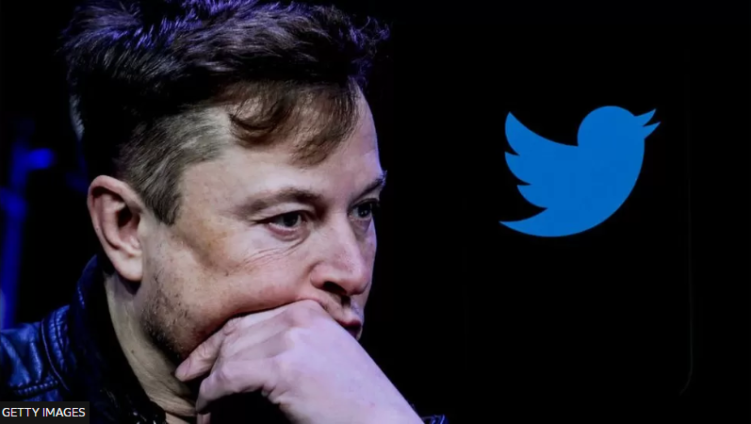
Elon Musk has said running Twitter has been "quite painful" and "a rollercoaster", in a last-minute interview with the BBC.
The multi-billionaire entrepreneur also said that he would sell the company if the right person came along.
The interview, aired live from Twitter HQ, also covered the mass lay-offs, misinformation and his work habits.
Mr Musk, who also runs car maker Tesla and rocket firm SpaceX, bought Twitter for $44bn (£35.4bn) in October.
In the conversation - in which Mr Musk tried to do the interviewing as much as the other way around - Mr Musk defended his running of the company.
Asked whether he had any regrets about buying Twitter, the world's second richest man said the "pain level has been extremely high, this hasn't been some kind of party".
Talking about his time at the helm so far, Mr Musk said: "It's not been boring. It's been quite a rollercoaster."
It has been "really quite a stressful situation over the last several months", he added, but said he still felt that buying the company was the right thing to do.
Things are going "reasonably well", he said, stating that usage of the site is up and "the site works".
The workload means that "I sometimes sleep in the office", he said, adding that he has a spot on a couch in a library "that nobody goes to".
And he also addressed his sometimes controversial tweets saying: "Have I shot myself in the foot with tweets multiple times? Yes."
"I think I should not tweet after 3am," he added.
Asked about the decision to add a label to the BBC's main Twitter account describing it as "government funded media", Mr Musk said: "I know the BBC is generally not thrilled about being labelled state media."
Earlier this week, the corporation contacted the social media giant over the designation on the @BBC account to resolve the issue "as soon as possible".
"The BBC is, and always has been, independent. We are funded by the British public through the licence fee," it said.
Mr Musk said Twitter was adjusting the label for the BBC to "publicly-funded". "We're trying to be accurate," he said.
"I actually do have a lot of respect for the BBC," Mr Musk added, stating that the interview was "a good opportunity to ask some questions" and "to get some feedback on what we should be doing different".
Discussing Twitter's finances, Mr Musk said the company is now "roughly breaking even", as most of its advertisers have returned.
He also said that cutting the workforce from just under 8,000 at the time he bought the firm to about 1,500 had not been easy.
He admitted he did not fire everybody in person, saying: "It's not possible to talk with that many people face to face."
The exit of many of Twitter's engineers since Mr Musk bought the company has raised concerns about the stability of the platform.
He acknowledged some glitches, including outages on the site but he said the outages have not been for very long and the site was currently working fine.
In the interview - which was broadcast live on Twitter Spaces from San Francisco - Mr Musk was also challenged over misinformation and hate speech on the platform.
He claimed there was less misinformation on Twitter since the takeover, and that his efforts to delete bots - automated accounts - will decrease fake news.
But many outside experts disagree. One study - and there are quite a few others along the same lines - found engagement with popular misinformation-spreading accounts spiked after Mr Musk's takeover.
He repeatedly questioned whether journalists were fair arbiters of truth and said he had more trust in "ordinary people".
On the issue of legacy-verified blue ticks on the platform, Mr Musk said they would be removed from accounts by the end of next week.
Former Twitter executive Bruce Daisley - who ran the business in Europe, the Middle East and Africa for eight years - said the interview "gave us some insight into the strange life of this billionaire".
"He confessed today that the only reason he went through with buying Twitter was because he believed a judge would force him to go through with the transaction. He's never admitted that till now, so it was a very whimsical interview."
Mr Daisley also suggested the interview showed he was not always consistent in what he says.
Mr Musk has an estimated personal fortune of almost $190bn, making him the world's second richest person, according to the Forbes billionaires list.
Latest Stories
-
Black Stars face Ivorian test as injuries force major squad changes
25 minutes -
Save Nations Foundation donates learning materials to Nooria Islamic Basic School, calls for more support
32 minutes -
From selling food to solving problems: How Esther Owusu Nkwantabisah rethought entrepreneurship
46 minutes -
High Cost of Domestic Airline Fares: Can government do something about it?
1 hour -
Inflation, cedi depreciation put BoG’s MPC under pressure as policy rate decision looms
1 hour -
Lawyer denies Salomey Baffoe received money from ‘Ghana Jollof’ account operator
2 hours -
Beyond politics: Why Kwame Nkrumah’s ideals still matter for today’s leaders
2 hours -
Top South African policeman charged with sexual offences
2 hours -
More than 170,000 respiratory cases recorded in haze-choked Indonesia
2 hours -
Narrowed space, intolerance – Sammy Crabbe says NPP is driving talented members away
2 hours -
We’re not analytical enough – Sammy Crabbe calls for data-driven decision-making
2 hours -
Tonto Dikeh celebrates Bobrisky as birthday tribute sparks online reactions
3 hours -
Peter Okoye tells court he received over $800,000 in P-Square royalties
3 hours -
I’ve never had problems with artistes – Rema addresses alleged fight with Davido
3 hours -
I was mocked for getting pregnant out of wedlock as pastor’s daughter – Davido’s baby mama
3 hours