

Audio By Carbonatix
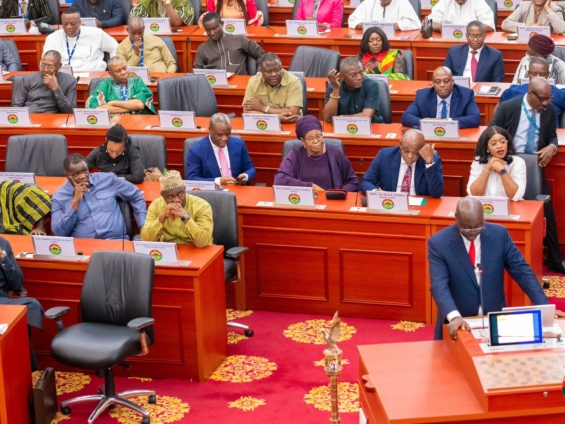
Parliament has passed the Value Added Tax Bill, 2025, marking the most sweeping reform to Ghana’s VAT regime in over a decade and officially scrapping the COVID-19 Health Recovery Levy.
The reforms fulfil a major pledge announced by the government in the 2025 Budget and Mid-Year Fiscal Policy Review to make Ghana’s VAT system fairer, simpler, and more growth-focused.
Finance Minister Dr Cassiel Ato Forson, who led the policy revisions, said the new legislation will remove distortions, reduce cascading effects, promote compliance, and improve economic efficiency for businesses and households.
“We promised to abolish the COVID-19 levy. With the support of this House, I am happy to announce today that it is abolished,” Dr Forson declared on the floor of Parliament.
Under the new VAT structure, the COVID-19 levy is removed entirely and is expected to return GH¢3.7 billion to individuals and businesses in 2026 alone.
The bill also abolishes the decoupling of GETFund and NHIL from the VAT base, meaning both are now eligible for input tax deductions, a change projected to reduce the cost of doing business by about 5 per cent.
The government says that cumulatively, the full reform package will give back nearly GH¢6 billion to the Ghanaian economy.
Other approved measures under the VAT Bill include:
• Abolition of VAT on mineral reconnaissance and prospecting, aimed at reviving exploration investment and reversing years of stagnation in greenfield development.
• Reduction of the effective VAT rate from 21.9 per cent to 20 per cent.
• Increase in the VAT registration threshold from GH¢200,000 to GH¢750,000, relieving thousands of micro and small enterprises from mandatory VAT compliance.
• Extension of zero-rated VAT on locally manufactured textiles to December 2028, protecting more than 2,000 jobs and enhancing competitiveness in the domestic garment market.
According to the Finance Minister, the previous taxation threshold had eroded significantly in real value since 2015, forcing many micro-businesses into VAT registration and raising administrative costs.
The new threshold, he said, restores fairness and frees small enterprises to grow without heavy compliance burdens.
Dr Forson emphasised that the VAT overhaul goes beyond tax adjustments, positioning Ghana for a digitally enhanced revenue future.
The rollout will introduce Fiscal Electronic Devices (FEDs) to track taxable transactions, digital VAT collection on cross-border e-commerce, and a new VAT reward scheme encouraging consumers to demand receipts and help police compliance.
The government believes these interventions will boost investor confidence, support local industry, and stimulate job creation, particularly in mining and textiles, where policy distortions have long restricted growth.
“These reforms mark a turning point in Ghana’s value-added tax administration,” the Finance Minister said. “This is not just a tax reform, it is a step toward a more just, predictable, and business-friendly economy.”
The Ghana Revenue Authority will begin a nationwide sensitisation campaign ahead of implementation, ensuring businesses and consumers are fully prepared for the transition.
The passage of the VAT Bill, 2025, signals a decisive shift in Ghana’s tax policy, one aimed at easing the cost of doing business, empowering industry, and anchoring long-term fiscal stability.
Latest Stories
-
Make loyalty to NPP a permanent culture, not an election-season tactic – Joseph Cudjoe
7 minutes -
NPP delegates want reform without destroying party’s reputation – Joseph Cudjoe
9 minutes -
Salomey Awiti Baffoe granted GH¢100,000 bail over alleged false news publication
13 minutes -
NPP is for all social classes, not just the middle class – Mike Oquaye
19 minutes -
Freezy Mɑcbones wins WBO Africɑ Light Heɑvyweight title in Lɑgos, Nigeria
21 minutes -
John Boadu is ‘an exceptionally gifted political figure’ – Prof Mike Oquaye
38 minutes -
NDC must study NPP congress closely for strategic lessons – Mustapha Gbande
44 minutes -
NDC has built strong structures to face any electoral challenge – Mustapha Gbande
54 minutes -
John Boadu can appeal across Ghana’s social groups – Prof Mike Oquaye
1 hour -
‘Electing Kojo Bamba is backward politics’ – Mustapha Gbande
1 hour -
Government must order payment of promoted teachers’ salaries – GNAT
1 hour -
Meet Sethina Edem Sunu, the healthcare professional eyeing the NDC UK & Ireland deputy organiser role
1 hour -
The myth of ‘sophisticated customer experience’ in the digital age
2 hours -
What happened to lands reserved for sanitary sites? -WasteCare CEO calls for audit
2 hours -
Manasseh Writes: The shift in the NPP
2 hours