

Audio By Carbonatix
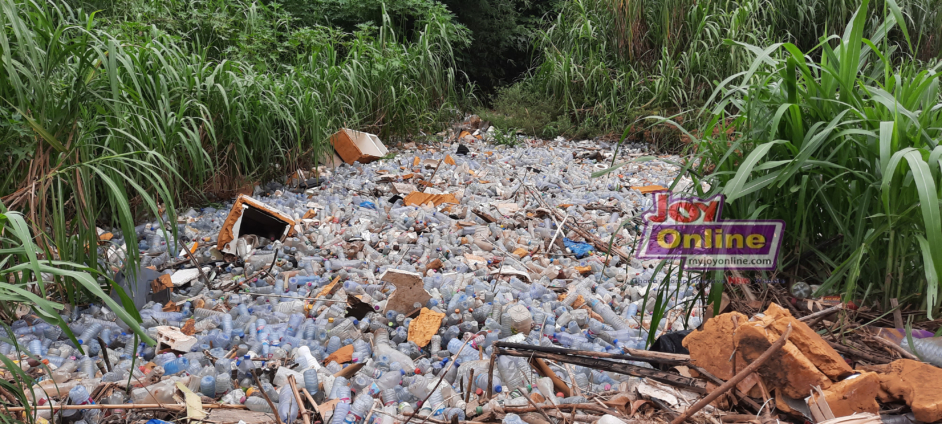
The country generates 1.1 billion pounds of plastic waste annually, Richard Adjei-Poku, the Executive Director of the Livelihood and Environment Ghana (LEG), an environmentally centred organisation, has said.
“However, only nine per cent of the waste is recycled, 41 per cent is collected, and 50 per cent remains uncollected”, he said in an interview in Sunyani, saying the nation spent close to $6 billion in cleaning plastic waste every year.
LEG is a community-based not-for-profit and Non-Governmental Organisation which promotes environmental sustainability and also seeks to better the socio-economic livelihood of marginalised people, advocates their rights and promotes transparency, accountability, and sustainable use of natural resources.
In Africa, he indicated that “research shows that the continent generates about 17 billion plastic waste, costing it close to $561 billion”.
Besides the economic impacts, Mr Adjei-Poku stressed that plastic pollution has “huge environmental and health impacts that are so catastrophic,” saying plastic-polluted water bodies caused biodiversity loss and increased greenhouse gases.
He said: “Chemicals like Bisphenol A, Dioxin and retardant use in the production of plastics contain high toxicity and can cause cancer, reproductive and developmental problems, damage to the immune system and metabolic disorders like diabetes, obesity and infertility”.
Mr Adjei-Poku said concerted and decisive approaches were required to control indiscriminate use and dumping of plastic waste and called on other NGOs and corporate bodies, and religious organisations to help intensify awareness creation on plastic pollution.
He said LEG remained committed to regreening the environment and restoring the nation’s depleted forest and vegetative cover, assuring its readiness to support the government’s Tree4Life Reforestation initiative for the nation to derive the optimum benefit.
President John Dramani Mahama launched the ‘Tree4Life Reforestation’ Initiative as a major national effort to restore the nation’s forests, which provide essential resources such as food, water, medicine, and employment to many Ghanaians.
The implementation of the Tree4Life initiative further gears towards putting the nation on the path to attaining the United Nations Sustainable Development Goals (SDGs) 11 and 13 of respectively, achieving Sustainable Cities and Communities and Climate Action.
Global goal 11 aims to make cities inclusive, safe, resilient, and sustainable, while goal 13 addresses the urgent need to combat climate change and its impacts.
Latest Stories
-
Anthropic seeks rehearing of case over Pentagon’s security risk branding
44 seconds -
NDC Deputy National Organizer Aspirant Hamza Umar targets grassroots mobilisation
45 minutes -
Villarreal fight back to beat Napoli and end losing run
3 hours -
Tresoldi nets hat-trick as Club Brugge win Inter thriller
3 hours -
PSG’s Luis Enrique hopes Man City avoid sanctions
3 hours -
Lisandro Martinez issues scathing attack on Man Utd board – has he made things worse?
3 hours -
Saka responds to Arteta’s challenge with ‘huge impact’
3 hours -
Viking hold Bayern in thriller as Kane breaks Messi record
4 hours -
Gordon scores as Barcelona beats Galatasaray
4 hours -
Bumble bought for $1.3bn in ‘bet on the future of humanity’
4 hours -
Imagination Africa, Mentors Chess Academy to host second African Genius Chess Championship at Ghud Park
4 hours -
Paradigm Initiative steps up calls over digital rights, internet freedom in Africa
4 hours -
Saudi man charged with planting ‘sophisticated’ recording device in OpenAI office
4 hours -
Ghana wins UN Human Rights Council seat as calls grow for action against atrocities
4 hours -
Royal Mail losing 400 postal workers a week, says union
5 hours