

Audio By Carbonatix
Plastic pollution in Ghana begins long before waste enters gutters or drains, a plastic policy expert has said, calling for stronger accountability from manufacturers under Extended Producer Responsibility systems.
Manager of the Ghana National Plastic Action Partnership, Nii Noi Kofi Omaboe, says the country’s growing plastic waste challenge cannot be solved if responsibility continues to rest mainly on households and sanitation authorities.
Speaking during the second edition of the Loud and Green XSpace organised by JoyNews and Beyond the Science, Mr Omaboe said the origins of plastic pollution lie in product design and packaging decisions made by companies.
“Plastic pollution does not begin in the gutter. It begins at the point of design,” he said.
He explained that many companies continue to rely heavily on single-use plastics despite the availability of reusable and recyclable alternatives.
According to him, clean-up campaigns alone are not sufficient to address the scale of the problem.
“The accountability we want from companies cannot be reduced to sponsoring clean-ups after the pollution has already happened,” he said. “Companies must rethink their products and redesign their systems.”
Mr Omaboe called for the strict enforcement of Extended Producer Responsibility (EPR), a policy framework that requires manufacturers to bear part of the cost of collecting and recycling the packaging they introduce into the market.
He argued that companies profiting from plastic packaging, especially sachets and bottles, should also share responsibility for managing their environmental impact after consumption.
“If a company profits from sachets and bottles, then it must also carry part of the responsibility for what happens after the product inside is consumed,” he said.
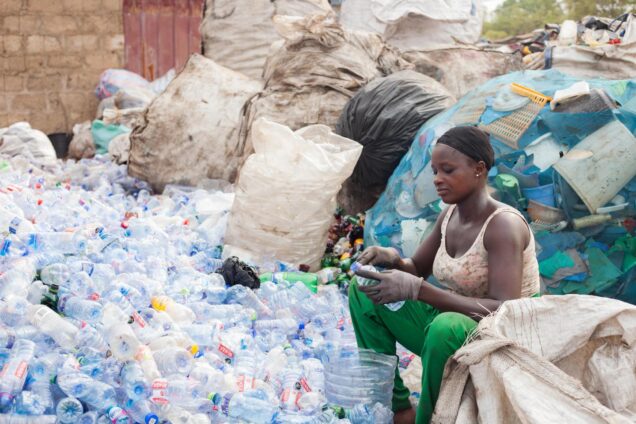
He further outlined key responsibilities for manufacturers, including reducing unnecessary plastic use, redesigning packaging, financing recycling systems, supporting waste collection networks and ensuring fair compensation for waste pickers.
Mr Omaboe stressed that solving Ghana’s plastic challenge requires changes not only in consumer behaviour but also in how products are designed and brought to market.
He maintained that meaningful progress will depend on shifting responsibility upstream, where production decisions are made, rather than focusing only on downstream clean-up efforts.
Latest Stories
-
Asos confirms hackers sent ‘unauthorised’ notification to app users
7 minutes -
White House defends Trump comment to let Iran ‘take out’ LA and San Diego
14 minutes -
US televangelist Jim Bakker, disgraced from sex scandal and fraud, dies at 86
17 minutes -
Congolese-born golfer to represent Ghana at Turkish Airlines World Cup grand final
22 minutes -
Amazon wins global rights to stream Emmys in six-year deal
23 minutes -
European Film Festival returns to Ghana after a 5-year break
28 minutes -
PTA backs teachers’ strike, threatens street protest if gov’t misses October 30 deadline
31 minutes -
Paramount takes over Warner Bros in $110bn Hollywood merger
32 minutes -
Suspend offshore gold exploration licence – NAFAG urges gov’t
33 minutes -
Investigators meet family, community over deaths of 3 children found in car trunk
41 minutes -
Teacher strike: FWSC blames new allowance demand for deadlock with teacher unions
1 hour -
Aboboyaa Company Ltd CEO donates 5 tricycles to Ghana Prisons Service
1 hour -
National Cathedral: ‘There’s no clarity as to what they want to use the site for’ – Afenyo-Markin on site’s future
1 hour -
Investigators meet family, community over deaths of 3 children found in car trunk
1 hour -
Teachers have legitimate concerns, but prolonged strike will affect pupils – Joseph Kumah
2 hours