

Audio By Carbonatix
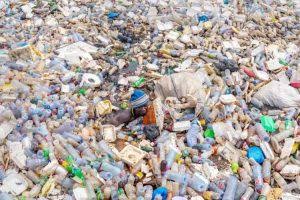
Ghana's plastic pollution crisis is no longer confined to littered streets, clogged drains and flooded communities, according to ocean conservation advocate Abdul Na-eem Muniru, who warns that discarded plastics are increasingly finding their way back to humans through the food chain.
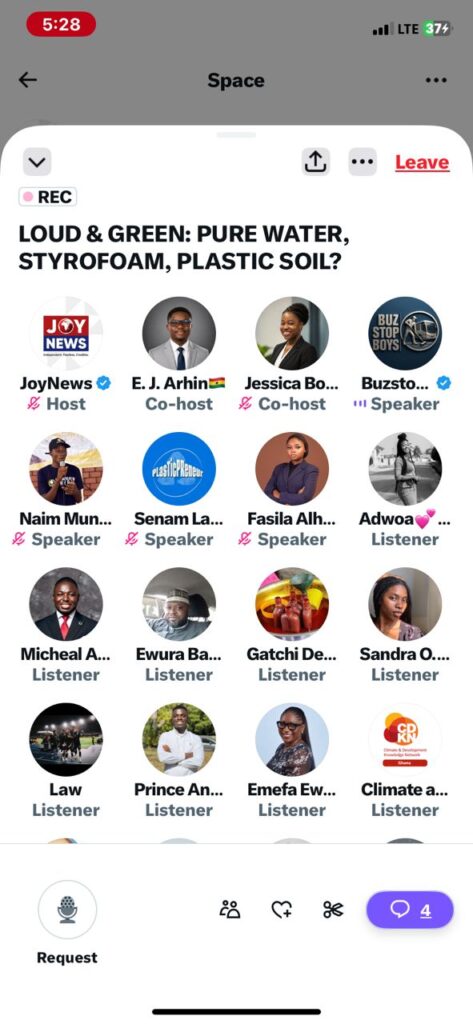
Speaking during the second edition of the Loud and Green XSpaces hosted on the JoyNews X platform, the Founder of the Ocean Harmony Project and National Geographic Society Young Explorer highlighted the growing threat plastic pollution poses to marine ecosystems, food security and public health.
“When fish ingest plastics and humans consume them, those plastics eventually enter the human body,” he said.
The discussion formed part of a broader conversation on the theme, "Pure Water, Styrofoam, Plastic Soil: Addressing Ghana's Growing Plastic Pollution."
Mr Muniru explained that plastic waste rarely remains where it is discarded. Instead, it is often washed into drains, carried into rivers and eventually transported into the ocean, where it becomes part of a destructive cycle affecting marine life and humans alike.
“Most of the things we get from the ocean, especially fish, are affected,” he said.
According to him, some of the most serious consequences of plastic pollution occur beneath the ocean's surface, away from public view.
“There is a lot happening beneath the ocean. A lot of biodiversity that humans have not yet discovered can be found there,” he said.
“When plastics enter the ocean, they have incredible negative effects not just on biodiversity but also on humans through the food we consume.”
Mr Muniru stressed that plastic pollution is not merely an environmental issue but one that affects livelihoods, ecosystems and public health.
“Plastic pollution affects everywhere, ecosystems, wildlife, livelihoods, humans and the ocean,” he added.
He warned that the true danger lies in the circular nature of plastic waste, where materials discarded on land eventually return through food systems and marine resources.
For him, the ocean should not be viewed as a dumping ground for waste, as the consequences inevitably find their way back to society.
His remarks come amid growing calls by environmental advocates for stronger action to reduce plastic waste, promote reusable alternatives and improve waste management systems across Ghana.
Environmental groups have repeatedly warned that without significant behavioural change and policy interventions, plastic pollution will continue to threaten biodiversity, undermine livelihoods and pose increasing risks to human health.
Latest Stories
-
Anthropic seeks rehearing of case over Pentagon’s security risk branding
56 seconds -
NDC Deputy National Organizer Aspirant Hamza Umar targets grassroots mobilisation
45 minutes -
Villarreal fight back to beat Napoli and end losing run
3 hours -
Tresoldi nets hat-trick as Club Brugge win Inter thriller
3 hours -
PSG’s Luis Enrique hopes Man City avoid sanctions
3 hours -
Lisandro Martinez issues scathing attack on Man Utd board – has he made things worse?
3 hours -
Saka responds to Arteta’s challenge with ‘huge impact’
3 hours -
Viking hold Bayern in thriller as Kane breaks Messi record
4 hours -
Gordon scores as Barcelona beats Galatasaray
4 hours -
Bumble bought for $1.3bn in ‘bet on the future of humanity’
4 hours -
Imagination Africa, Mentors Chess Academy to host second African Genius Chess Championship at Ghud Park
4 hours -
Paradigm Initiative steps up calls over digital rights, internet freedom in Africa
4 hours -
Saudi man charged with planting ‘sophisticated’ recording device in OpenAI office
4 hours -
Ghana wins UN Human Rights Council seat as calls grow for action against atrocities
4 hours -
Royal Mail losing 400 postal workers a week, says union
5 hours