

Audio By Carbonatix
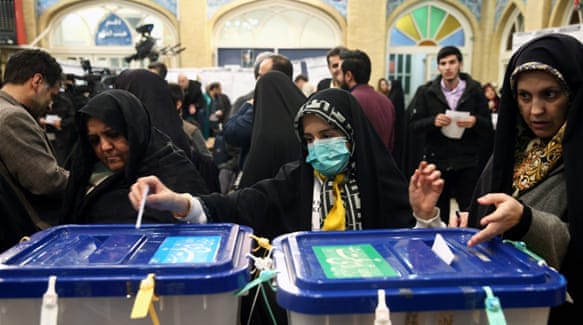
Polls have closed in Iran's second round of parliamentary elections held in 10 constituencies, with the authorities mobilising about 100,000 people to ensure a smooth process.
Friday's race for the remaining 10 parliamentary seats was being held in 3,100 voting stations after months of delay due to the coronavirus pandemic.
The first round in February saw the lowest voter turnout in the 40-year history of the Islamic republic and resulted in its most conservative parliament.
"It doesn't look like the politics dynamic in the parliament is going to change," Al Jazeera's Assed Baig, reporting from Tehran, said on Friday.
"Two-thirds of those seats still belong to the conservatives - and that's not good news for Rouhani's [reformist-aligned] government" ahead of next year's presidential election, he added.
In July, conservative members of parliament heckled Foreign Minister Mohammad Javad Zarif and denounced him as a liar during a speech to the 290-member body, or majlis.
Online campaigning
The issues dominating Iranian politics include the state of the economy, corruption and crippling sanctions reimposed by the United States in the wake of its 2018 unilateral withdrawal from a landmark nuclear deal signed between Iran and world powers in 2015.
In Golestan province in northeast Iran, residents said they wanted to see action from their elected representatives.
"I hope my lawmaker cooperates with the people," said one voter.
Politicians are encouraging more people to come out and vote but the pandemic complicates the situation, while candidates were barred from campaigning on the streets.
"As the health ministry has warned against any public gathering, we asked the candidates to take their campaigns online," Jamal Orf, the president of Iran's election commission, said.
During the opening session of the new parliament in May, Rouhani, who is in the final year of his second and final term, had called on MPs to place the "national interest above special interests", "party interests" or "constituency interests".
The body, which was previously dominated by Rouhani's reformist-moderate camp, is now composed of a majority of 220 conservative politicians, including more than 50 who are close allies of former hardline President Mahmoud Ahmadinejad.
There are also 38 independent legislators and 18 pro-reform and moderates, down from 136 in the previous House.
The number of female MPs stands at 16, compared with 17 before.
Latest Stories
-
LA 2028: Black Queens hold final training session ahead of second leg against Mauritius
33 minutes -
Standards are not Seasonal: What the EC appointments teach both sides
46 minutes -
King Mohammed VI urges private sector to create youth jobs and spread benefits of growth
47 minutes -
KGL U17 Colts 2026: Greater Accra win title after penalties win over Western Region
47 minutes -
UK Investment Roadshow opens in London to advance UK-Ghana growth partnership
59 minutes -
Assemblies of God requires pastors to resign before entering partisan politics – Rev. Wengam
1 hour -
Ghana targets 20% annual reduction in maternal deaths – Health Minister
1 hour -
Cyber attacks in Africa grow faster than global rate, report finds
1 hour -
Ghana signs UAE deal to create 5,000 overseas jobs
1 hour -
One Million Coders Programme targets 100,000 digital jobs in two years – Sam George
1 hour -
John Jinapor, Italian Ambassador explore opportunities for energy sector investment
1 hour -
NHIA seeks legal reforms to support Free Primary Healthcare
2 hours -
Beatrice Annan defends Afi Agbenyo’s EC appointment, cites record of gender advocacy
2 hours -
Ghana seeks investment deals in Bangkok amid global economic crises
2 hours -
IMF raises Ghana’s 2026 growth forecast to 5.7%, sees inflation falling to 4.8%
2 hours