

Audio By Carbonatix
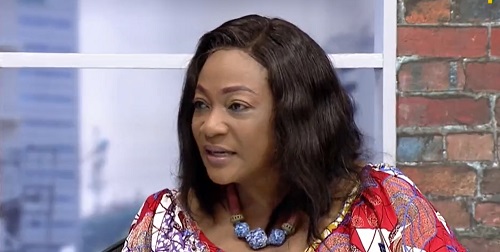
The Executive Director of the Henry Djaba Memorial Foundation, Otiko Afisah Djaba, has stated that poverty is the primary driving force behind child prostitution in some regions of Ghana.
Mrs Djaba disclosed that during her time as Gender Minister, traditional leaders brought to her attention that under-aged girls were forced into prostitution due to severe poverty in their communities.
Speaking on JoyNews’ AM show, she stated that "the children were now selling themselves so that they could feed their families, and that has to do with poverty and a lack of understanding of the importance of education and the responsibility of parenting. No child should be a parent"she argued.
“Why should a ten-year-old be a breadwinner? And because of that, the girls were becoming very rude because they were now looking after the parents, and the girl goes out and comes home very late, and the parent is not able to admonish the child because the child is now paying the rent and the electricity bill. It happens in the Central Region as well, because that is where there is a lot of poverty.
“If you look at Ghana, it is the upper east, upper west, northern region, and central region that are most deprived and we have the highest data of poverty in those areas. So, poverty plays a key role in prostitution.”
The former minister of gender and social protection has emphasised the far-reaching impact of poverty on women and girls in Ghana, explaining that prostitution often becomes a "first resort" for those struggling to make ends meet.
According to her, poverty is the driving force behind prostitution for both adults and children, resulting in serious consequences.
“Because of the ills that come with them, you might get sexually transmitted diseases, or you might get an unwanted pregnancy. You might get raped. The violence that comes from prostitution is totally unacceptable, and we are all aware of all these things that happen, but an older person is more aware than a child who feels that she has no choice.
“Some parents even push the children into prostitution because they feel that is the only way to make ends meet, like pushing your child to go and sell doughnuts and dog chains, and what have you?”.
The former minister emphasised the need for personal responsibility and hard work in the face of poverty.
Mrs Djaba firmly rejected prostitution as an acceptable response to poverty, arguing that despite the hardships faced by women and girls in Ghana, they must strive to make productive choices and prioritise personal dignity over the lure of quick financial gain..
Latest Stories
-
Libya’s military seizes narcotics after firefight with smugglers
2 hours -
At least 139 migrants dead, including some children, after boat from Djibouti to Yemen capsizes, UN agency says
2 hours -
“US Embassy introduced TRIBE Culture Fest to NSA, GTA” – Kofi Adams
2 hours -
“NSA did not tell us of any embassy arrangement” – Kofi Adams
2 hours -
Kumasi records third commercial fire in three days
3 hours -
Trump faces growing backlash over plans to import diesel from Russia
4 hours -
AI is less regulated than milk, says Microsoft president
4 hours -
Boots sold in £7bn deal to Canadian billionaire family
4 hours -
Glasner suffers loss on Selhurst return as Palace beat Forest
4 hours -
WAFU B U17: ‘We won but I expected more from my boys’ – Kassim Ocansey
4 hours -
Royal Mail plans to cut 2,500 jobs
4 hours -
Man City cruise to statement win over 10-man Liverpool
4 hours -
Citroen revives the 2CV for an electric age
4 hours -
Blind guide dog owner says quiet EVs put lives at risk
4 hours -
Be careful with cross-border lending, foreign currency exposures – BoG to financial institutions
7 hours