


Audio By Carbonatix
The National Project Coordinator for the International Trade Centre's Netherlands Trust Fund 5 Programme, has called on stakeholders in Ghana’s agricultural value chain to prepare for the integration of traceability systems within the sector.
Isaac Newton Acquah stated that implementing traceability is crucial to maintaining trade relationships with major agricultural export partners.
"The European Union is a major export partner for Ghana, and with new laws coming up in 2025 that require tracing any produce we’re exporting, we need to be prepared,” Acquah said.
Speaking at the second Agricultural Innovation for Africa (AIA) Conference, organised by the Kosmos Innovation Centre and its partners, Acquah highlighted the significant contribution of agriculture to Ghana’s Gross Domestic Product (GDP) and stressed the importance of adapting to evolving export market trends to ensure sustained benefits from the nation’s agricultural exports.
While acknowledging the challenges facing Ghana’s agricultural sector, Acquah noted that several industry players are tackling these issues.
“We have 99 problems, maybe more, but there are companies like Grow for Me, Sabon Sake, and Farmerline addressing access to finance, carbon sequestration, and traceability, respectively,” he said.
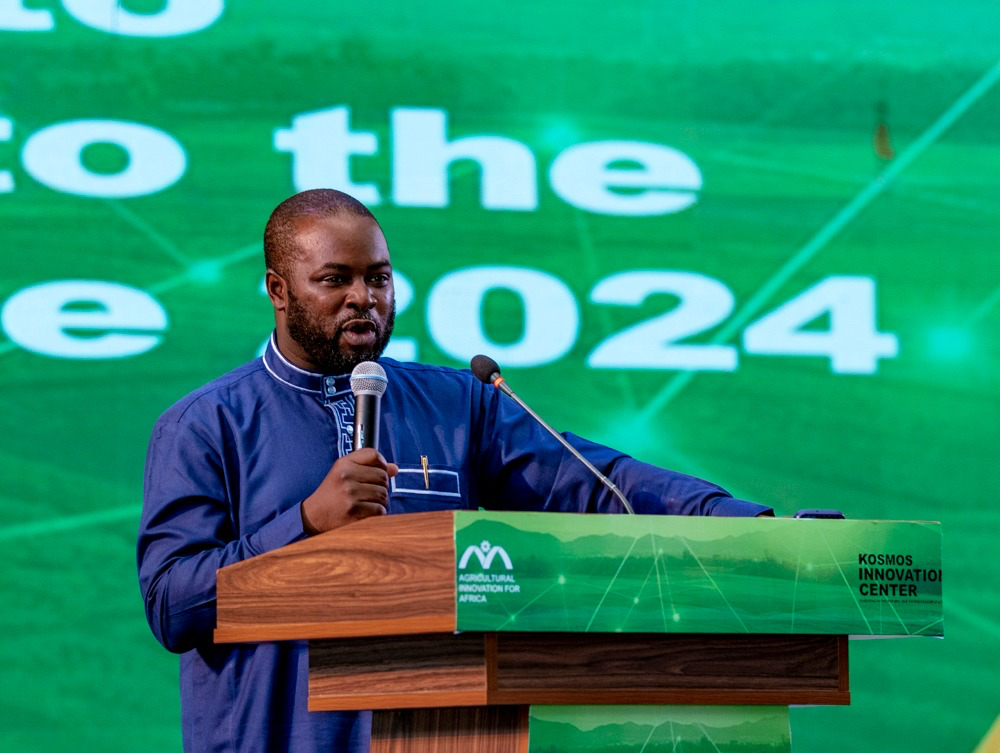
He noted the need to transform Ghana into a major exporter of agricultural produce.
“Our goal should be to transition from dependence on food imports to becoming a leading exporter. We need to generate surplus produce that can be exported for additional revenue,” he asserted.
Acquah also encouraged Ghanaian youth to take an active role in agriculture to help achieve national food security.
"Agriculture offers numerous opportunities for young people. You don’t need a background in agriculture to make an impact. Ultimately, it’s not just about job creation but ensuring food security," he added.
The AIA Conference, held under the theme “Empowering Youth Startups and Agri-MSMEs in Africa: Addressing Climate Change, Innovative Financing, Market Efficiency, and Gender Mainstreaming for Sustainable Food Systems,” brought together over 500 participants both virtually and in person, featuring discussions on innovative financing, market efficiency, and a workshop on traceability.
Latest Stories
-
Asantehene plants trees to commence Jimi Watercourse Rehabilitation destroyed by galamsey
22 minutes -
15 arrested, 6 trucks impounded over sandwinning activities on Kumasi-Accra Expressway
22 minutes -
OFFICIAL: Vinicius will miss El Clásico, suspended four games
26 minutes -
Prayer vigil held after four arson attack murders
33 minutes -
GRA fully recovers $154k legacy debt owed by foreign entities between 2022 and 2024
34 minutes -
Kwesi Pratt Jr warns bus preachers are adding to passengers’ stress with accident prophecies
35 minutes -
MTN Ghana to spend $1.1bn in 3 years, build 500 new sites as MoMo hits 44% Growth
37 minutes -
I have no regrets joining Assemblies of God – Mahama
37 minutes -
Starlink restrictions in Ukraine war linked to political situation, Zelensky aide says
40 minutes -
Furniture boost for Techiman North schools as MP donates to 20 institutions
41 minutes -
Assemblies of God to loan 10,000-seater dome for Ghana@70 celebrations
41 minutes -
Government to audit 2,016 community network sites – Communications Minister
41 minutes -
Heritage Series notes: BoG promises more inclusive cedi with improved sizes, tactile features
59 minutes -
‘We want answers’ – Family seeks probe into 14-year-old’s death 12 days after starting SHS
1 hour -
No preacher has the right to impose beliefs on bus passengers – Kwesi Pratt Jr backs preaching ban
1 hour