

Audio By Carbonatix
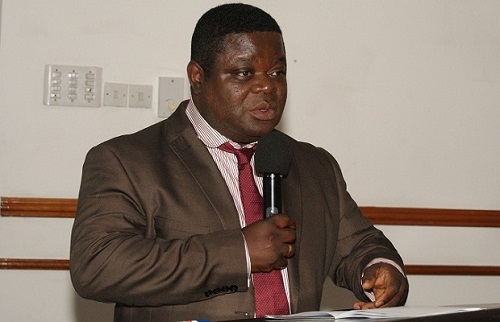
The Director of the Institute of Statistical, Social and Economic Research (ISSER) says traders cannot be blamed for increasing the price of goods since the outbreak of COVID-19, a disease caused by coronavirus.
In Peter Quartey’s view, the decision is a rational one to a development they do not understand and are uncertain of.
Speaking on Joy FM’s Super Morning Show, he said “For lack of information or understanding people behave rationally.
"If you think you’re going to be lockdown and they say there is going to be a shortage, as rational human beings you try to stock as much as you can.
“It is a demand and supply issue and so although the goods are there, the sudden increase in demand is what the traders are taking advantage of…So it is a rational decision in my view and I don’t think anyone should be blamed,” he added.
Prices of goods such as hand sanitizers, food items like gari and bread have shot up by more than 100 percent in some parts of the country since the outbreak of the novel coronavirus.
Fears of an impending lockdown – which is now in force partially - added fuel to the fire with traders increasing prices for staple foods and other everyday items.
Enraged by the development, consumers have called on government to regulate prices.
While Prof Quartey believes this can be done, he said the National Commission of Civic Education (NCCE) should intensify education in local languages for people to appreciate what is being done.
Citing Ghana’s coup history, he said the curfew and shortages that characterized those periods are still fresh on the minds of those who experienced it and are simply trying to avoid similar developments, a reason there has been a rush to stock up on food and other essential items.
He also believes “people are avoiding confrontation with the law enforcement agencies and so would rather stock and observe what will go on in the coming days.
“If our law enforcement agencies are professionals, people will realize that this is not a total lockdown and that food and other things will be available, gradually things will ease off and go back to normal.”
He called on the Ghana National Buffer Stock Company to release some of the goods if supply cannot meet demand.
“If we allow goods to flow freely, we will solve the supply problem,” he stressed.
Latest Stories
-
Communities affected by construction of Akosombo Dam urge government to speed up compensation process
9 minutes -
World Cup visa scandal: Sports Ministry not shielding anyone – Sports Minister’s special aide
30 minutes -
World Cup visa scandal: Over 30 people misrepresented as GTA board members to US Embassy – Vincent Assafuah alleges
31 minutes -
Fire destroys wooden structure near Yesu Mo Villa at Bush Road
32 minutes -
NDC threatens sanctions over oversized campaign posters, gives aspirants 5 days to comply
1 hour -
Star Oil paid GH¢2.7bn in taxes, levies in nine months of 2026
2 hours -
Samson’s Take: The rule of law is cheaper before the bulldozer
2 hours -
GRA blames system failure for delay in issuing receipt over passenger’s customs duty
2 hours -
Livestream: Newsfile discusses World Cup visa scandal, beach demolitions, education strikes, BRICS bid
2 hours -
NC-PTAs welcomes end of teachers’ strike, urges parents to prepare children for Monday
2 hours -
Government procures over 2,000 transformers as Ghana’s electricity access hits 89.13% – Energy Minister
3 hours -
UTAG-UG threatens strike on October 19 over unpaid allowance
3 hours -
Let The Constitution direct Chieftaincy to deliver “All Development Is Local”
4 hours -
John Jinapor outlines renewable energy, nuclear power priorities for 2027
4 hours -
Ghana explores centre of excellence for hearing, communication and cochlear implant care
5 hours