

Audio By Carbonatix
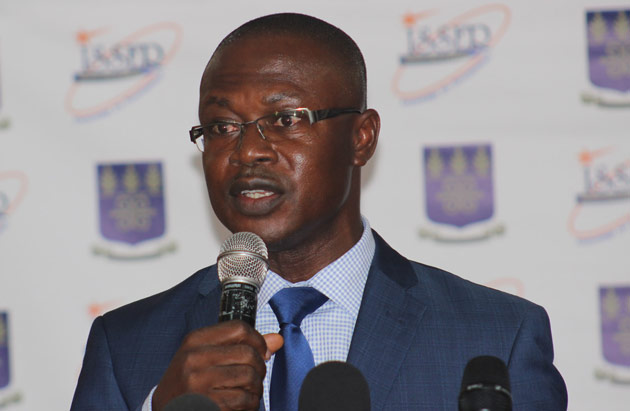
The 2025 Mid-Year Budget Review offers no real excitement for jobs or the fight against poverty, according to Professor of Finance and Economics at the University of Ghana, Charles Godfred Ackah.
He believes that while the economic managers can claim credit for some positive indicators, the deeper issues facing Ghanaians remain untouched.
“The statistics are showing some good performance,” Prof. Ackah said.
“If you measure them in the context of normal, orthodox economics, you will see a reduction or some form of consolidation.”
He pointed to the primary surplus, inflation trending down, and exchange rate stability as evidence of fiscal consolidation.
“So I think that is good to some extent,” he noted. “But you have to ask yourself, at what cost? What is our vision as a nation? What do we want to achieve?”
For him, the metrics may look impressive on paper, but they fall short of addressing the real economic needs of the people.
“If it’s just to appear to be achieving some good statistics, then I think we should give congratulations to the managers of the economy,” he said.
“But if the bottom line, or the vision, is to create jobs, to build a competitive, resilient economy, to improve the welfare of the Ghanaian, to reduce poverty and inequality, then I don’t think this mid-year budget review gives any excitement.”
Prof. Ackah argued that the gains being highlighted by the Finance Ministry are largely the result of favourable global conditions rather than sound domestic policy.
“Because if you look at what has actually happened, I think it’s mainly resulting from the external sector. The external sector, because of the increase in gold production and export of gold, we are getting a lot of external advantage from there in terms of foreign exchange revenue,” he said.
“Also, the cocoa is doing well in terms of the price, and the oil price has stabilised, and, therefore, all of these are giving us some windfall.”
He warned against presenting such outcomes as achievements rooted in domestic competence.
“To which the managers of the economy could claim advantage and say it’s purely as a result of their own doing, as we normally do. But I think most of the results are externally driven, and if things change, we have seen this before.”
Citing historical examples, he said Ghana’s vulnerability to global commodity shocks remains unchanged.
“If you look at the 2013 budget, 2014 budget, 2015 budget, when President Mahama was still there, we recorded some 2.8% budget surplus,” he said.
“But if we don’t prefer to build a resilient economy, [it] is susceptible to shocks, and if the gold prices fall all of a sudden, crude oil price goes through the roof all of a sudden, then we will be back to square one.”
Latest Stories
-
Government promises support for Kumasi Central Market fire victims
2 minutes -
Vibes The Movie: Big Ghun’s Ghanaian film earns five nominations at 2026 REFFA
32 minutes -
MamaCare CEO warns unresolved conflicts among health workers could undermine maternal and neonatal care
57 minutes -
Health professionals urged to translate medical knowledge into practice to save mothers
1 hour -
Conflicts among care providers linked to maternal, neonatal deaths – Expert
3 hours -
GIS marks 10th TIME conference, champions improved teaching practices
3 hours -
BRICS Or Balance? What Ghana’s bid really means
3 hours -
GPRTU wants full TRAFFITECH-GH implementation to start in 2027
3 hours -
Mahama announces plans to import electric wheelchairs for PWDs
4 hours -
KGL U17 Colts 2026: Western beat Prempeh Elite Academy to set up final final with Greater Accra Region
4 hours -
Late Solanke strike salvages 10-man Spurs draw at Man United
4 hours -
Gender Ministry to monitor welfare of Nana Akua Addo’s children amid domestic violence case
4 hours -
Benedict Okyere Yeboah: Ghana’s football problem goes beyond sacking a coach
4 hours -
GPL 2026/27: Darkwah Wiafe’s winner sees All Blacks beat Kotoko
4 hours -
ITF World Tour : Patel Wins Boys’ Singles Final at J100 Accra
5 hours