

Audio By Carbonatix
Public health officials have warned of a heightened risk of cholera, malaria and other communicable diseases as heavy rains and flooding continue to affect several communities across Ghana.
The officials say poor sanitation, contaminated water sources and the spread of misinformation could worsen public health challenges if preventive measures are not strengthened.
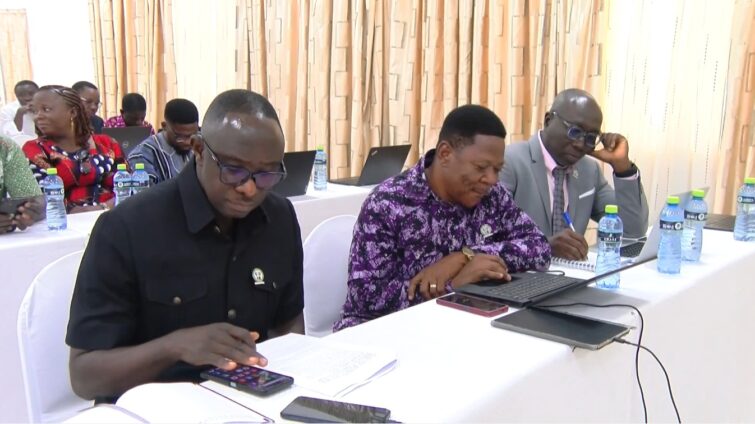
The concerns were raised during a Public Health Communication and Publicity Training Programme organised by the Ghana Association of Public Health Technical Officers (GAPHTO) under the theme, “Strengthening Public Health Communication and Publicity for Effective Service Delivery and GAPHTO Visibility.”
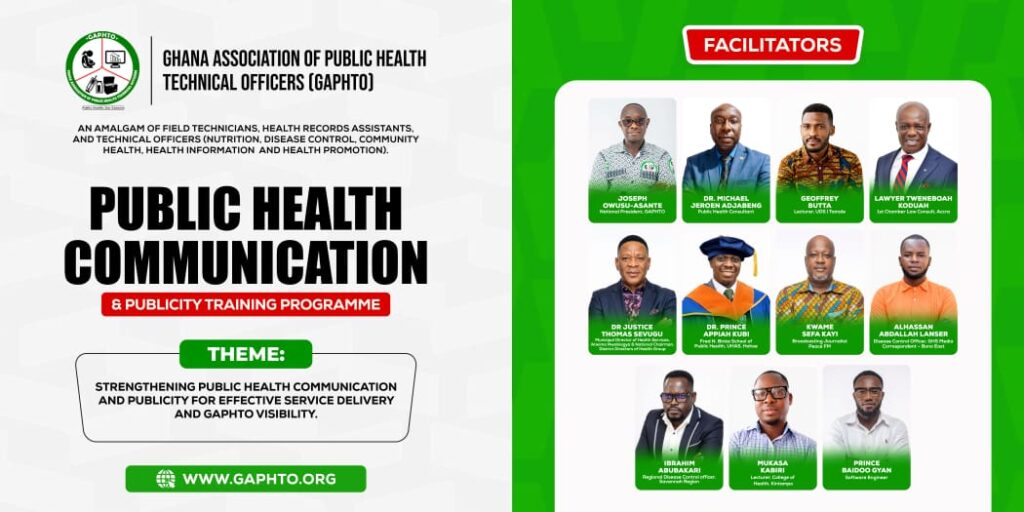
Speaking at the event, National President of GAPHTO, Joseph Owusu Asante, said flooding often contaminates water sources with human waste and other pollutants, creating conditions for outbreaks of water-borne diseases.
“I should remind all of us that whenever there is rain, we talk about cholera. All diseases that move along with contaminated water are likely to come because floods can mix water sources with excreta and other pollutants,” he said.
Mr Asante warned that water-borne, water-based and water-related diseases could resurface if communities fail to improve hygiene practices and address recurring flooding challenges.
He noted that disease control officers and port health officials across the country continue to monitor communities, health facilities and points of entry to detect and respond quickly to disease outbreaks, including imported infections such as Ebola and mpox.
“We have disease control officers who follow reports from communities and hospitals, investigate suspected cases and work with laboratories to confirm diseases. The system is in place, but we need more personnel to strengthen disease surveillance,” he added.
District Director of Health Services for Kwahu East, Angela Acheampomaa, also expressed concern about the health implications of the ongoing rains, urging the public to adhere to proper sanitation and hygiene practices.
“The flooding we are seeing can contaminate food and water bodies. When this happens, cholera outbreaks and malaria cases can increase,” she said.
She advised residents to wash fruits and vegetables thoroughly, practise regular handwashing, avoid indiscriminate waste disposal and seek prompt medical attention when experiencing symptoms such as vomiting or diarrhoea.
Ms Acheampomaa also highlighted the growing challenge of health misinformation, particularly on social media, describing it as a threat to effective disease prevention and outbreak response.
“Misinformation is everywhere. As public health officers, our responsibility is to provide the right information so people can make informed decisions about their health,” she said.
The warning comes as several parts of the country continue to experience heavy rainfall and flooding, raising concerns about public health and environmental sanitation.
Health officials believe that strengthening public health communication, improving sanitation and enhancing disease surveillance systems will be critical to preventing outbreaks and protecting communities during the rainy season.
Latest Stories
-
GAEC must retain nuclear scientists for Ghana’s nuclear ambitions – Minister
25 minutes -
Man reportedly mistaken for game and shot by hunter dead in forest
28 minutes -
19-year-old mason jailed 15 years for defiling seven-year-old pupil
32 minutes -
Ghana’s banking sector assets rise 20.47% to GH¢500.2bn – BoG Governor
36 minutes -
22 injured as Sprinter bus overturns at Sege after tyre burst
38 minutes -
UN housing expert urges Ghana to strengthen Rent Control Department amid housing affordability concerns
46 minutes -
Delta-BCI partnership reaches 166,000 people with breast cancer education
55 minutes -
Power restoration fault suspected in Kumasi Central Market fire
6 hours -
The 7-foot giant of Ngleshie Amanfro: Seven-foot Ghanaian Ephraim Saawa dreams of joining the national basketball team
7 hours -
Government promises support for Kumasi Central Market fire victims
7 hours -
Vibes The Movie: Big Ghun’s Ghanaian film earns five nominations at 2026 REFFA
7 hours -
‘I’m a fulfilled man’—Justice Korbieh on missing out on Supreme Court despite two nominations
8 hours -
MamaCare CEO warns unresolved conflicts among health workers could undermine maternal and neonatal care
8 hours -
Health professionals urged to translate medical knowledge into practice to save mothers
8 hours -
Retired judge Justice Francis Korbieh charges 1,568 new lawyers to uphold integrity
9 hours