

Audio By Carbonatix
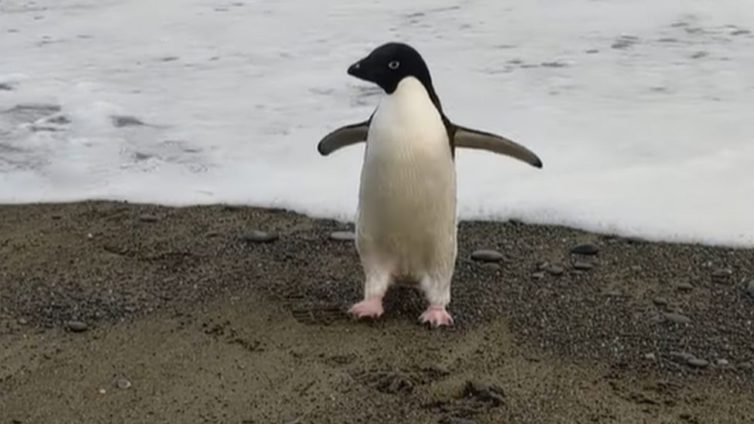
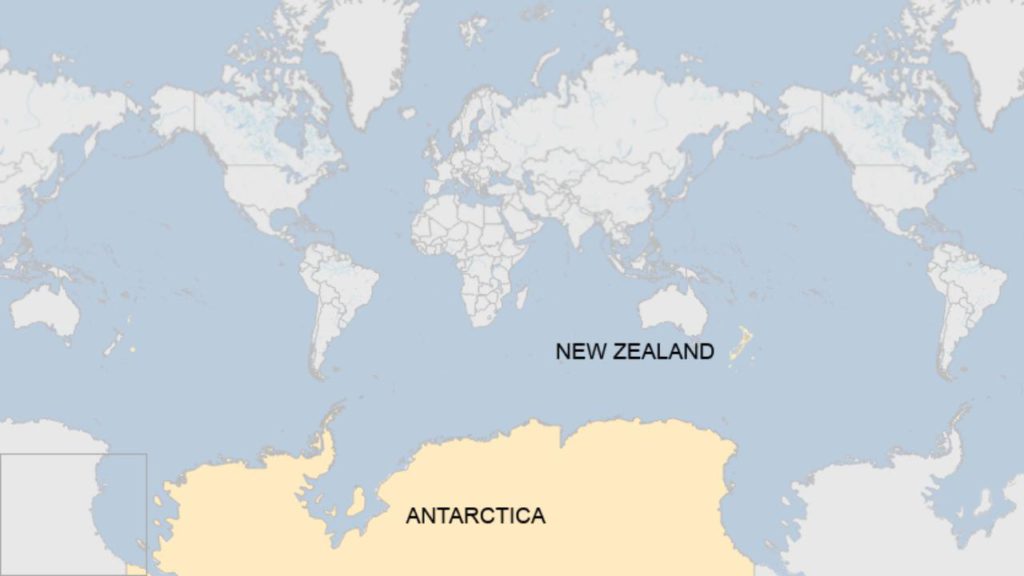
A penguin has found itself on the shores of New Zealand, at least 3,000 kilometres (1,864 miles) away from its natural habitat of Antarctica.
The Adélie penguin, who has now been affectionately named Pingu by locals, was found looking lost on the coast.
Harry Singh, the local resident who found him, said he thought he was a "soft toy" at first.
It is only the third recorded incident of an Adélie penguin being found on New Zealand's coast.
Mr Singh and his wife first came across the penguin when they were out walking after a long day of work on the beach at Birdlings Flat, a settlement located about 45 kilometres south of the capital Christchurch.
"First I thought it (was) a soft toy, suddenly the penguin moved his head , so I realized it was real," Mr Singh told the BBC.
Footage of the penguin posted on Mr Singh's Facebook page showed the penguin appearing lost and alone.
"It did not move for one hour... and [looked] exhausted" Mr Singh said.
Mr Singh proceeded to call penguin rescuers as he was concerned that the penguin was not getting into the water, thereby making it a potential target for other predatory animals roaming the beach.
"We did not want it to end up in a dog's or cat's stomach," he said.
He eventually got through to Thomas Stracke, who has been rehabilitating penguins on New Zealand's South Island for about 10 years.
Mr Stracke was shocked to find that the penguin was an Adélie penguin - a species that lives exclusively on the Antarctic peninsula. Mr Stracke, along with a veterinarian, rescued the penguin that same evening.
Underweight and dehydrated
Blood tests performed on Pingu showed that it was slightly underweight and dehydrated. It has since been given fluids and fed via a feeding tube.
The bird will eventually be released onto a safe beach on Banks Peninsula, which is free of dogs.
The discovery is only the third in history that an Adélie penguin has been found on New Zealand's coasts, following two incidents in 1993 and 1962.
Adélie spottings remain rare in New Zealand, but if more of them appear in the future, it could be a worrying sign, say experts.
"I think if we started getting annual arrivals of Adélie penguins, we'd go actually, something's changed in the ocean that we need to understand," Otago University zoology professor Philip Seddon told news site The Guardian.
"More studies will give us more understanding where penguins go, what they do, what the population trends are like - they're going to tell us something about the health of that marine ecosystem in general."
Latest Stories
-
Perceptions of Judicial partisanship ‘unfortunate’ – Justice Adjei-Frimpong urges greater public engagement to build trust
2 minutes -
Ghana to honour Christina Hammock Koch for historic Artemis II mission
1 hour -
Supreme Court appointments require more than 15 years’ experience – Justice Adjei-Frimpong
1 hour -
Fire destroys 3-bedroom house at Bogyawe
2 hours -
Why the Supreme Court is a “policy court” – Justice Richard Adjei-Frimpong breaks it down
2 hours -
Playback: The Law discussed Supreme Court @150
3 hours -
MTN Momo staff walk to promote wellness and fitness
3 hours -
Assafuah: Sedina Attionu’s return from Nevada will test government’s commitment to accountability
3 hours -
How GRA’s Modified Taxation Scheme is boosting revenue compliance & SMEs competitiveness
4 hours -
Stonebwoy Can Do It: A call to unite behind 2026 BHIM Fest
4 hours -
World Shea Expo returns to Tamale for 2026 edition
4 hours -
Prioritise cocoa sector with better prices, timely payments-Annoh-Dompreh urges NDC
4 hours -
Lands and Mines Watch Ghana endorses Heath Goldfields’ mining capacity
5 hours -
Gbintiri residents protest alleged diversion of 24-hour market project
5 hours -
Justin Bieber headlines Coachella with nostalgia-fuelled set
5 hours