

Audio By Carbonatix
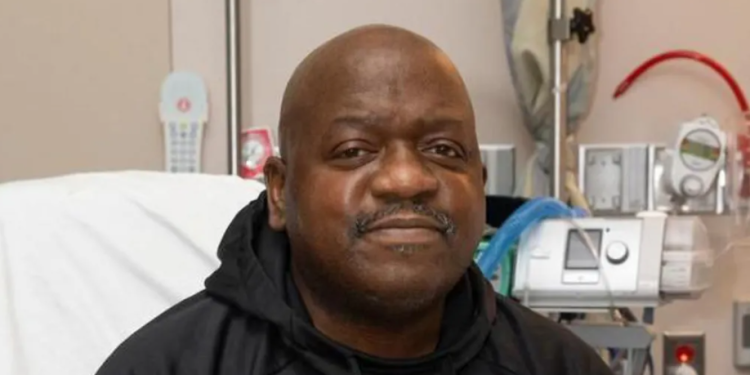
The first man to receive a genetically modified pig kidney transplant has died two months after the operation, the hospital which carried out the procedure has said.
Richard “Rick” Slayman, 62, was suffering with end-stage kidney disease before undergoing the operation in March.
Massachusetts General Hospital (MGH) said on Sunday there was no indication his death was a result of the transplant.
Transplants of other organs from genetically modified pigs have failed in the past, but the operation on Mr Slayman was hailed as a historic milestone.
In addition to kidney disease, Mr Slayman also suffered from Type 2 diabetes and hypertension. In 2018, he had a human kidney transplant, but it began to fail after five years.
Following his pig kidney transplant on 16 March, his doctors confirmed he no longer needed dialysis after the new organ was said to be functioning well.
“Mr Slayman will forever be seen as a beacon of hope to countless transplant patients worldwide and we are deeply grateful for his trust and willingness to advance the field of xenotransplantation,” MGH said in a statement.
Xenotransplantation is the transplanting of living cells, tissues or organs from one species to another.
MGH said it was “deeply saddened” at his sudden death and offered condolences to his family.
Mr Slayman’s relatives said his story was an inspiration.
“Rick said that one of the reasons he underwent this procedure was to provide hope for the thousands of people who need a transplant to survive,” they said.
“Rick accomplished that goal and his hope and optimism will endure forever.
“To us, Rick was a kind-hearted man with a quick-witted sense of humour who was fiercely dedicated to his family, friends, and co-workers,” they added.
While Mr Slayman received the first pig kidney to be transplanted into a human, it is not the first pig organ to be used in a transplant procedure.
Two other patients have received pig heart transplants, but those procedures were unsuccessful as the recipients died a few weeks later.
In one case, there were signs the patient’s immune system had rejected the organ, which is a common risk in transplants.
Latest Stories
-
World Cup visa scandal: Sports Ministry not shielding anyone – Sports Minister’s special aide
14 minutes -
World Cup visa scandal: Over 30 people misrepresented as GTA board members to US Embassy – Vincent Assafuah alleges
15 minutes -
Fire destroys wooden structure near Yesu Mo Villa at Bush Road
17 minutes -
NDC threatens sanctions over oversized campaign posters, gives aspirants 5 days to comply
1 hour -
Star Oil paid GH¢2.7bn in taxes, levies in nine months of 2026
1 hour -
Samson’s Take: The rule of law is cheaper before the bulldozer
1 hour -
GRA blames system failure for delay in issuing receipt over passenger’s customs duty
2 hours -
Livestream: Newsfile discusses World Cup visa scandal, beach demolitions, education strikes, BRICS bid
2 hours -
NC-PTAs welcomes end of teachers’ strike, urges parents to prepare children for Monday
2 hours -
Government procures over 2,000 transformers as Ghana’s electricity access hits 89.13% – Energy Minister
2 hours -
UTAG-UG threatens strike on October 19 over unpaid allowance
3 hours -
Let The Constitution direct Chieftaincy to deliver “All Development Is Local”
4 hours -
John Jinapor outlines renewable energy, nuclear power priorities for 2027
4 hours -
Ghana explores centre of excellence for hearing, communication and cochlear implant care
5 hours -
Schizophrenia-related disorders lead mental health cases recorded in Ghana
6 hours